

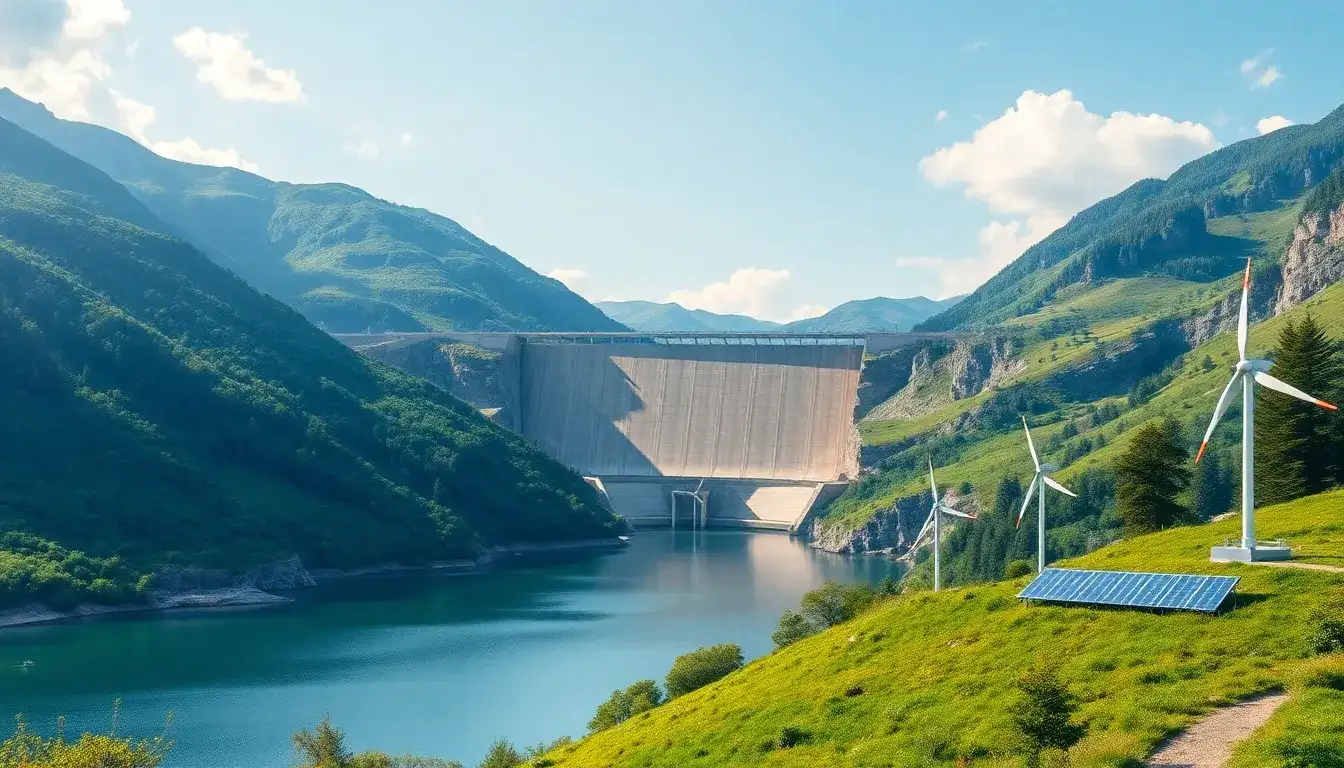
Pumped hydroelectric energy storage (PHES) plays a crucial role in mitigating climate change by enabling higher integration of renewable energy sources, providing grid stability, and having very low associated greenhouse gas emissions.
Key Roles of Pumped Hydroelectric Energy Storage in Climate Change Mitigation
1. Enabling Renewable Energy Integration and Grid Flexibility
Pumped hydro storage acts as a large-scale “water battery,” storing excess energy generated from variable renewables like solar and wind by pumping water to a higher reservoir when supply exceeds demand, and generating electricity by releasing it back when needed. This capability helps to balance fluctuations in renewable energy production, thereby supporting a more reliable and resilient power grid that can accommodate higher shares of renewables. The Intergovernmental Panel on Climate Change (IPCC) recognizes pumped storage hydropower as a critical flexibility service that compensates for rapid variations in electricity loads and supplies, which is essential for achieving net-zero emissions targets.
2. Low Global Warming Potential (GWP)
Recent life cycle analyses, such as those by the U.S. Department of Energy’s National Renewable Energy Laboratory (NREL), have found that closed-loop pumped storage hydropower systems have the lowest global warming potential among energy storage technologies. This low GWP accounts for all lifecycle emissions including materials and construction, meaning PHES adds minimal additional greenhouse gases compared to other storage options.
3. Supporting Deep Decarbonization of the Electricity Sector
Studies using real-world power systems like Spain’s demonstrate that existing and additional pumped hydro storage capacity improves the utilization of low-carbon energy sources (solar, wind, nuclear) while reducing reliance on fossil fuel generation such as natural gas. Investments in PHES thus directly contribute to lowering sector-wide greenhouse gas emissions, accelerating the decarbonization of electricity grids.
4. Climate Change Resilience and Management
Beyond decarbonization, pumped hydropower reservoirs can aid in climate adaptation by offering water storage capacity that contributes to flood and drought control. Seasonal pumped hydropower storage (SPHS) in particular shows promise for managing climate-induced variability in water availability, which is especially relevant in regions vulnerable to climate change effects. Integration of SPHS with renewables can reduce CO2 emissions by up to 68% and supports the path toward a fully renewable energy matrix over the long term.
Summary Table of Pumped Hydroelectric Storage Benefits for Climate Change Mitigation
| Role/Benefit | Description | Impact on Climate Change |
|---|---|---|
| Renewable integration | Balances supply-demand fluctuations | Enables higher renewables penetration, reduces fossil fuel use |
| Low lifecycle emissions | Minimal GHGs over full lifecycle | Lowest global warming potential among storage techs |
| Grid decarbonization support | Improves use of solar, wind, nuclear | Reduces fossil fuel generation needed |
| Climate resilience | Flood/drought control via water storage | Enhances system robustness to climate impacts |
| Seasonal storage capabilities | Stores energy over longer periods | Facilitates reliable renewable supply year-round |
In conclusion, pumped hydroelectric energy storage is a pivotal technology in mitigating climate change by providing critical grid flexibility, enabling deep renewable energy integration, and maintaining one of the lowest carbon footprints of energy storage systems available today.
Original article by NenPower, If reposted, please credit the source: https://nenpower.com/blog/what-role-does-pumped-hydroelectric-energy-storage-play-in-mitigating-climate-change/

