

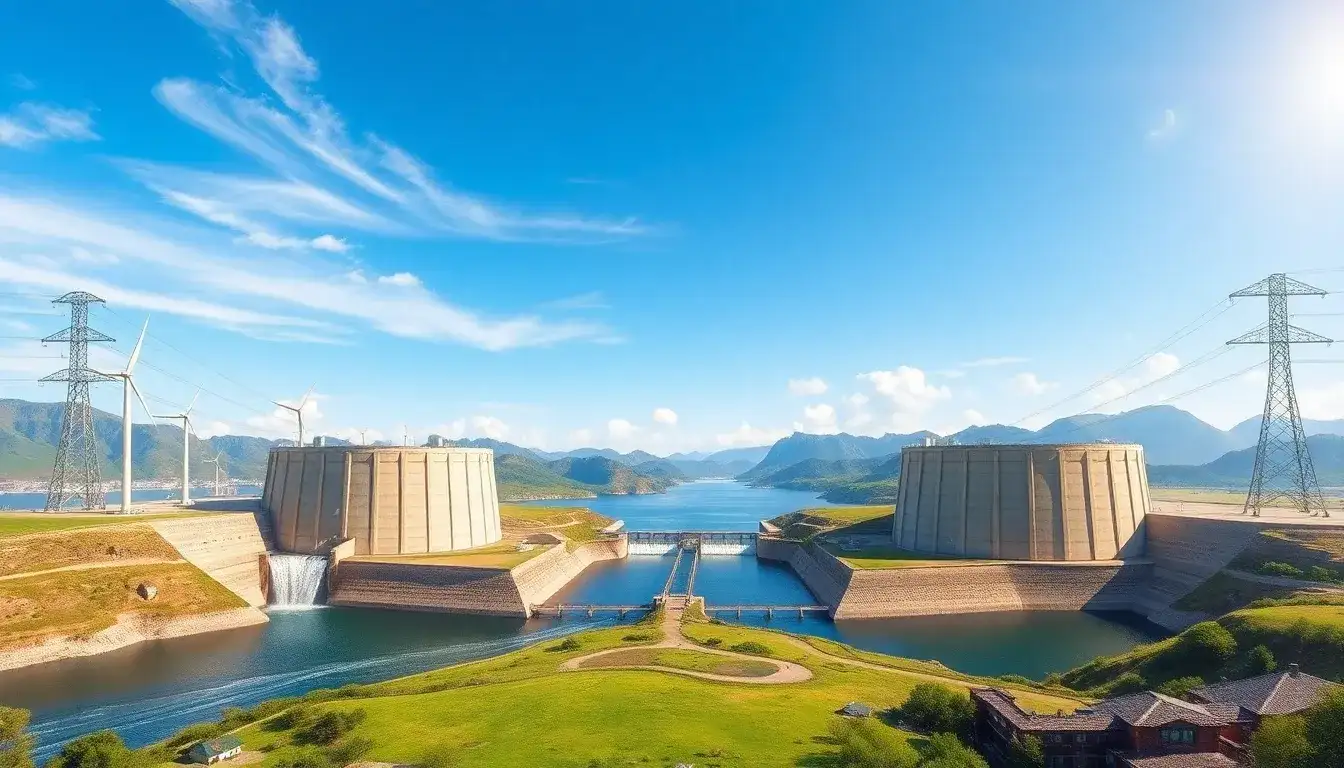
Pumped hydroelectric energy storage (PHES) plays a critical role in managing grid fluctuations by acting as a large-scale, flexible energy storage system that enhances grid reliability and stability. Its main contributions include:
- Balancing Variable Renewable Energy: PHES can absorb excess energy when generation from variable sources like solar and wind is high and then release stored energy during periods of low generation or high demand. This flexibility helps smooth the intermittent output of renewables and maintain continuous power supply.
- Responding Rapidly to Demand Fluctuations: Pumped storage facilities can quickly ramp up or down their electricity output, enabling rapid responses to sudden changes in power demand or supply disruptions. This capability helps manage frequency and voltage fluctuations that arise from variability in the grid.
- Providing System Reserves and Grid Stability: By supplying reserves and increasing grid inertia, PHES supports overall grid stability. It can also help manage grid bottlenecks, support black start capability (restoring power after outages), and contribute to long-term energy resource management.
- Economic and Operational Benefits: Recent modeling shows that optimizing PHES operations can increase profitability for operators and reduce total system costs, benefiting consumers through lower energy prices. This optimization enhances the grid’s ability to integrate more renewable energy resources while maintaining balance and efficiency.
In summary, pumped hydroelectric energy storage acts as a “water battery” that stabilizes the grid by storing excess energy and providing it back when needed, mitigating the fluctuations caused by renewable energy sources and demand variability. Its proven high operational flexibility and long facility lifetimes make it a cornerstone technology for managing grid fluctuations and supporting clean energy transitions.
This combination of rapid response, large capacity, and grid services makes PHES indispensable for modern electricity grids aiming to accommodate increasing renewable energy penetration.
Original article by NenPower, If reposted, please credit the source: https://nenpower.com/blog/what-role-does-pumped-hydroelectric-energy-storage-play-in-managing-grid-fluctuations/

