

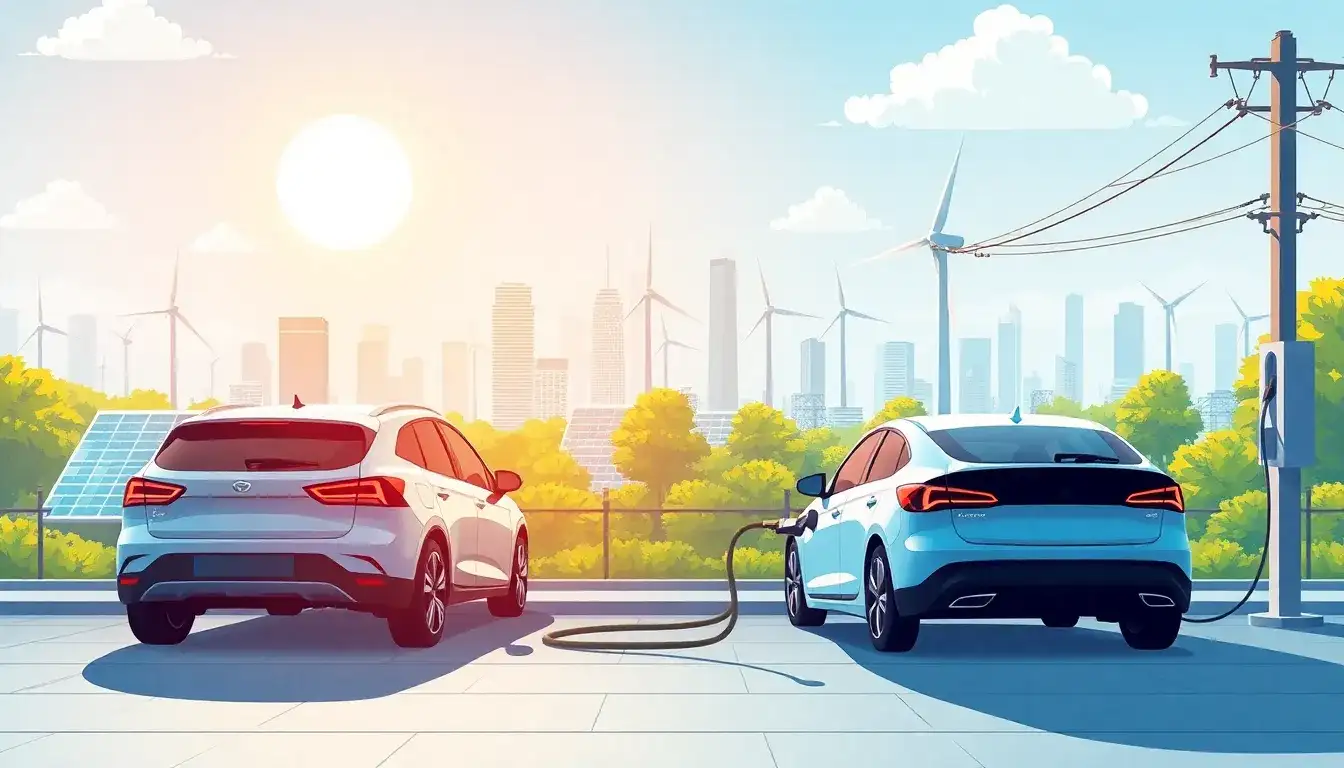
Grid decarbonization plays a critical role in enhancing the environmental benefits of plug-in hybrid electric vehicles (PHEVs). The extent to which PHEVs reduce greenhouse gas emissions compared to internal combustion engine vehicles (ICEVs) depends significantly on the carbon intensity of the electricity used to charge their batteries.
Impact of Grid Decarbonization on PHEV Emissions
- Emissions Reductions Increase as Grid Decarbonizes: PHEVs purchased in 2023 produce about 30% less emissions over their lifetime compared to ICEVs. This emissions advantage increases to 35% for PHEVs purchased in 2035 due to further decarbonization of electricity generation in scenarios with accelerated climate action.
- Well-to-Tank Emissions Fall with Cleaner Grids: Improvements in the electricity grid reduce well-to-tank emissions (emissions associated with producing and delivering the fuel/electricity) by 25-35% for vehicles sold in 2023 and by 55-75% for those sold in 2035, due to a 50-65% drop in electricity generation emissions intensity between 2023 and 2035.
- Battery Production Emissions Also Decrease: As grids decarbonize, the emissions associated with battery manufacturing for PHEVs also fall by about 10% by 2035, further improving their overall lifecycle emissions profile.
- Cleaner Grids Enhance the Relative Advantage of Electric Driving: Since PHEVs partially operate on electricity, the cleaner the grid electricity, the greater the emissions benefit over conventional vehicles. In regions with cleaner grids, PHEVs can significantly reduce lifecycle greenhouse gas emissions compared to ICEVs and even conventional hybrids (HEVs).
Additional Benefits from Grid Interaction
- Smart Charging and Vehicle-to-Grid (V2G) Services: PHEVs can provide flexibility in charging times, allowing charging during periods of low grid emissions or high renewable energy availability. This flexibility improves power plant dispatch efficiency and can reduce overall emissions from electricity generation.
- V2G Services Further Reduce Emissions: By offering ancillary services like spinning reserves and energy storage back to the grid, PHEVs can help reduce emissions of CO2, NOx, and SO2 beyond what is achieved just from using electricity.
Comparative Environmental Impact
- Although battery electric vehicles (BEVs) typically have lower lifecycle emissions than PHEVs when charged on a clean grid, PHEVs currently offer a substantial emissions reduction advantage over ICEVs, particularly in grids that are still transitioning to low-carbon sources.
- PHEVs have a lifecycle emissions advantage partly because of their smaller battery size and lower associated embodied emissions compared to BEVs, which also benefits from grid decarbonization but remains dependent on the pace of cleaner electricity generation.
Summary: Grid decarbonization amplifies the environmental benefits of PHEVs by reducing the emissions associated with electricity used for charging and battery production. Cleaner electricity generation increases PHEVs’ lifetime emissions savings compared to conventional vehicles. Additionally, PHEVs’ ability to charge flexibly and provide vehicle-to-grid services further optimizes grid emissions and enhances their environmental value.
Original article by NenPower, If reposted, please credit the source: https://nenpower.com/blog/what-role-does-grid-decarbonization-play-in-the-environmental-benefits-of-phevs/

