

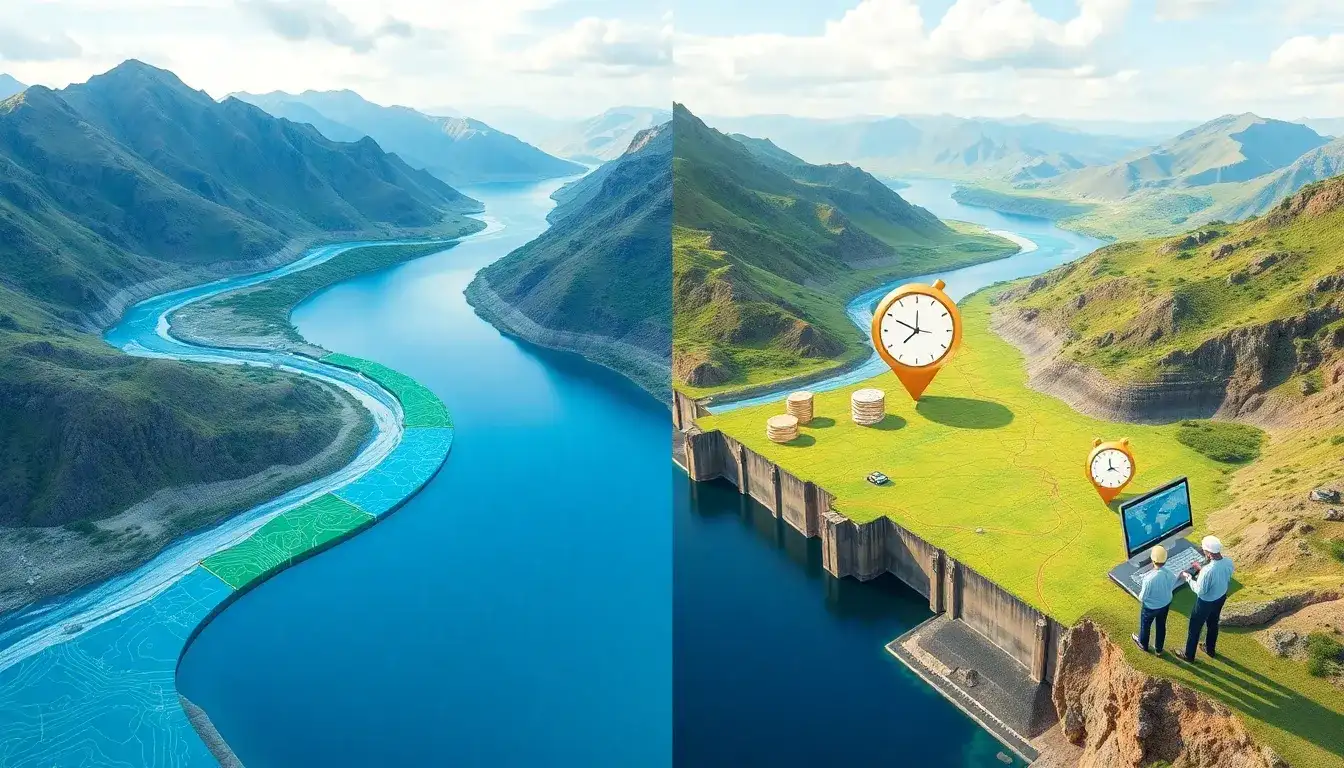
Geographic Information Systems (GIS) play a crucial role in reducing the time and cost associated with hydropower plant development through several mechanisms:
Role of GIS in Hydropower Plant Development
- Site Selection Efficiency:
- Feasibility Analysis: GIS allows for the efficient evaluation of potential sites based on criteria such as water discharge, head (vertical distance water falls), and stream power. This helps in identifying the most suitable locations without the need for extensive on-site assessments, thereby saving time and resources.
- GIS-Based Multi-Criteria Analysis (GIS-MCA): This method integrates various geographic and decision-making factors to assess different locations comprehensively. It enables decision-makers to prioritize sites based on multiple criteria, reducing the time and effort required for manual evaluations.
- Optimization and Planning:
- Algorithmic Simplification: New algorithms are being developed to simplify GIS-based preliminary planning and positioning optimization for small hydropower plants. These algorithms improve the accuracy and speed of planning by leveraging complex topographic and design parameters.
- Streamlining Design: By utilizing GIS for preliminary design phases, developers can ensure that potential sites are optimized for their specific characteristics, leading to more efficient use of resources during both planning and construction phases.
- Cost Reduction:
- Data-Driven Decision Making: GIS provides accurate and comprehensive data, enabling developers to make informed decisions that minimize the risk of costly mistakes during site selection and construction phases.
- Economic Gains: The use of GIS can result in economic benefits by optimizing resource allocation and reducing unnecessary expenses associated with incorrect site selection or inefficient plant design.
- Real-Time Monitoring and Management:
- Operational Efficiency: GIS systems enable real-time monitoring of hydropower plants, which helps in managing operations efficiently and adjusting to changing environmental conditions quickly. This capability reduces operational costs and enhances overall plant performance.
In summary, GIS technology significantly contributes to reducing both the time and cost of developing hydropower plants by improving site selection, optimizing planning, streamlining operations, and facilitating data-driven decision-making processes.
Original article by NenPower, If reposted, please credit the source: https://nenpower.com/blog/what-role-does-gis-play-in-reducing-the-time-and-cost-associated-with-hydropower-plant-development/

