

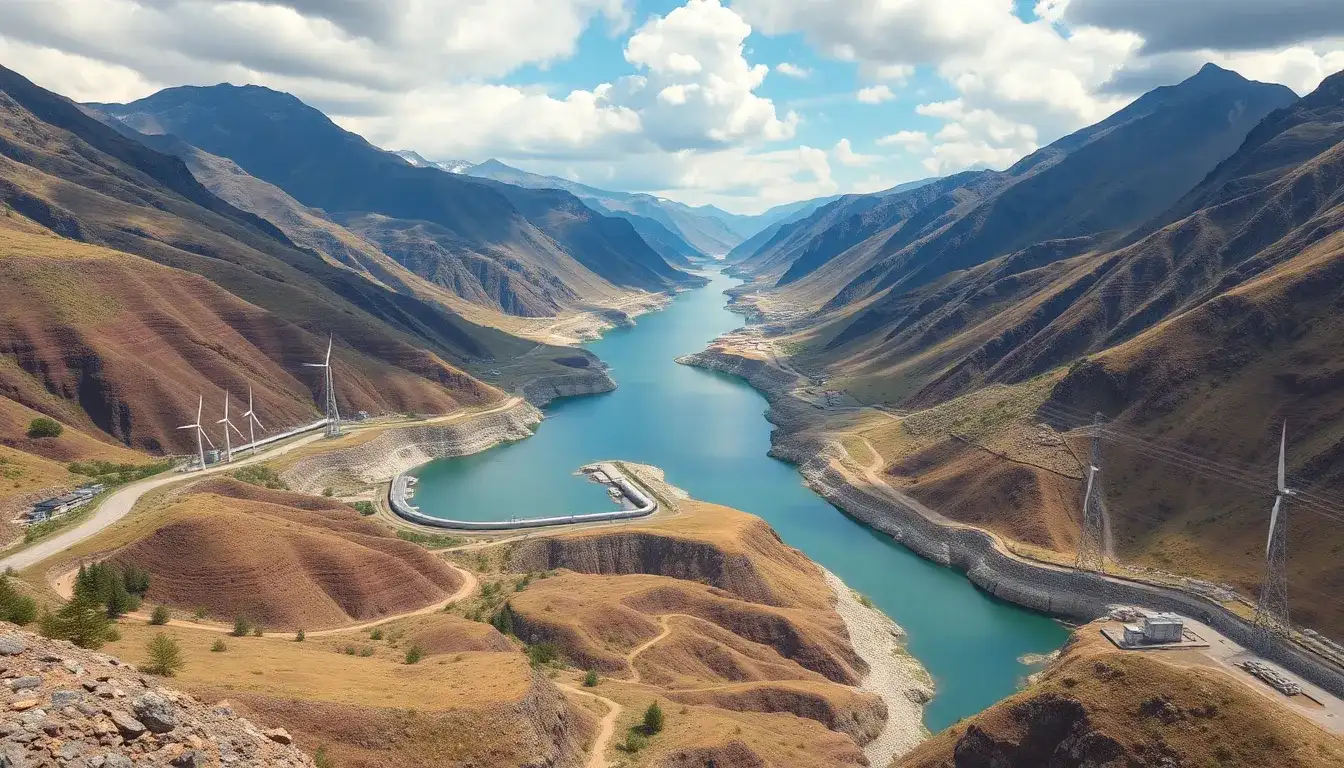
Geography plays a crucial role in the feasibility of pumped hydroelectric projects due to several key factors:
Key Geographic Factors Affecting Feasibility
1. Suitable Elevation Difference
Pumped hydroelectric storage relies on pumping water from a lower reservoir to a higher reservoir and then releasing it back down to generate electricity. A significant vertical height difference between these reservoirs is essential because it determines the potential energy storage capacity. The higher the water is stored, the more potential energy it holds, which increases the efficiency and economic viability of the project. However, if the distance (both vertical and horizontal) between reservoirs is too large, the energy consumed in pumping water can outweigh the benefits, making the project less feasible economically.
2. Topography and Terrain
Mountainous or hilly terrain is ideal because it naturally provides the elevation difference and hard rock formations suitable for constructing underground powerhouses and reservoirs. For example, the Cruachan Power Station in Scotland uses the natural geological features of the West Highlands: hard but workable granite-like rock (diorite and phyllite) that allowed safe tunneling and power station construction inside the mountain, coupled with abundant water supply in the region.
3. Availability of Water Resources
An adequate and reliable water source is necessary to maintain reservoir levels. The site must have enough water for initial filling and ongoing minimal makeup water to offset evaporation or seepage. Closed-loop systems that do not rely on existing rivers can reduce ecological impacts but still require appropriate topography and water management.
4. Environmental and Ecosystem Considerations
Geography also dictates the environmental impact and feasibility. Constructing reservoirs and dams can flood land, destroy forest, wildlife habitats, and alter water flow. Sites physically separated from existing river systems (off-channel or closed-loop reservoirs) can minimize impacts on aquatic ecosystems and reduce regulatory hurdles.
5. Proximity to Grid and Infrastructure
While not purely geographic, the location must also be considered in relation to the existing power grid for efficient integration and economic viability. Terrain and remoteness can affect construction and maintenance costs.
Summary Table of Geographic Considerations
| Geographic Factor | Impact on Feasibility | Explanation |
|---|---|---|
| Elevation difference | Critical for energy storage capacity and efficiency | Greater height = more potential energy |
| Terrain type | Influences construction ease and safety | Hard rock suitable for underground works |
| Water availability | Needed for reservoir filling and sustained operation | Abundance of water essential |
| Environmental sensitivity | Determines allowable project footprint and design | Minimizing impact on ecosystems |
| Distance between reservoirs | Affects energy used for pumping and economic viability | Shorter horizontal distance preferred |
| Proximity to grid and access | Influences implementation costs and grid integration | Must balance remoteness with practicality |
In conclusion, the geography of a site fundamentally defines whether a pumped hydroelectric project is viable by providing the necessary elevation difference, suitable terrain and geology, sufficient water resources, and minimal environmental disruption. This explains why suitable locations are limited and why geographic assessments form a central part of project planning.
Original article by NenPower, If reposted, please credit the source: https://nenpower.com/blog/what-role-does-geography-play-in-the-feasibility-of-pumped-hydroelectric-projects/

