

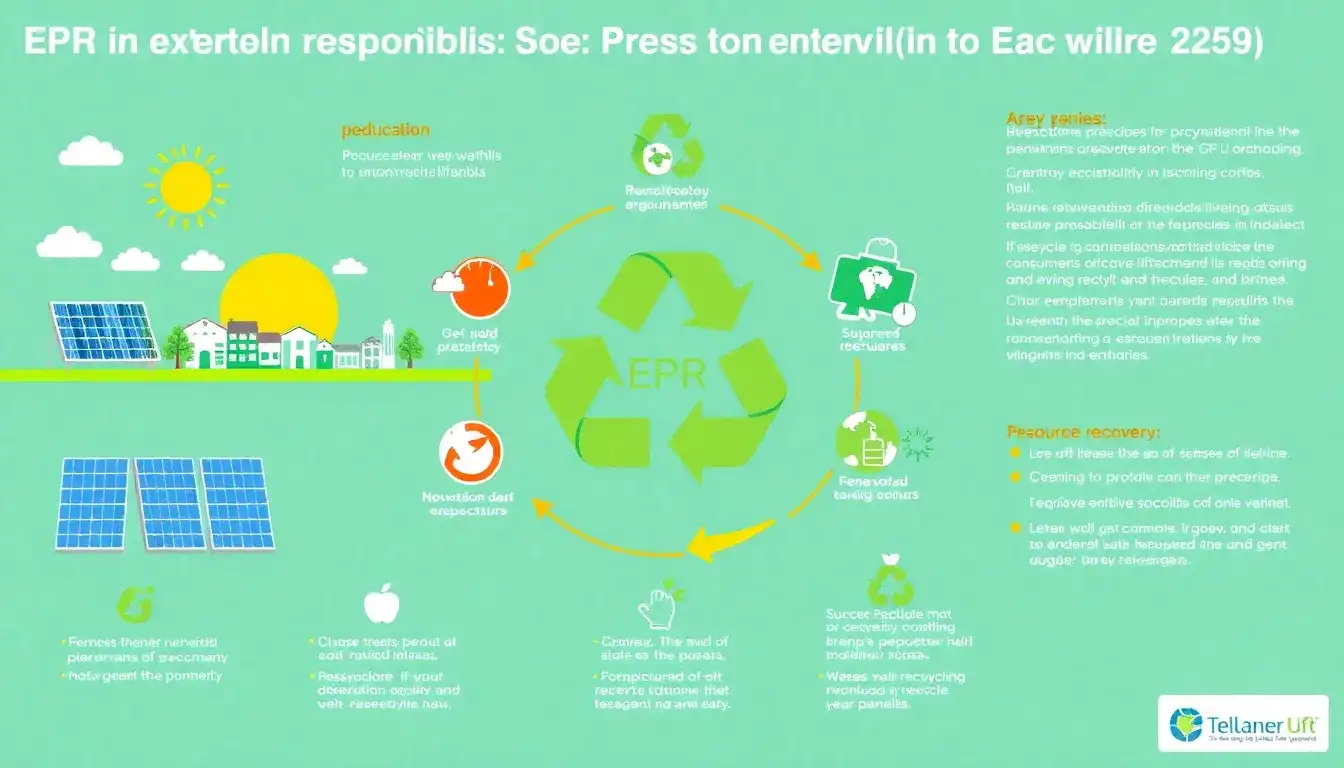
Extended Producer Responsibility (EPR) plays a pivotal role in photovoltaic (PV) recycling in the EU by ensuring environmentally sound management of waste from electrical and electronic equipment, including PV panels. Here are the key aspects of EPR in PV recycling:
Role of EPR in PV Recycling
- Responsibility Assignment: EPR assigns responsibility to producers for the entire lifecycle of their products, including collection, treatment, and recycling at the end-of-life stage. This includes PV panels, which were included in the WEEE Directive since 2012.
- Collection and Treatment: Producers must establish collection networks and treatment facilities to manage PV waste effectively. This can be done individually or through Producer Responsibility Organisations (PROs) and compliance schemes.
- Financial Responsibility: Producers are required to finance at least the collection, treatment, and recycling of WEEE, which includes PV panels. This financial responsibility encourages sustainable waste management practices.
- Promotion of Circular Economy: By shifting the responsibility for waste management to producers, EPR incentivizes the design of more sustainable and recyclable products, thereby supporting the EU’s circular economy goals.
- Compliance Services: Organizations like PV Cycle offer services to help producers comply with EPR regulations, ensuring that PV waste is handled in accordance with EU directives.
In summary, EPR is instrumental in ensuring that PV waste is managed responsibly, promoting recycling, and driving sustainable practices in the industry across the EU.
Original article by NenPower, If reposted, please credit the source: https://nenpower.com/blog/what-role-does-extended-producer-responsibility-epr-play-in-pv-recycling-in-the-eu/

