

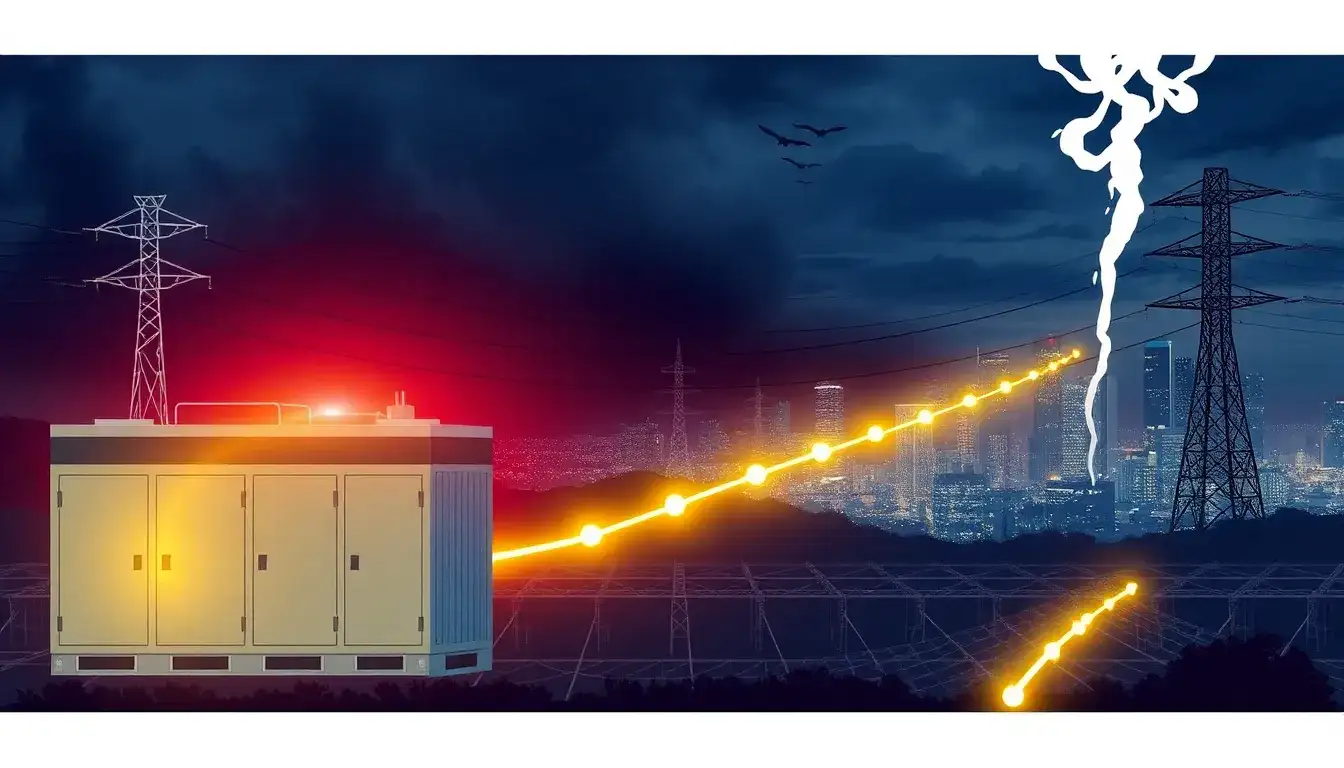
Energy storage, particularly through battery energy storage systems (BESS), plays a crucial role in providing voltage support during grid outages. Here’s how it contributes:
Key Functions of Energy Storage in Voltage Support
- Voltage Regulation: Energy storage systems, like BESS, can quickly adjust their power output to stabilize voltage levels on the grid. They can inject or absorb both real and reactive power to maintain a stable voltage, countering voltage fluctuations caused by disturbances or outages.
- Power Quality Management: By compensating for voltage variations and spikes, energy storage helps maintain power quality, ensuring that the grid operates within safe and efficient voltage limits. This reduces the risk of equipment damage and power outages.
- Rapid Response: Unlike traditional power generation systems, BESS can respond almost instantaneously to changes in grid conditions, making them ideal for addressing sudden voltage drops or surges during grid outages.
- Backup Power: Energy storage systems can provide backup power during outages, ensuring continuous electricity supply in critical areas. This is especially important for maintaining essential services during grid disruptions.
- Grid Resilience: By stabilizing voltage and ensuring power quality, energy storage systems contribute to overall grid resilience. They help maintain grid stability even when faced with sudden changes or disturbances.
In summary, energy storage systems like BESS are vital for maintaining grid stability and voltage support during outages, ensuring reliable and efficient power delivery even in challenging conditions.
Original article by NenPower, If reposted, please credit the source: https://nenpower.com/blog/what-role-does-energy-storage-play-in-voltage-support-during-grid-outages/

