

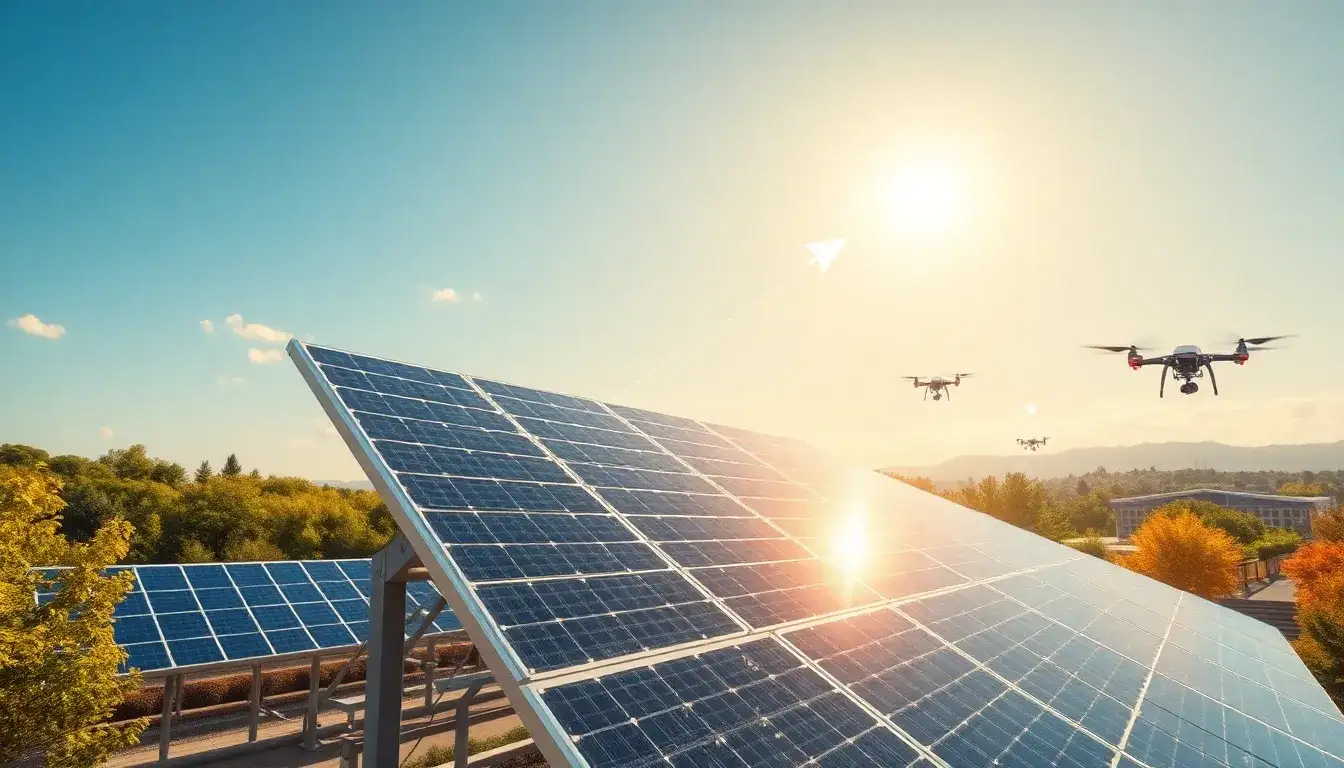
Computer vision plays a crucial role in optimizing solar tracking systems by enabling real-time, precise detection and tracking of the sun’s position to maximize solar energy capture. Its main contributions are outlined as follows:
Real-Time Sun Position Detection and Tracking
- Computer vision systems use cameras and advanced image processing techniques to visually identify the sun’s location in the sky. For instance, deep convolutional neural networks (CNNs), such as Alexnet, are trained to recognize and localize objects related to solar tracking like the sun, clouds, heliostats, and targets. This allows for accurate monitoring of the sun’s position even under varying weather conditions such as cloud cover.
- By continuously analyzing visual feedback, these systems dynamically adjust the orientation of solar panels or heliostats to maintain optimal alignment with the sun’s trajectory throughout the day, unlike fixed systems which have static positioning.
Enhancing Accuracy and Responsiveness
- Computer vision provides precise and responsive adjustments far beyond traditional mechanical or sensor-based tracking methods. The visual data enables the system to immediately respond to changes in sun position and environmental conditions, improving tracking performance and consequently boosting energy output.
- Experimental studies have shown that solar panels equipped with computer vision-based tracking can achieve significantly higher power output, for example up to about 85% more compared to fixed panels, especially during low sun angles when tracking precision is critical.
Integration with AI and Machine Learning
- Computer vision is often integrated with AI and machine learning algorithms to predict solar patterns, process vast amounts of data, and optimize the tracking strategy. This combined approach allows the system to learn from historical and real-time data, improving tracking accuracy and energy efficiency further.
- Cloud computing and IoT also complement computer vision by providing environmental data and sensor feedback to enhance the system’s decision-making and adaptability.
Summary
| Role of Computer Vision | Description |
|---|---|
| Sun Position Detection | Uses cameras and CNNs for real-time localization of the sun and relevant objects. |
| Dynamic Panel Alignment | Enables continuous adjustment of solar panels to the optimal angle for maximum solar capture. |
| Improved Accuracy and Responsiveness | Provides precise, rapid adjustments superior to traditional sensors. |
| Integration with AI and IoT | Works with AI algorithms and sensor data to predict solar patterns and optimize tracking. |
In essence, computer vision transforms solar tracking systems from static or sensor-limited setups into smart, visually guided systems that maximize solar energy harvest by leveraging real-time visual insights and AI-driven adaptations.
Original article by NenPower, If reposted, please credit the source: https://nenpower.com/blog/what-role-does-computer-vision-play-in-optimizing-solar-tracking-systems/

