

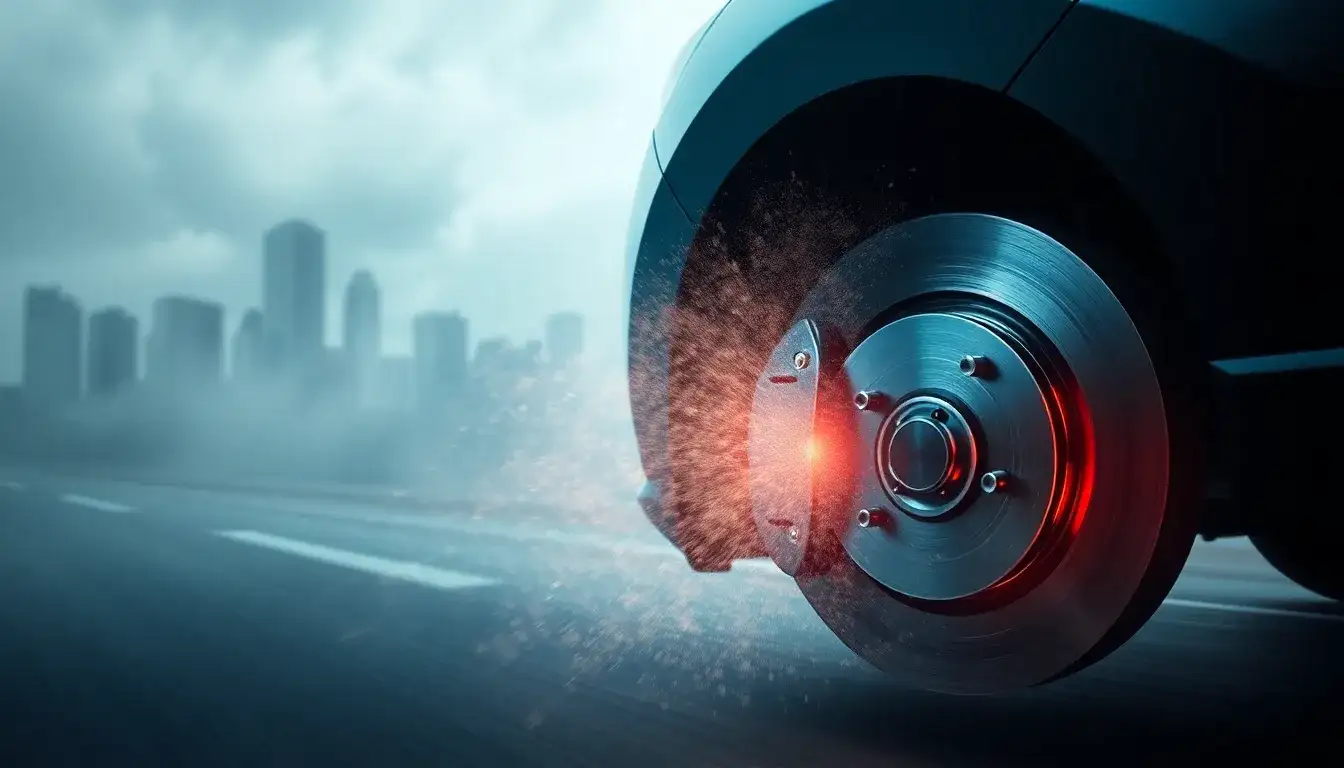
Brake wear plays a significant role in the emissions of PM2.5 (particulate matter with a diameter of 2.5 micrometers or less) from electric vehicles (EVs), constituting a major non-exhaust source of particulate pollution. This role emerges especially as electric vehicles produce no tailpipe exhaust emissions, shifting the focus to other particle sources such as brake wear.
Brake Wear and PM2.5 Emissions in Electric Vehicles
- Quantitative Emissions from EV Brakes: Studies measuring urban brake wear emissions specifically for electric powertrains have found emission factors ranging from about 1.5 to 2.1 mg PM2.5 per kilometer traveled by EVs. This indicates that even without engine combustion emissions, brake wear still contributes noticeably to PM2.5 pollution.
- Brake Wear Compared to Other Vehicle Types: Although electric vehicles do not emit exhaust particles, their brake wear particulate matter emissions occur at levels comparable to or slightly lower than conventional vehicles. For example, vehicle-level brake wear PM emission rates generally vary from 3.3 to 13.6 mg/mile, depending on brake pad material and driving conditions. Metallic brake pads tend to emit larger particles and more mass overall, which can influence PM2.5 emissions.
- Increasing Relative Importance: As exhaust emissions have significantly decreased due to advances like catalytic converters and particulate filters, brake wear (along with tire and road wear) has become a more dominant source of traffic-related PM2.5 emissions. This trend is expected to continue, making brake wear an increasingly important contributor to PM pollution in urban areas, including from electric vehicles.
- Health and Regulatory Concerns: The particulate emissions from brakes are critical not only because of the mass but because of the particle size and chemical composition — smaller particles penetrate deeper into the lungs and can carry toxic metals if present in brake materials. New regulations such as the European Union’s Euro VII standards are starting to address brake wear emissions directly, highlighting the need to control these non-exhaust sources from all vehicles, including EVs.
- Estimated Emission Factors and Variability: The UK National Atmospheric Emissions Inventory (NAEI) estimates average brake wear PM2.5 emission factors of about 3 mg per km per vehicle, with variability depending on factors such as braking intensity and vehicle weight. The U.S. EPA’s MOVES model shows a range of 1.0 to 9.6 mg/km for brake wear PM2.5 emissions depending on vehicle types, indicating the complexity in quantifying these emissions accurately.
Summary
Brake wear is a significant contributor to PM2.5 emissions from electric vehicles, as it remains a primary source of particulate pollution in the absence of tailpipe emissions. These particles originate from the friction between brake pads and rotors and can vary based on brake material and driving behavior. With the reduction of exhaust emissions, brake wear emissions from EVs are becoming increasingly important for urban air quality and public health and are the target of emerging regulatory standards to reduce particulate pollution.
Thus, controlling brake wear emissions will be critical for minimizing overall PM2.5 pollution from electric vehicles as they become more widespread.
Original article by NenPower, If reposted, please credit the source: https://nenpower.com/blog/what-role-does-brake-wear-play-in-the-pm2-5-emissions-from-electric-vehicles/

