

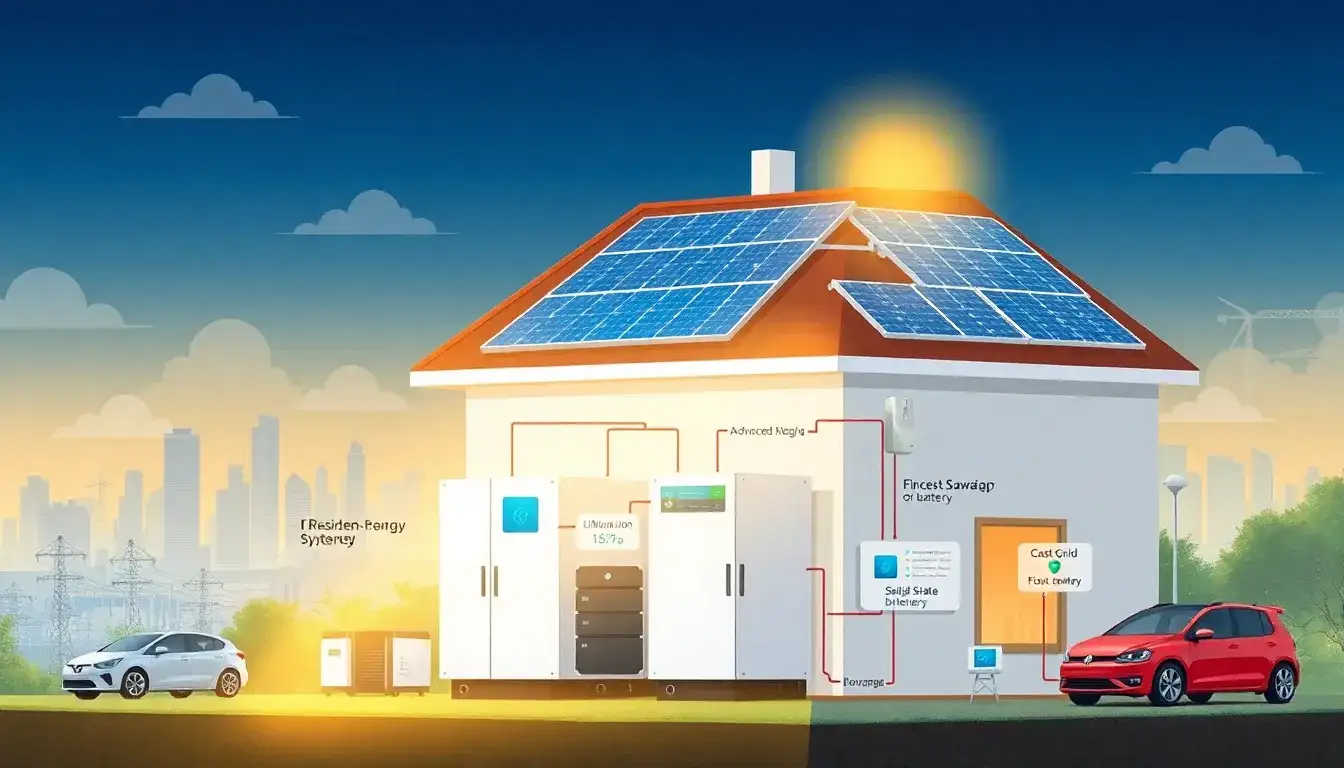
Battery technology plays a crucial role in the cost of residential energy storage systems by influencing both the pricing and functionality of these systems. Here are some key aspects of how battery technology impacts the cost:
Role of Battery Technology in Cost Reduction
- Cost per Kilowatt-Hour (kWh): Advances in battery technology have significantly reduced costs over the years. For instance, the cost of home battery storage has dropped to about $1,133 per kWh, reflecting a 16% decrease from the previous year. Streamlined manufacturing processes, especially in China, and lower material costs have contributed to these reductions.
- Efficiency and Capacity: Improved efficiency and higher storage capacities in batteries allow for better energy utilization, reducing the need for larger (and more expensive) systems. This efficiency also prolongs the battery lifespan, which lowers the total cost of ownership over time.
Impact on System Design and Installation
- System Design: Battery technology advancements enable more flexible and efficient system designs. For example, Tesla’s Powerwall 3 offers higher power and capacity at competitive pricing, around $1,000 per kWh.
- Installation Costs: While battery costs have decreased, installation costs remain a significant factor. Professional installation often involves additional expenses for components like inverters and accessories. However, improvements in battery design can simplify installation processes, potentially reducing labor costs.
Future Prospects
- Innovation in Battery Chemistries: Researchers are exploring new battery chemistries (e.g., sodium-ion, magnesium-ion) that could offer even lower costs and improved safety. These developments have the potential to disrupt the current market by providing more affordable and sustainable storage solutions.
- Integration with Renewable Energy Sources: Residential energy storage systems can optimize the use of solar panels by storing excess energy generated during the day for use at night. This integration enhances self-supply and reduces reliance on grid power, contributing to cost savings.
In summary, battery technology is central to the affordability and functionality of residential energy storage systems, driving cost reductions, improving efficiency, and supporting integration with renewable energy sources.
Original article by NenPower, If reposted, please credit the source: https://nenpower.com/blog/what-role-does-battery-technology-play-in-the-cost-of-residential-energy-storage-systems/

