

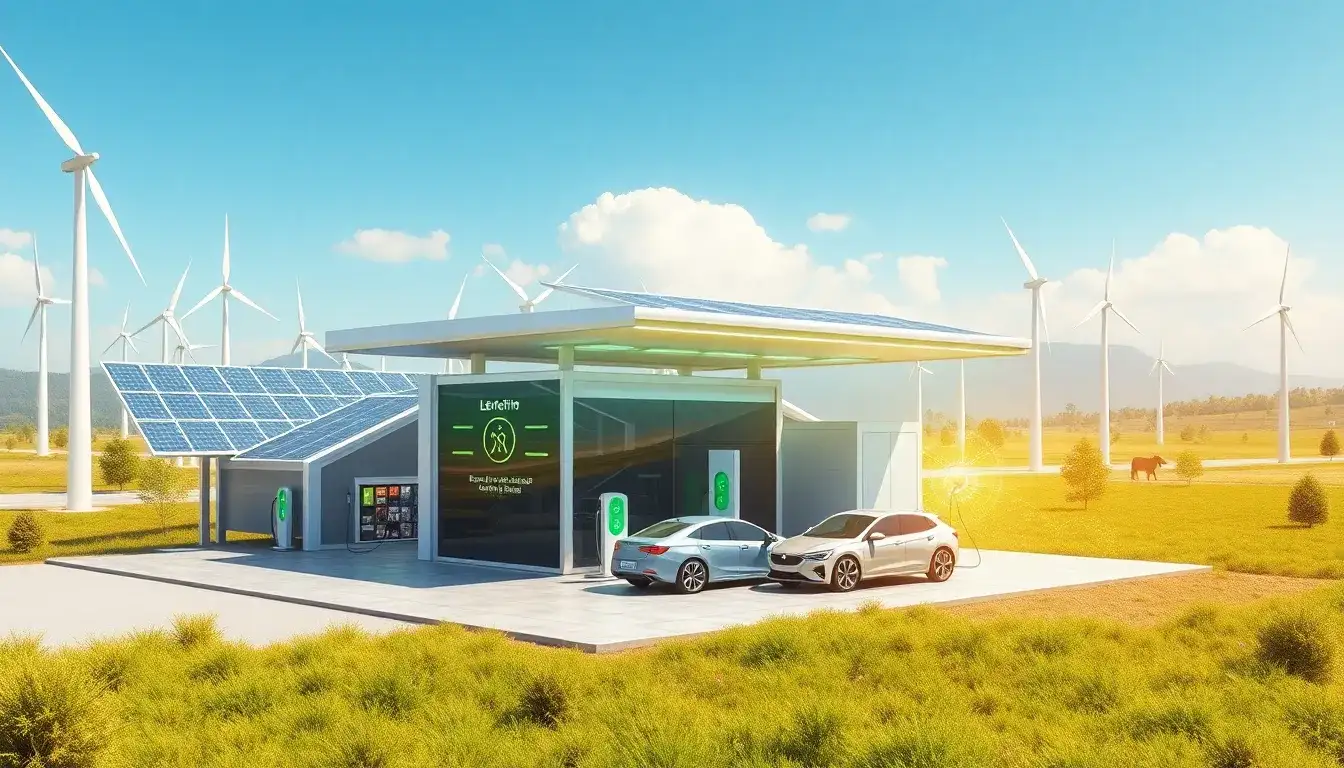
Battery storage plays a critical role in renewable energy-based EV charging stations by enhancing capacity, grid stability, cost efficiency, and reliability. Here are the key roles it fulfills:
Key Roles of Battery Storage in Renewable Energy-Based EV Charging
1. Increasing Charging Capacity and Avoiding Grid Overload
Battery energy storage systems (BESS) store excess electricity generated during periods of low grid demand or high renewable energy generation. This stored energy can then be released during peak EV charging demand. This buffering prevents overloading the local electricity network and reduces the need for costly and time-consuming grid infrastructure upgrades.
2. Power Boost and Load Balancing
By supplying power from the battery during simultaneous charging of multiple EVs, battery storage enables a “power boost” that allows fast and efficient EV charging without requiring a proportional draw from the grid. The storage system distributes energy evenly across multiple charging points, preventing high instantaneous power draw or peak loads that cause demand charges and grid stress.
3. Peak Shaving and Energy Cost Management
Electricity prices often fluctuate, with higher rates during peak demand periods. Battery storage enables stations to perform peak shaving by discharging stored electricity during these high-cost times and recharging batteries during off-peak hours when energy is cheaper. This optimizes operational costs and reduces financial burden.
4. Supporting Grid Resilience and Reliability
Battery storage enhances the resilience of EV charging infrastructure by maintaining power supply stability during grid fluctuations or outages. This is particularly important for renewable energy sources, which can be intermittent. The storage system ensures a reliable charging service regardless of renewable generation variability or grid stress.
5. Enabling EV Charging in Locations with Limited Grid Capacity
For areas with limited or weak grid infrastructure, battery storage allows deployment of EV fast charging stations without immediate grid upgrades, thus accelerating infrastructure expansion and access to EV charging.
In summary, battery storage integrated with renewable energy-based EV charging stations acts as an energy buffer that balances supply and demand, improves grid interaction, reduces costs, and provides a reliable, scalable charging solution that supports a sustainable transportation ecosystem.
Original article by NenPower, If reposted, please credit the source: https://nenpower.com/blog/what-role-does-battery-storage-play-in-renewable-energy-based-ev-charging-stations/

