

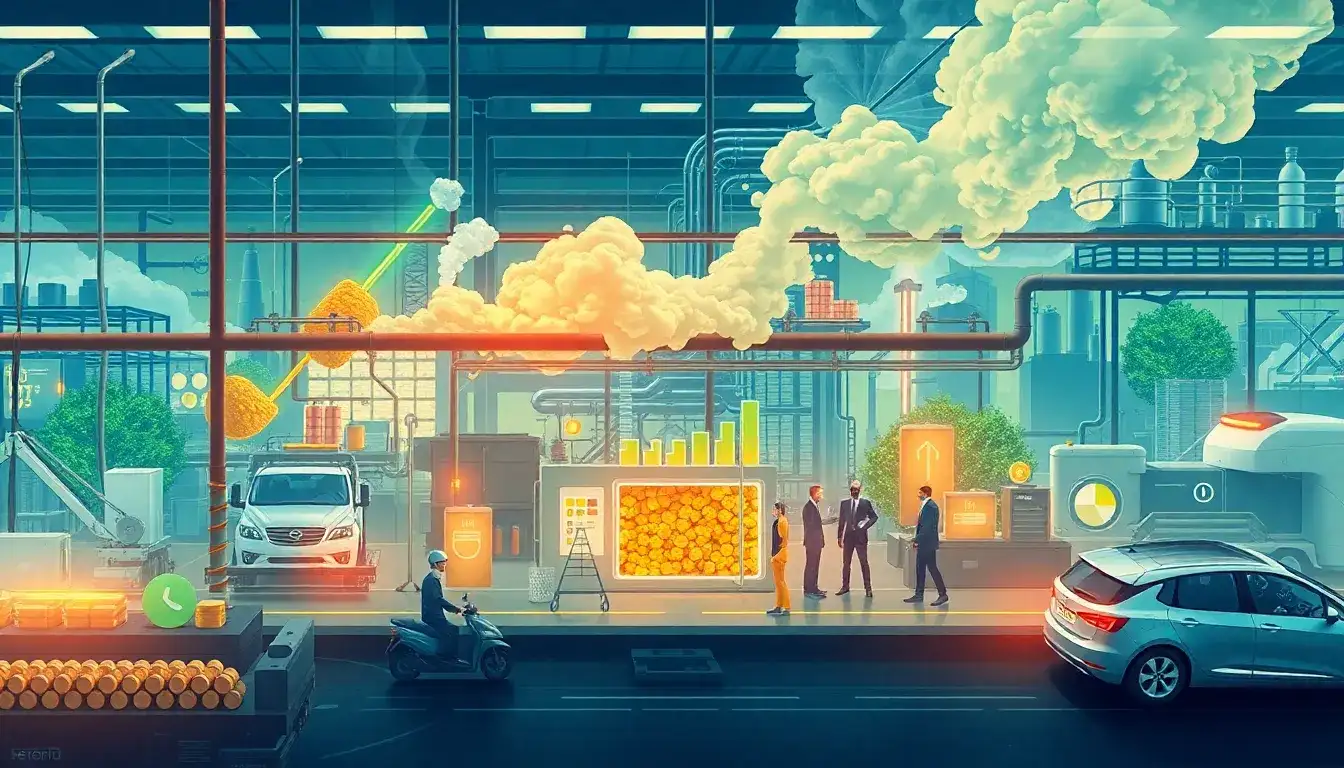
Battery production plays a significant role in the overall emissions of electric vehicles (EVs), primarily due to the materials and energy used in the manufacturing process. Here are key points highlighting its impact:
Impact of Battery Production on EV Emissions
- Carbon Footprint: Battery production is responsible for a substantial portion of an EV’s lifecycle emissions. Studies indicate that EV production, particularly the battery, emits more than seven tons of CO2e for a typical 75-kWh battery pack, significantly adding to the vehicle’s overall carbon footprint. The carbon footprint of EVs is roughly double that of internal combustion engine (ICE) vehicles.
- Material Extraction: The mining and refining of materials like nickel, manganese, cobalt, lithium, and graphite for battery production release substantial amounts of greenhouse gases. Different battery chemistries and materials have varying emissions impacts.
- Energy Consumption: The production process involves energy-intensive operations such as high-temperature processing for anode and cathode materials. The source of energy (renewable vs. fossil fuel) can significantly affect emissions levels.
- Emissions per Kilowatt-Hour: Research studies vary, but they generally find that battery production emits between 56 and 494 kilograms of CO2 per kilowatt-hour of battery capacity.
- Lifecycle Emissions: Although EVs have zero tailpipe emissions during operation, their lifecycle emissions include production phase emissions. Overall lifecycle emissions depend on both production emissions and the emissions associated with generating the electricity used by the vehicle.
- Variability and Uncertainty: There is significant variability and uncertainty in assessing lifecycle emissions due to differences in methods, materials, and production locations.
Mitigation Strategies
Mitigating the carbon footprint of battery production involves strategies such as:
- Renewable Energy Use: Transitioning to renewable energy sources during production can significantly reduce emissions.
- Efficiency Improvements: Enhancing production efficiency and reducing energy consumption can minimize emissions.
- Sustainable Material Sourcing: Ensuring materials are sourced in an environmentally responsible manner can help lower environmental impacts.
- Closed-Loop Recycling: Developing closed-loop recycling systems for battery materials could reduce reliance on primary material extraction and lower emissions.
Original article by NenPower, If reposted, please credit the source: https://nenpower.com/blog/what-role-does-battery-production-play-in-the-overall-emissions-of-evs/

