

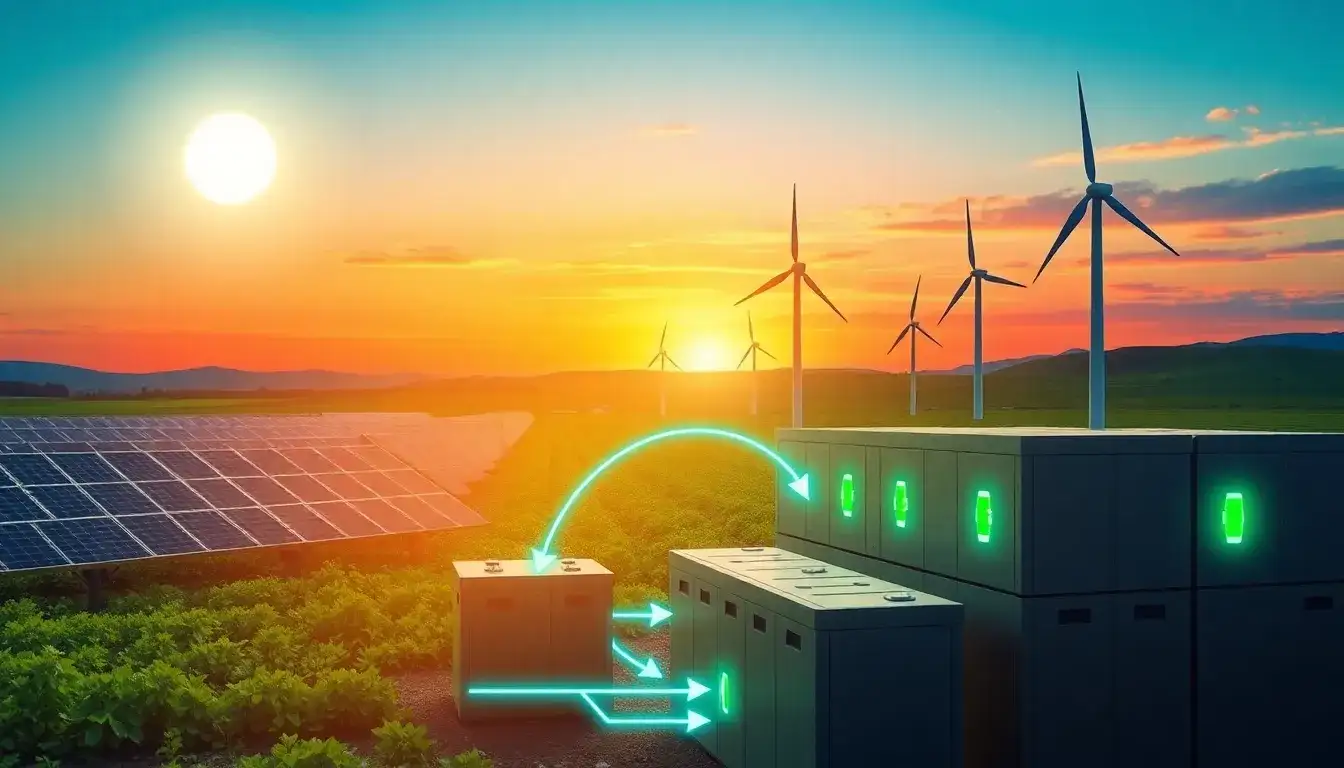
Battery energy storage systems (BESS) play a crucial role in integrating renewable energy sources like wind and solar into the power grid by addressing their inherent variability and intermittency. Here are the key roles and benefits of battery energy storage in renewable integration:
Key Roles of Battery Energy Storage in Renewable Integration
-
Smoothing Intermittency and Variability
Renewable sources such as solar and wind generate power inconsistently depending on weather conditions and time of day. BESS can store excess electricity produced during periods of high renewable output and release it during times when renewable generation is low or demand peaks, thus smoothing out fluctuations and maintaining a stable power supply. -
Matching Supply and Demand
Grid operators must continuously balance electricity supply with demand. Battery storage enables this by charging when renewable generation exceeds demand and discharging during peak demand periods. This reduces reliance on fossil-fuel peaking plants and helps maintain grid stability and reliability. -
Providing Grid Services
Besides energy shifting, batteries provide fast-response ancillary services such as frequency regulation, load following, and emergency grid support. These capabilities help manage short-term variability and maintain grid frequency and voltage stability as renewable penetration grows. -
Enabling Higher Renewable Penetration
By offsetting the variability of renewables, battery storage allows grids to accommodate higher shares of wind and solar energy without compromising reliability. This facilitates decarbonization efforts and helps meet net-zero carbon targets. -
Supporting Off-Grid and Isolated Grids
In remote or island communities relying on costly diesel generators, BESS paired with renewables can provide a more stable, economical, and cleaner power supply by storing excess renewable energy and ensuring consistent delivery. -
Enabling Self-Consumption and Cost Optimization
At residential and commercial scales, batteries allow consumers to store solar energy during the day and use it later, reducing dependence on the grid and lowering electricity bills. This also encourages the adoption of renewables by improving their economic attractiveness. -
Reducing Carbon Emissions and Fossil Fuel Dependence
By storing renewable energy for use during non-generation periods, batteries help decrease the need for fossil fuel backup generation, leading to lower greenhouse gas emissions and air pollution.
Additional Insights
- Battery technology is rapidly evolving, with lithium-ion batteries currently dominant but other forms like flow batteries and mechanical storage also in use or development.
- While battery costs are falling, initial investment and maintenance remain barriers to widespread adoption, though long-term savings and governmental incentives support growth.
- The global market for battery energy storage is expanding swiftly, with utility-scale and behind-the-meter residential systems both growing significantly.
- Battery storage systems are controlled by intelligent software that optimizes when to store and release energy based on grid conditions and demand, maximizing efficiency and cost-effectiveness.
Summary
Battery energy storage acts as a vital enabler for renewable energy integration by mitigating the challenges posed by the intermittent nature of wind and solar power. It enhances grid stability, enables higher penetration of renewables, supports energy self-consumption, and reduces reliance on fossil fuels. As battery technologies improve and costs decline, their role in the transition towards a more sustainable, reliable, and decarbonized energy system will only increase.
Original article by NenPower, If reposted, please credit the source: https://nenpower.com/blog/what-role-does-battery-energy-storage-play-in-integrating-renewable-energy-sources/

