

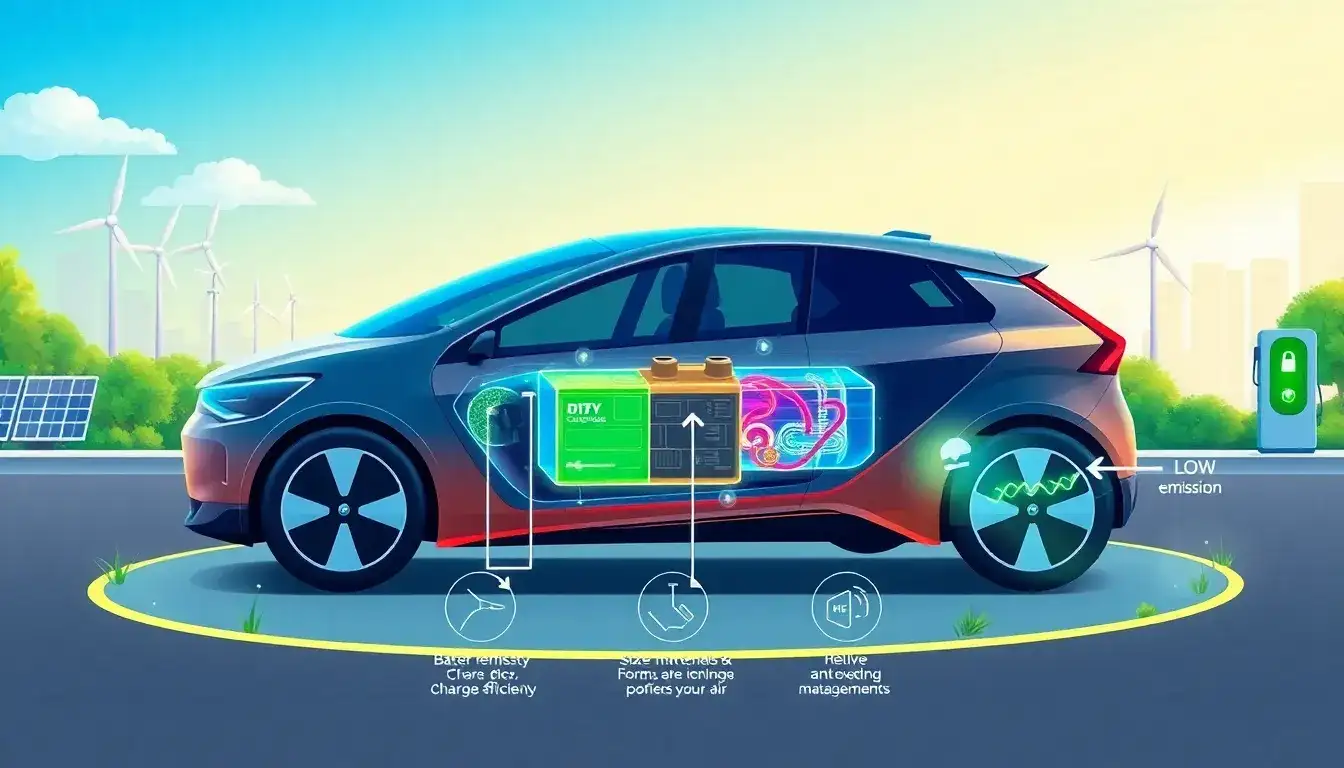
Battery design plays a crucial role in reducing emissions from plug-in hybrid electric vehicles (PHEVs) through several key factors:
Battery Chemistry and Emissions
- Shifting battery chemistry from nickel-based batteries (e.g., NMC: nickel manganese cobalt) to lithium iron phosphate (LFP) batteries can substantially lower emissions. Nickel extraction and refinement produce significant sulfur dioxide (SO₂) emissions, especially from sulfide ores. LFP batteries avoid these high SO₂ emissions since they do not use nickel, resulting in lower environmental impact during battery production.
- Lifecycle emissions from battery production vary by chemistry: critical minerals processing accounts for about 55% of total emissions for NMC batteries but only 35% for LFP; in contrast, battery manufacturing emissions are almost 50% of total emissions for LFP versus 15% for NMC. This indicates that LFP has a comparatively cleaner production footprint, especially if low-carbon electricity is used.
Design Features that Reduce Emissions
- Increasing the energy density of batteries decreases the amount of raw material needed per unit of energy stored. This reduces material extraction and processing emissions, indirectly lowering overall PHEV emissions.
- Recycling of battery materials, particularly cathode active materials, also helps reduce emissions by lessening the need for virgin mineral extraction and processing.
- Using electricity from low-carbon sources to power battery manufacturing further cuts emissions associated with battery production.
Impact on Vehicle Emissions
- The battery design influences how effectively a PHEV can operate in all-electric mode and reduce tailpipe emissions. Better battery capacity and efficiency enable more frequent electric-only driving, which produces zero tailpipe emissions, thereby lowering overall greenhouse gas emissions.
- However, emission reductions depend also on how much the vehicle uses the battery versus the gasoline engine, and increasing PHEV charging rates and battery utilization maximizes emission benefits.
Summary
Battery design affects PHEV emissions primarily by:
- Choosing cleaner battery chemistries like LFP to reduce upstream emissions from raw materials and manufacturing;
- Enhancing energy density to minimize material use;
- Promoting recycling to limit mining impacts;
- Utilizing low-carbon electricity in production;
- Enabling greater electric driving range to cut gasoline use and tailpipe emissions.
Thus, well-designed batteries are a critical lever for reducing both the lifecycle and operational emissions of PHEVs, helping them contribute meaningfully to emission reduction goals when combined with effective charging and driving practices.
Original article by NenPower, If reposted, please credit the source: https://nenpower.com/blog/what-role-does-battery-design-play-in-reducing-emissions-from-phevs/

