

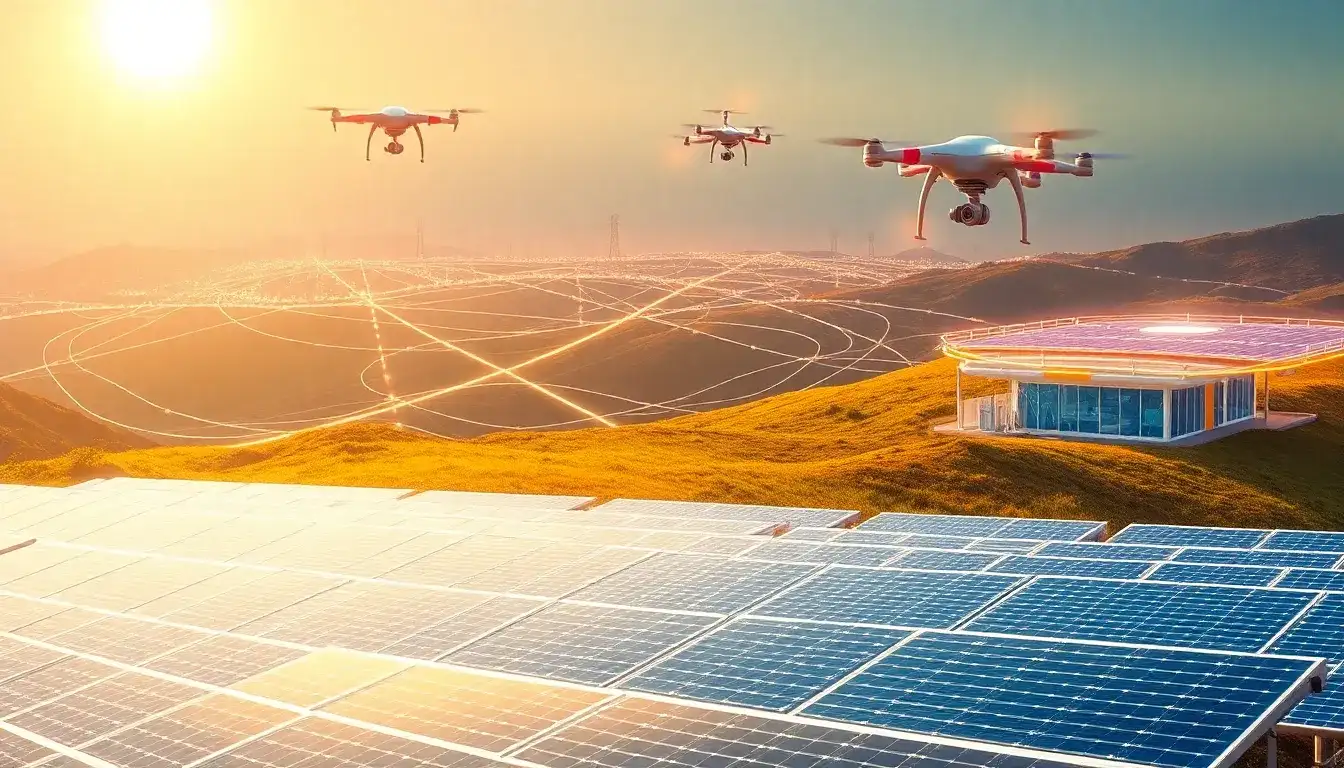
AI plays a crucial role in integrating solar trackers with smart grids by enhancing the efficiency, reliability, and management of solar energy systems in several key ways:
Enhanced Solar Tracking Precision and Energy Capture
AI-powered solar trackers use real-time data—such as sunlight intensity, wind speed, and voltage—to dynamically adjust the angle of solar panels for optimal energy capture. This precise tracking ensures maximum solar irradiance utilization, improving overall energy output even under fluctuating environmental conditions. Machine learning algorithms analyze sensor data from photovoltaic panels to continuously optimize tracking accuracy and system performance.
Real-Time Monitoring, Fault Detection, and Predictive Maintenance
AI-enabled systems continuously monitor solar panel performance and related equipment in real time. By analyzing vast amounts of sensor data, AI detects inefficiencies, anomalies, and faults quickly, enabling rapid troubleshooting and minimizing downtime. Predictive maintenance powered by AI anticipates equipment failures before they occur, reducing costly repairs and enhancing system reliability.
Intelligent Energy Forecasting and Grid Balancing
AI models forecast solar energy production using historical data and weather predictions. This accurate energy forecasting helps grid operators balance supply and demand more effectively, crucial for integrating the variable output of solar power into the grid. It reduces reliance on fossil fuel backup and improves grid stability.
Optimized Integration with Smart Grid Infrastructure
AI facilitates intelligent grid integration by managing energy flows between solar installations, energy storage systems, and other power plants. It optimizes charging and discharging cycles of batteries to maximize storage efficiency and lifespan. Moreover, AI-driven smart grids adapt to decentralized and fluctuating solar power inputs, ensuring consistent and reliable energy distribution across the network.
Demand-Side Management and Grid Resilience
AI supports demand-side management by predicting consumption patterns and dynamically adjusting energy distribution. This capability allows smart grids to respond adaptively to changes in energy supply and demand, enhancing resilience against disruptions and accommodating increasing solar adoption among households and businesses.
Summary Table of AI Roles in Solar Tracker and Smart Grid Integration
| Role | Description | Benefits |
|---|---|---|
| Solar Tracking Optimization | AI adjusts solar panel angles in real-time for max energy capture | Increased solar energy output |
| Real-Time Monitoring & Fault Detection | Continuous performance tracking and anomaly detection | Reduced downtime, faster maintenance |
| Predictive Maintenance | Early failure prediction based on data analytics | Lower repair costs, improved system longevity |
| Energy Forecasting | Predicting solar energy production using weather and historical data | Better grid balancing, reduced fossil fuel use |
| Grid Integration & Energy Storage Management | Intelligent control of energy flow and battery cycles | Enhanced grid stability and energy efficiency |
| Demand-Side Management | Adjusting supply based on consumption patterns | Improved grid resilience and reliability |
In conclusion, AI is foundational to the effective integration of solar trackers with smart grids by enabling precise, adaptive control of solar energy generation and distribution. It maximizes energy harvest, improves system reliability, and ensures stable and sustainable grid operation as solar penetration increases.
Original article by NenPower, If reposted, please credit the source: https://nenpower.com/blog/what-role-does-ai-play-in-the-integration-of-solar-trackers-with-smart-grids/

