

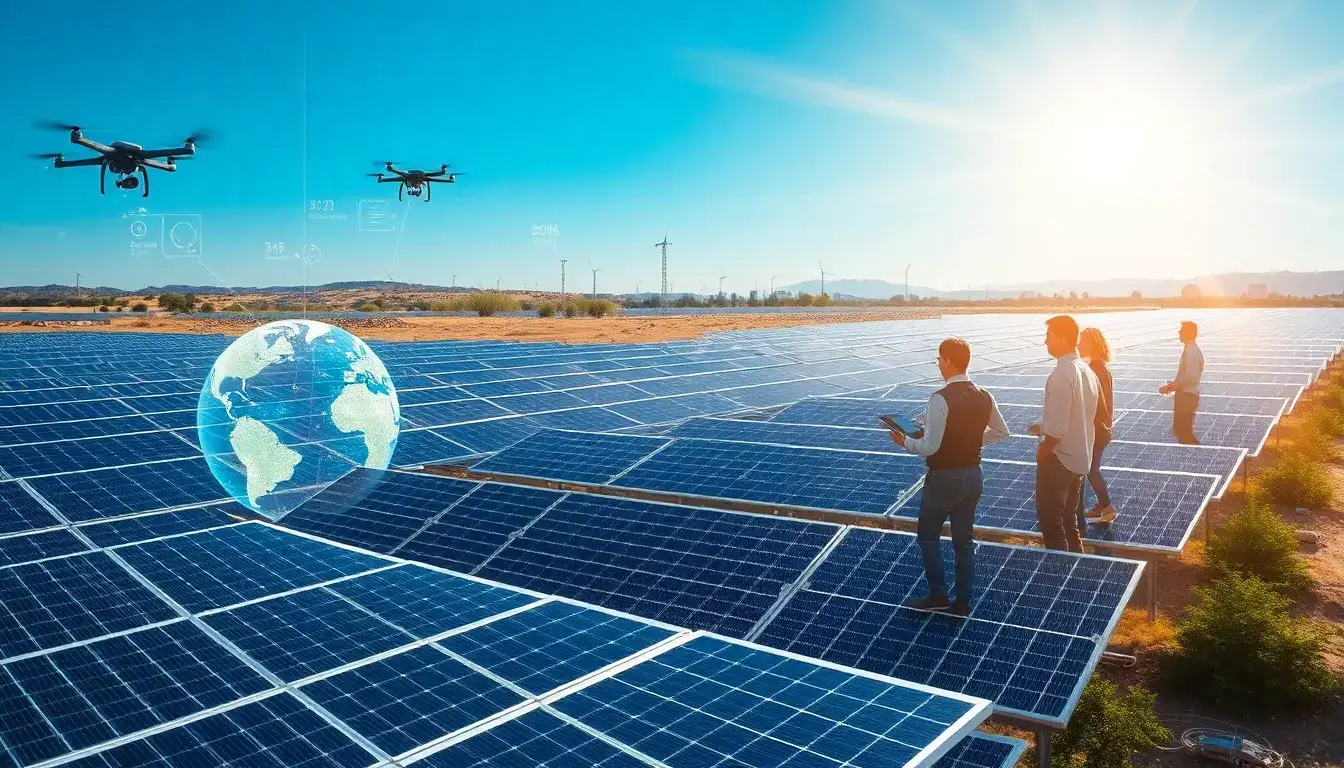
AI plays a multifaceted role in optimizing solar panel efficiency by leveraging machine learning, real-time data analysis, and advanced predictive techniques. Here are the key ways AI enhances solar panel performance:
Real-Time Optimization of Panel Orientation and Efficiency
AI uses machine learning algorithms to continuously adjust the tilt and orientation of solar panels in real-time, ensuring they capture the maximum possible sunlight throughout the day despite changing environmental conditions. This dynamic repositioning can increase energy yields by up to 25% by maximizing sunlight absorption regardless of cloud cover or sun position.
Predictive Maintenance and Fault Detection
AI systems analyze sensor data and performance metrics to detect faults or inefficiencies early—often before they significantly impact energy output. By predicting potential failures or degradation, AI enables proactive maintenance scheduling, which reduces costly downtime, extends solar panel lifespan, and lowers operational costs by around 30%.
Weather Forecasting and Energy Management
AI integrates weather data such as cloud cover, temperature, and irradiance predictions to forecast energy production more accurately. This allows solar systems to preemptively adjust settings or manage energy storage and consumption. Improved forecasting helps stabilize grid integration and optimize load balancing, reducing reliance on fossil fuels.
Energy Yield Prediction and Optimization
By analyzing historical and real-time data, AI models predict solar energy output with high accuracy. This insight supports better system design, resource allocation, and operational planning, maximizing energy utilization and return on investment.
Automated Monitoring and Performance Analytics
AI continuously monitors vast datasets from IoT sensors embedded in solar farms, analyzing metrics like volts, units produced, and capacity in real time. This enables immediate detection of shading, debris, or panel underperformance. AI-powered drones also assist in surveying panels to identify defects or cleanliness issues, facilitating timely interventions.
Cost Reduction and Financial Optimization
By identifying inefficiencies and optimizing operational strategies, AI reduces maintenance expenses and enhances financial outcomes for solar projects. The ability to handle complex data integration and deliver actionable insights helps solar operators cut costs while improving productivity and scalability.
Scalability and Grid Integration Support
Advanced AI techniques, including reinforcement learning and long short-term memory networks, allow solar systems to scale from small installations to large solar farms and microgrids. AI supports efficient energy distribution, aids in microgrid management, and facilitates smooth integration with existing power grids.
Summary Table of AI Roles in Solar Panel Efficiency Optimization
| AI Function | Description and Benefits |
|---|---|
| Real-Time Orientation | Dynamic adjustment of solar panels to maximize sunlight capture, increasing energy yields by ~25% |
| Predictive Maintenance | Early fault detection to reduce downtime and costly repairs, lowering maintenance costs by ~30% |
| Weather Forecasting | Uses weather data to forecast energy output and optimize energy management |
| Energy Yield Prediction | Accurate prediction models for system design and energy planning |
| Automated Monitoring | Real-time data analysis from sensors and drones for immediate problem identification |
| Cost and Financial Optimization | Identifies inefficiencies for cost savings and ROI improvement |
| Grid Integration and Scalability | Supports stable grid connection and management of large-scale solar farms and microgrids |
In conclusion, AI transforms solar energy systems by enabling smart, data-driven control and predictive analytics that optimize performance, reduce costs, and enhance sustainability. These innovations are pivotal in advancing solar power as a reliable and efficient renewable energy source.
Original article by NenPower, If reposted, please credit the source: https://nenpower.com/blog/what-role-does-ai-play-in-optimizing-the-efficiency-of-solar-panels/

