

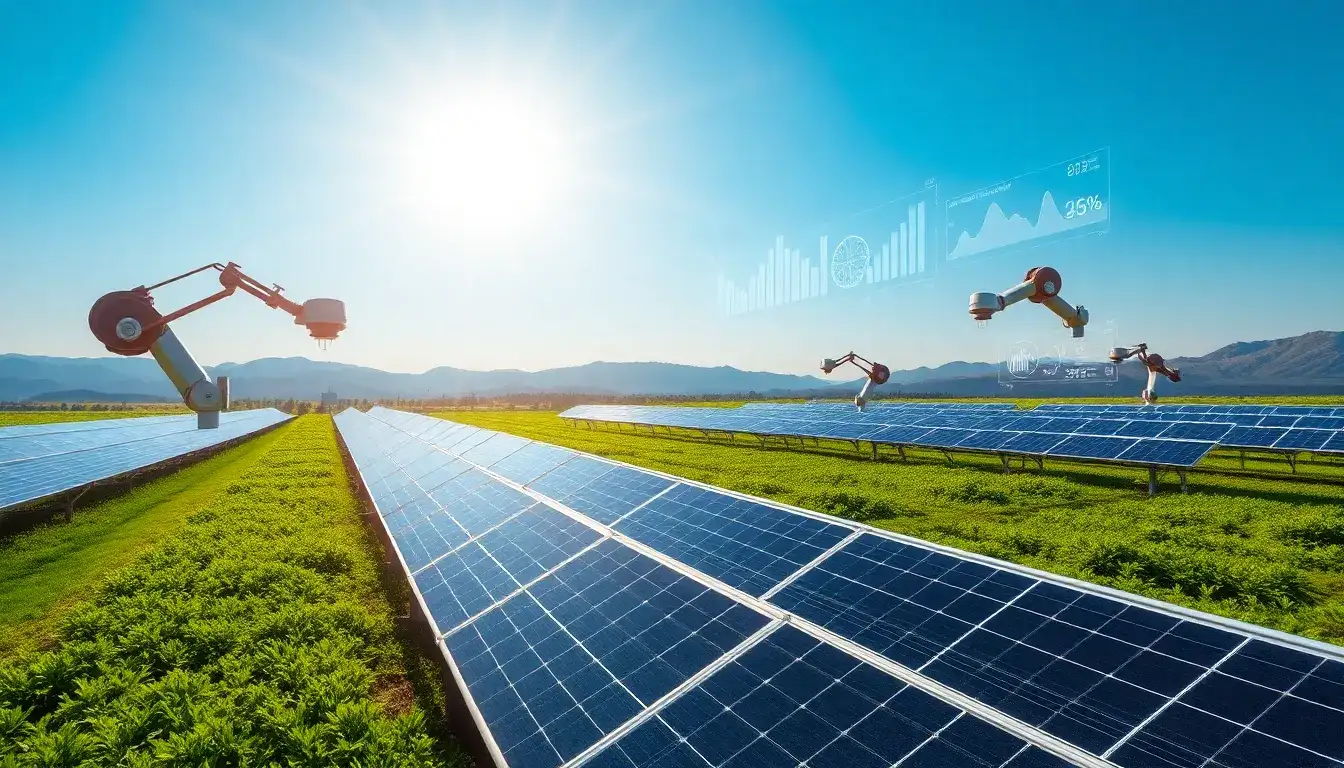
AI plays a crucial role in optimizing solar panel efficiency by leveraging advanced algorithms and machine learning techniques to enhance performance and reduce operational costs. Here are some key ways AI contributes to solar panel optimization:
1. Real-Time Data Analysis
AI systems can analyze vast amounts of data in real-time, including weather patterns, solar irradiance levels, and historical performance data. This allows AI to make informed decisions that maximize energy output by adjusting settings dynamically according to changing conditions.
2. Dynamic Optimization of Panel Orientation
AI adjusts the orientation and tilt angles of solar panels in real-time to capture the maximum amount of sunlight throughout the day, regardless of changing conditions such as cloud cover.
3. Energy Management and Grid Alignment
AI implements dynamic energy management strategies to align energy consumption with grid demands, ensuring efficient energy distribution and usage.
4. Advanced Materials Optimization
AI-driven techniques, such as combining machine learning with physics-based simulations, are used to optimize the efficiency of advanced solar cell materials, like perovskite solar cells.
5. Operational Cost Reduction
By optimizing solar panel performance and anticipating maintenance needs, AI helps reduce operational costs associated with solar energy systems.
Overall, AI significantly enhances the efficiency and performance of solar energy systems, contributing to a more efficient and sustainable renewable energy sector.
Original article by NenPower, If reposted, please credit the source: https://nenpower.com/blog/what-role-does-ai-play-in-optimizing-solar-panel-efficiency/

