

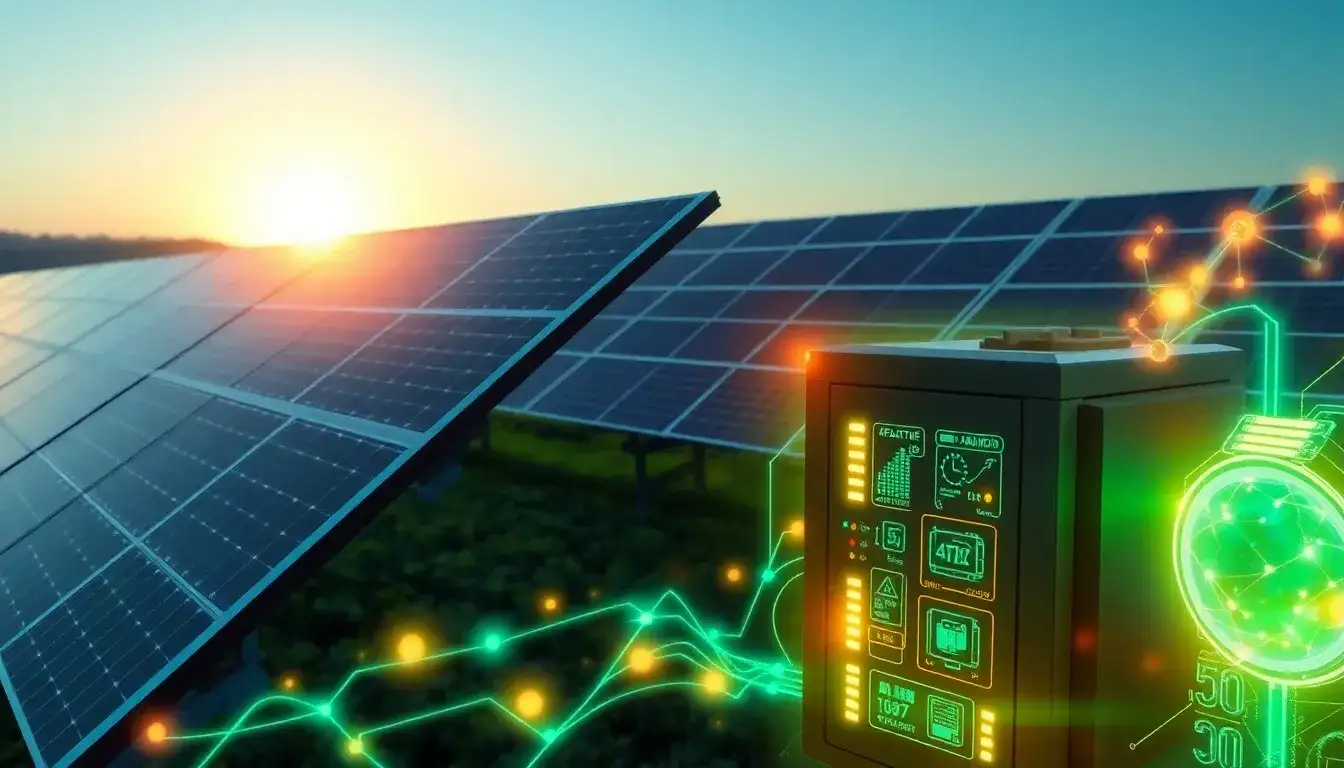
AI plays a pivotal role in optimizing energy storage in solar systems by enhancing the efficiency, reliability, and economic value of solar power integration. Key contributions include:
Optimizing Storage Operations and Energy Use
- AI uses machine learning algorithms to analyze vast datasets—such as weather forecasts, solar production data, electricity prices, and demand patterns—to determine the best times to store excess solar energy and when to release it to the grid or for onsite consumption. This dynamic optimization transforms solar power from a variable, intermittent resource into a more reliable energy source.
- By forecasting on-site solar generation and energy demand, AI-enabled energy storage platforms (e.g., Stem’s Athena) adjust battery charging and discharging in real time to maximize self-consumption, reduce peak grid demand, and comply with incentive programs. This co-optimization across multiple value streams enhances both cost savings and grid stability.
Enhancing Predictive Maintenance and System Longevity
- AI-driven predictive maintenance systems use sensor data and historical performance to detect early signs of equipment degradation or faults within solar panels and storage units. This facilitates timely maintenance, minimizing downtime and extending system lifespan.
Facilitating Smart Grid Integration
- AI helps manage the complex interactions between distributed solar generation, storage assets, and power grid demands by balancing supply and demand dynamically. This coordination prevents grid instability, optimizes power flows, and supports the integration of higher solar penetration in energy markets.
Improving Residential and Commercial Energy Management
- For homeowners and businesses, AI systems integrate energy storage with smart home or facility management. They automatically adjust appliance operation, battery usage, and grid interactions based on predicted solar availability and consumption patterns, promoting energy independence, resilience, and cost efficiency.
Summary Table of AI Roles in Solar Energy Storage Optimization
| AI Function | Description | Benefits |
|---|---|---|
| Data-driven charge/discharge control | Using ML models to decide when batteries should store or release energy based on forecasts | Increased solar self-consumption, cost savings |
| Predictive maintenance | Monitoring system health to detect faults early | Reduced downtime, extended asset life |
| Grid integration optimization | Balancing distributed resources to maintain grid stability | Higher renewable penetration, reliability |
| Smart energy management | Automating consumption and storage management in buildings | Energy independence, convenience, bill reduction |
In conclusion, AI significantly enhances energy storage optimization in solar systems by enabling intelligent decision-making on energy flows, improving system reliability, facilitating grid integration, and promoting cost-effective renewable energy use. These capabilities are key to overcoming solar power’s intermittency and scaling its adoption globally.
Original article by NenPower, If reposted, please credit the source: https://nenpower.com/blog/what-role-does-ai-play-in-optimizing-energy-storage-in-solar-systems/

