

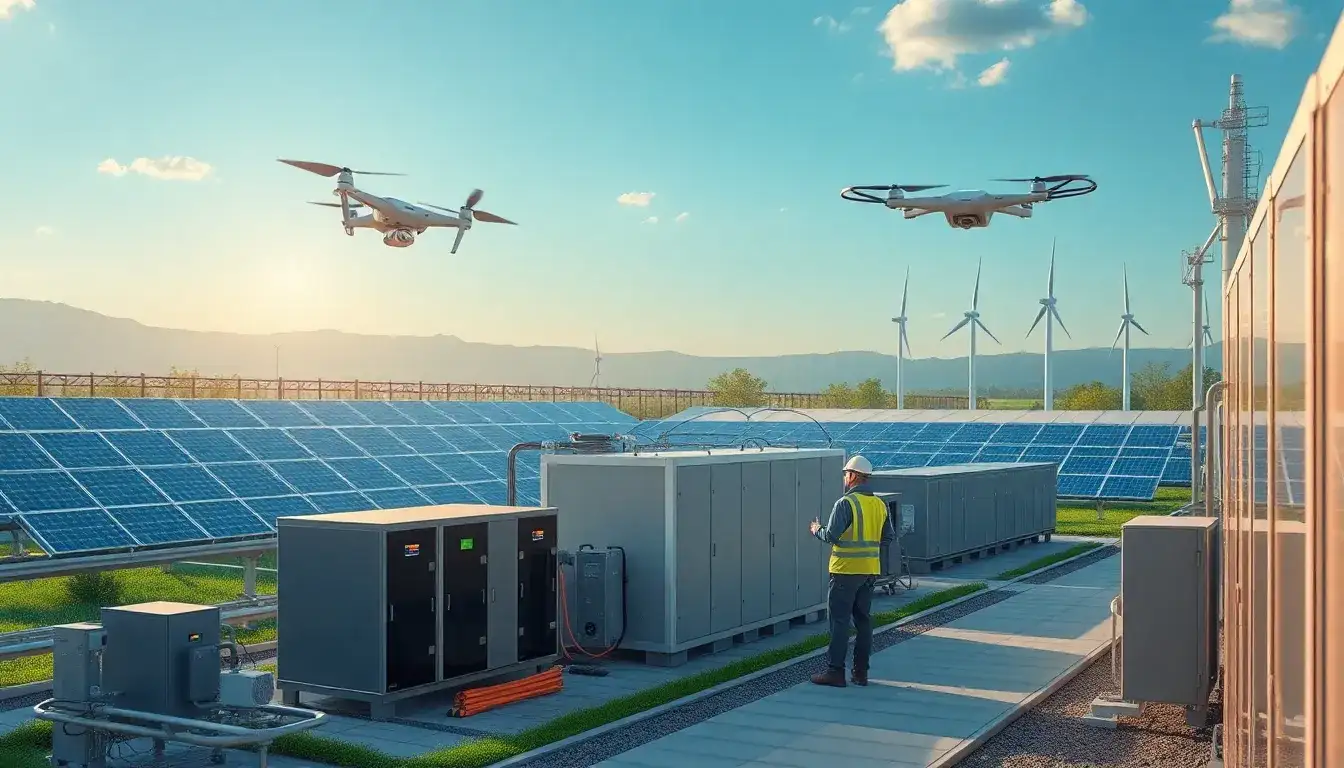
AI plays a crucial role in ensuring grid stability by enabling predictive maintenance of energy storage systems (ESS), which are essential for integrating renewable energy sources and stabilizing power grids. Through advanced machine learning and data analytics, AI models can predict battery degradation, component failures, and performance anomalies well before they become critical, thereby extending the lifespan and improving the reliability of ESS.
Predictive maintenance powered by AI shifts maintenance practices from reactive or fixed-interval schedules to condition-based, data-driven strategies. Unlike traditional methods that either wait for failures to occur or perform maintenance at predetermined times, AI analyzes large volumes of real-time sensor data and historical performance records to forecast potential equipment failures. This allows operators to optimally schedule maintenance only when needed, reducing both unplanned downtime and maintenance costs.
Specifically, AI enhances grid stability through predictive maintenance of ESS by:
- Detecting Early Warning Signs: AI algorithms identify subtle anomalies and patterns in sensor data that indicate impending failures, such as battery cell degradation or thermal issues, thus preventing unexpected outages.
- Optimizing Maintenance Scheduling: By accurately forecasting when components are likely to fail, AI enables just-in-time maintenance interventions that maximize equipment uptime and operational efficiency.
- Extending System Lifespan: Predictive insights help avoid over-maintenance and premature replacement of components, thereby prolonging the effective life of energy storage assets.
- Reducing Operational Costs and Risks: Fewer unexpected failures mean lower repair expenses and reduced risk of catastrophic events like thermal runaway, enhancing overall system safety and economic viability.
- Supporting Renewable Integration and Grid Resilience: Reliable and well-maintained ESS can better buffer the variability of renewable power sources such as solar and wind, contributing to a stable and resilient electricity grid.
In summary, AI-driven predictive maintenance transforms how energy storage systems are managed by leveraging real-time data and advanced analytics to forecast failures and optimize interventions. This not only enhances the reliability and safety of ESS but also plays a vital role in maintaining grid stability amid increasing renewable energy penetration.
Original article by NenPower, If reposted, please credit the source: https://nenpower.com/blog/what-role-does-ai-play-in-ensuring-grid-stability-through-predictive-maintenance-of-energy-storage-systems/

