

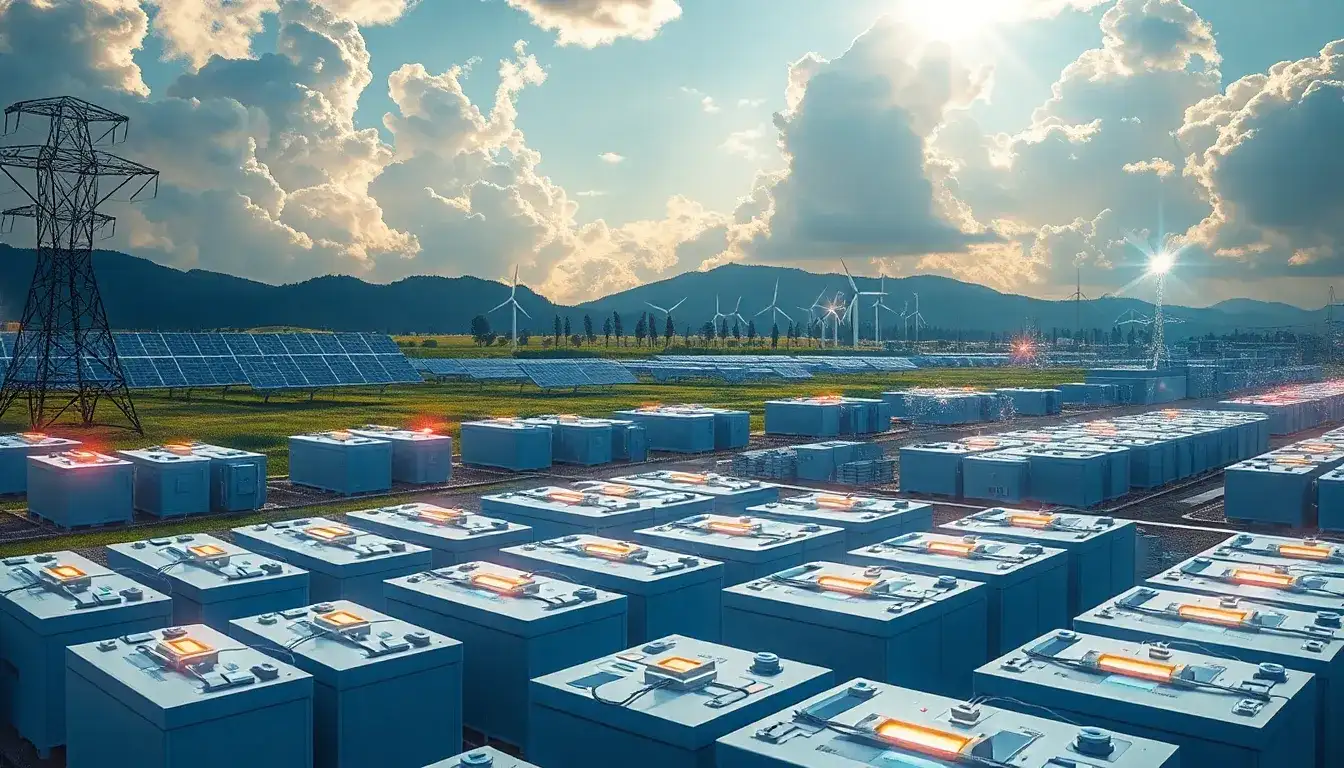
Utility-scale batteries play a critical role in managing sudden changes in electricity generation or demand, providing a range of essential grid services that enhance the reliability, stability, and efficiency of the power system.
Key Roles of Utility-Scale Batteries in Managing Sudden Changes
1. Fast Response to Grid Fluctuations
Utility-scale batteries can respond in real time to sudden shifts in supply or demand by rapidly discharging or absorbing electricity. This fast response capability helps maintain grid frequency close to the standard 60 Hz, preventing disruptions and ensuring continuous power quality.
2. Providing Ramping and Spinning Reserves
During abrupt changes such as unexpected generator outages or spikes in consumer electricity use, batteries offer ramping support by quickly supplying or absorbing power. They serve as spinning reserves—backup power ready to activate instantly—thereby stabilizing the grid and avoiding blackouts.
3. Firming Variable Renewable Energy (VRE)
Batteries smooth out the intermittent output of renewable sources like solar and wind by storing excess energy when generation is high and releasing it during low production periods. This capacity to firm renewable output reduces solar and wind variability, making renewable energy more reliable and easier to integrate.
4. Capacity and Resource Adequacy
By storing surplus electricity during low demand and releasing it during peak periods, batteries add system capacity exactly when it is most needed. This helps utilities plan for resource adequacy and reduces the likelihood of supply shortfalls during peak demand events like heatwaves or weather disruptions.
5. Energy Arbitrage and Cost Optimization
Batteries charge during times of low electricity prices and discharge when prices peak, optimizing grid economics. This load-shifting reduces peak demand pressures and stabilizes electricity costs.
6. Deferring Transmission and Distribution Upgrades
Strategically placed battery storage can locally supply power and reduce congestion on transmission and distribution lines, deferring expensive infrastructure upgrades and minimizing line losses.
Summary Table of Utility-Scale Battery Services for Sudden Changes
| Service | Role in Managing Sudden Changes |
|---|---|
| Fast frequency response | Instantly inject or absorb power to maintain grid frequency |
| Ramping and spinning reserve | Provide immediate backup during sudden generation or demand shifts |
| Renewable firming | Smooth output variability from solar and wind |
| Capacity adequacy | Supply extra capacity during peak demand periods |
| Energy arbitrage | Shift energy use from low to high demand times |
| T&D upgrade deferral | Relieve grid congestion, avoid costly grid expansion |
Utility-scale batteries thus act as flexible, fast-acting energy buffers that stabilize the grid amid fluctuations, support renewable integration, and improve overall grid resilience and cost-effectiveness. Their role becomes even more crucial as power systems incorporate greater shares of variable renewable energy sources.
References
Information is summarized and synthesized primarily from various sources.
Original article by NenPower, If reposted, please credit the source: https://nenpower.com/blog/what-role-do-utility-scale-batteries-play-in-managing-sudden-changes-in-generation-or-demand/

