

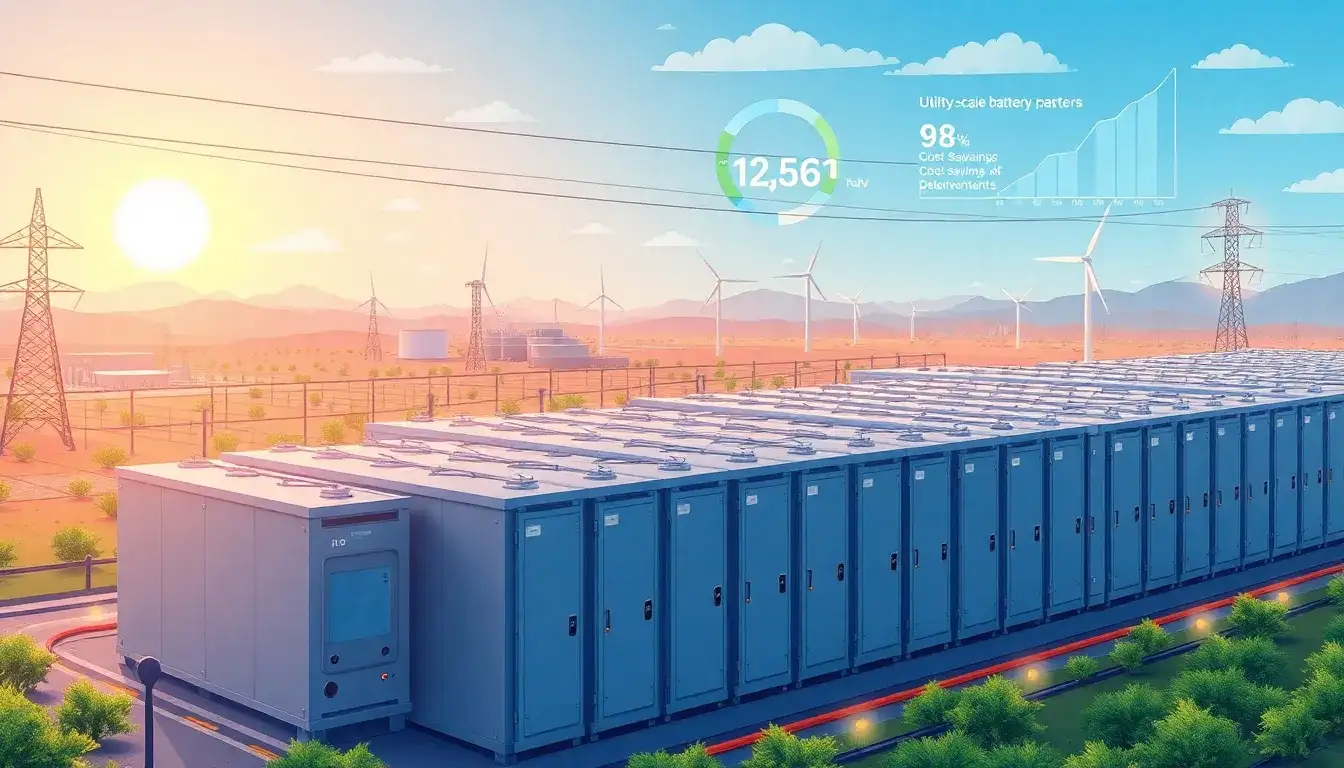
Utility-scale batteries play a critical role in deferring investments in peak generation by acting as a flexible, cost-effective alternative to traditional infrastructure. Here’s how they achieve this:
Peak Demand Management
Batteries store excess energy during low-demand periods and discharge it during peak hours, reducing reliance on natural gas “peaker” plants typically used to meet temporary demand spikes. This substitution of stored energy for fossil-fueled generation allows utilities to delay or avoid building new peak-generation capacity.
Grid Infrastructure Optimization
By smoothing demand fluctuations, batteries help defer upgrades to transmission and distribution networks that would otherwise be necessary to handle peak loads. This reduces capital expenditures on physical grid expansions.
System Efficiency Enhancement
- Curtailment mitigation: Batteries absorb surplus renewable energy during overproduction (e.g., sunny midday solar peaks), preventing waste and maximizing existing asset utilization.
- Frequency regulation: Their millisecond response times provide grid-balancing services more efficiently than thermal plants, maintaining grid stability without requiring standby generators.
As noted in research by MIT’s Mallapragada, “capacity deferral is the primary source of storage value” – batteries help avoid investments in generation/transmission assets worth hundreds of millions by optimizing existing infrastructure.
Original article by NenPower, If reposted, please credit the source: https://nenpower.com/blog/what-role-do-utility-scale-batteries-play-in-deferring-investments-in-peak-generation/

