

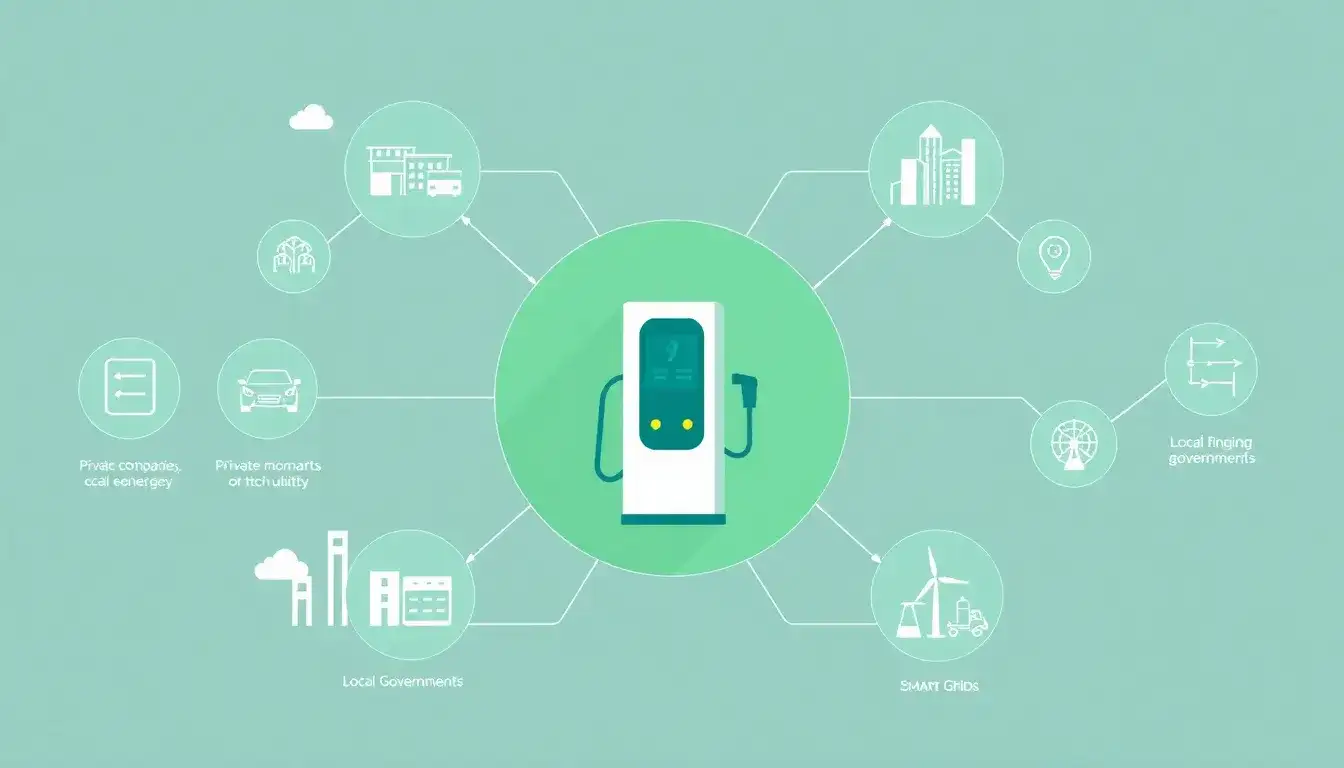
Utilities serve as critical intermediaries in public-private collaborations for EV charging infrastructure through four key mechanisms:
Grid Capacity and Infrastructure Modernization
Utilities assess and upgrade electrical grids to handle increased EV loads, particularly in rural areas where infrastructure may be less robust. They share data on electricity capacity, projected demand, and load management strategies with private companies and municipalities to guide optimal charger placement.
Data-Sharing Partnerships
By collaborating with charging providers and local governments, utilities provide transparency through:
- Electricity capacity maps showing available power for new stations
- Real-time grid performance data to prevent overloads
- Managed charging algorithms that automatically adjust power levels based on grid strain
Policy Advocacy and Regulatory Coordination
Utilities joint advocate with private partners for:
- Streamlined permitting processes
- Standardized charging regulations
- Financial incentives like rebates for charger installations
Customer Engagement Programs
Leveraging public trust, utilities:
- Promote off-peak charging through rate incentives
- Implement automated load-shifting to balance grid demand
- Coordinate with automakers on enrollment strategies for managed charging programs
Early utility involvement in project planning—even at conceptual stages—helps avoid costly grid upgrades later, while their grid expertise ensures reliable charging networks as EV adoption accelerates.
Original article by NenPower, If reposted, please credit the source: https://nenpower.com/blog/what-role-do-utilities-play-in-the-collaboration-between-private-companies-and-local-governments-for-ev-charging/

