

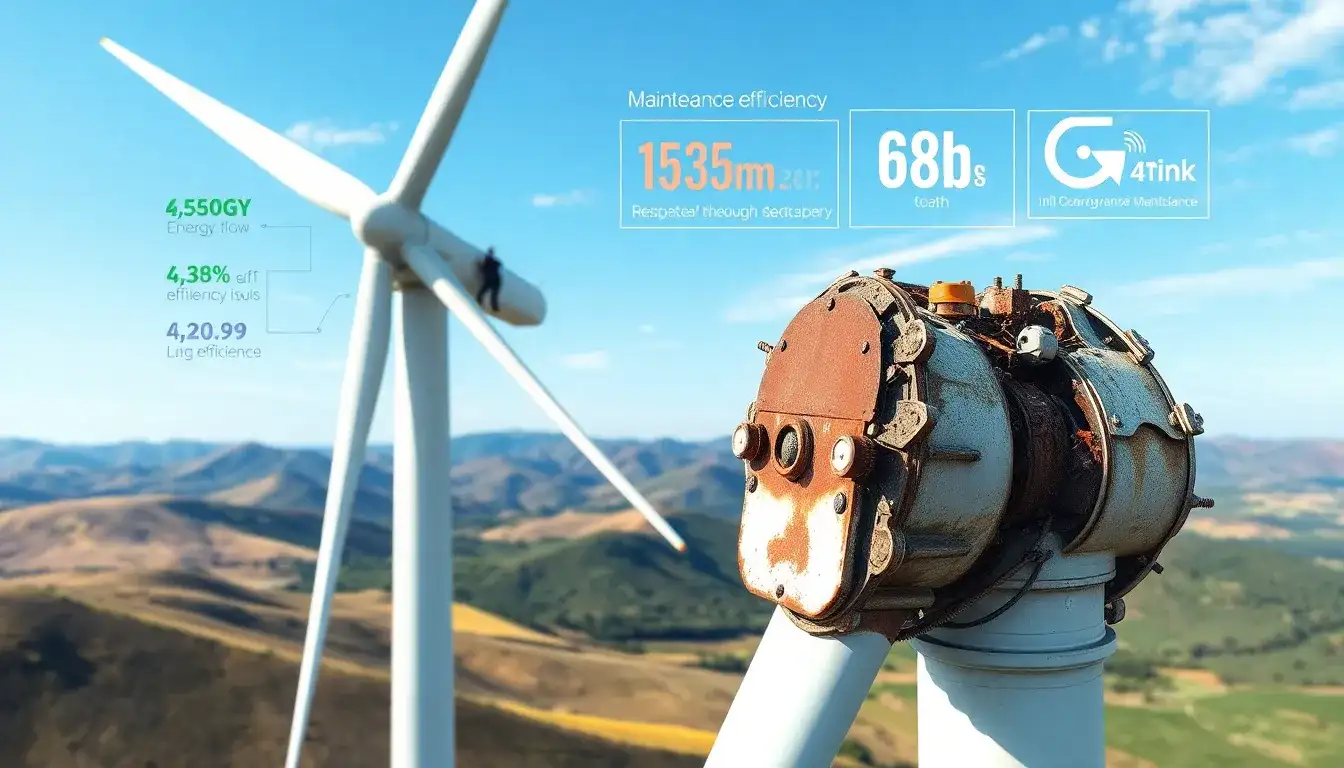
Turbine maintenance issues directly impact the variability of round-trip efficiency (the effectiveness of energy conversion and recovery processes) through several mechanisms:
1. Fuel efficiency degradation
Neglected maintenance leads to blade deposits, component misalignment, and mechanical wear, increasing energy losses during operation. These issues force turbines to consume more fuel for the same power output, reducing their thermal efficiency.
2. Heat rate fluctuations
A poorly maintained turbine experiences suboptimal heat rates (energy required per unit of electricity generated). This inconsistency directly contributes to variability in efficiency metrics, as deposits and wear alter thermodynamic performance unpredictably.
3. Operational instability
Unaddressed maintenance needs cause unplanned downtime and output fluctuations, disrupting the balance between energy input and usable output. This instability amplifies efficiency variability, particularly in systems requiring precise energy management.
4. Component degradation patterns
Irregular maintenance allows non-uniform wear across turbine components, creating localized inefficiencies that compound over time. This results in unpredictable efficiency drops rather than steady, linear declines.
5. Upgrade compatibility
Poorly maintained turbines often require retrofits or part replacements to restore efficiency, introducing variability during transitional phases. Conversely, proactive maintenance enables controlled upgrades that minimize efficiency fluctuations.
For systems involving energy storage or multi-stage conversion (where round-trip efficiency is critical), turbine maintenance directly governs the consistency of energy recovery by ensuring stable baseline performance.
Original article by NenPower, If reposted, please credit the source: https://nenpower.com/blog/what-role-do-turbine-maintenance-issues-play-in-the-variability-of-round-trip-efficiency/

