

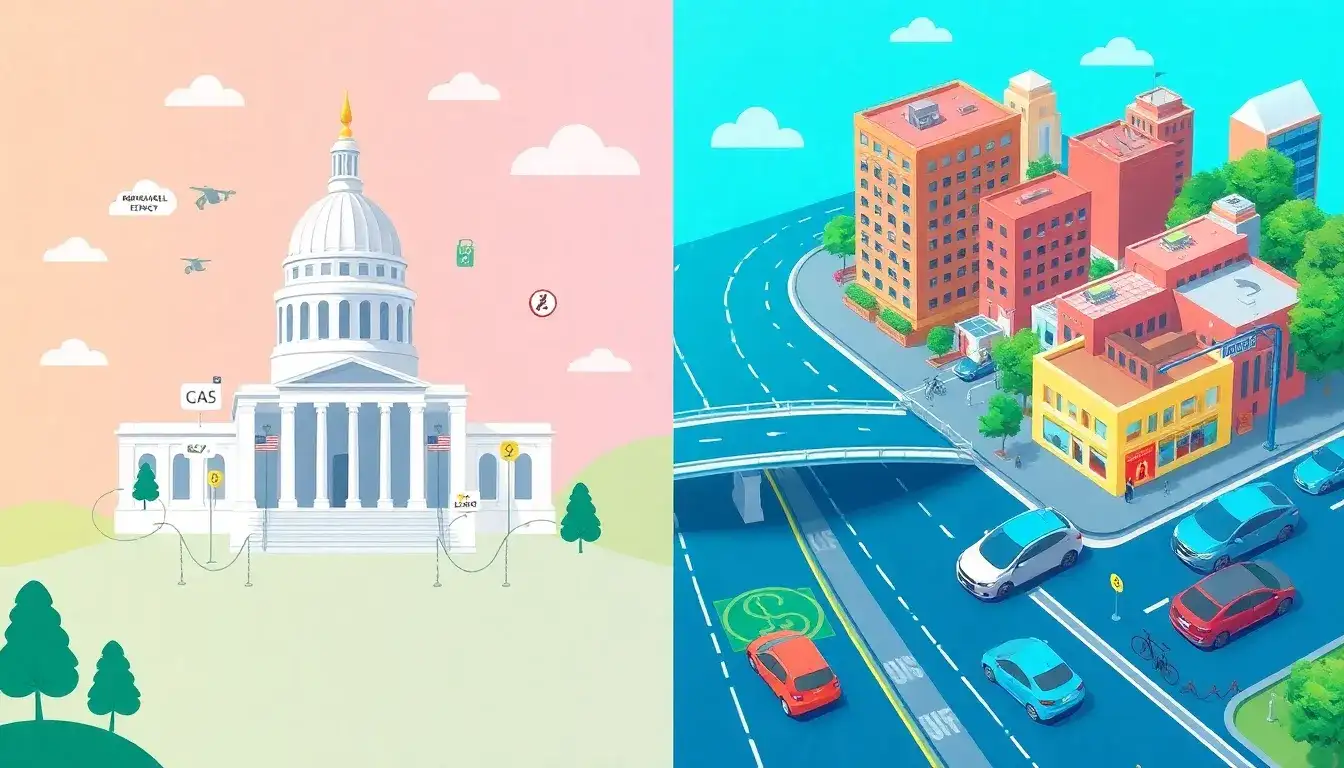
State and city policies play complementary but distinct roles in advancing electric vehicle (EV) adoption, with state policies often setting broad mandates and resource commitments while city-level efforts focus on local implementation and incentives.
State-Level Policies
- Regulatory Mandates: California’s 2035 ban on new internal combustion engine vehicles creates a binding framework for automakers and infrastructure development. Multi-state collaborations like the ZEV Action Plan (involving 9 states) set regional targets for 3.3 million ZEVs by 2025.
- Incentive Programs: States design purchase rebates, tax credits, and charging infrastructure grants. For example, federal programs like the $700 million Charging and Fueling Infrastructure Discretionary Grant are often administered through state agencies.
- Fleet Electrification: States lead public fleet transitions, such as federal goals for 100% EV acquisitions in government fleets, which influence procurement rules for state-owned vehicles.
City-Level Policies
- Local Incentives: Cities often provide additional rebates, discounted parking, or toll exemptions for EVs, though these are not detailed in the provided results.
- Zoning and Infrastructure: Municipalities streamline permitting for charging stations and mandate EV-ready building codes (e.g., requiring residential/commercial properties to include charging infrastructure).
- Awareness Campaigns: Local governments frequently launch outreach programs to address range anxiety and promote benefits like reduced fuel costs.
Key Differences
| Aspect | State Policies | City Policies |
|---|---|---|
| Scope | Broad regulatory and funding frameworks | Hyper-local implementation |
| Focus | Multi-year targets, cross-border agreements | Immediate infrastructure deployment |
| Enforcement | Binding regulations (e.g., ZEV mandates) | Permitting processes and incentive access |
While state policies create the foundational rules and resources, city efforts tailor solutions to local needs, such as prioritizing charging stations in dense urban areas or low-income neighborhoods. Together, they address adoption barriers at systemic and community levels.
City-specific examples are not detailed in the provided results, but typical roles are inferred from broader EV adoption strategies.
Original article by NenPower, If reposted, please credit the source: https://nenpower.com/blog/what-role-do-state-level-policies-play-in-ev-adoption-compared-to-city-level-policies/

