

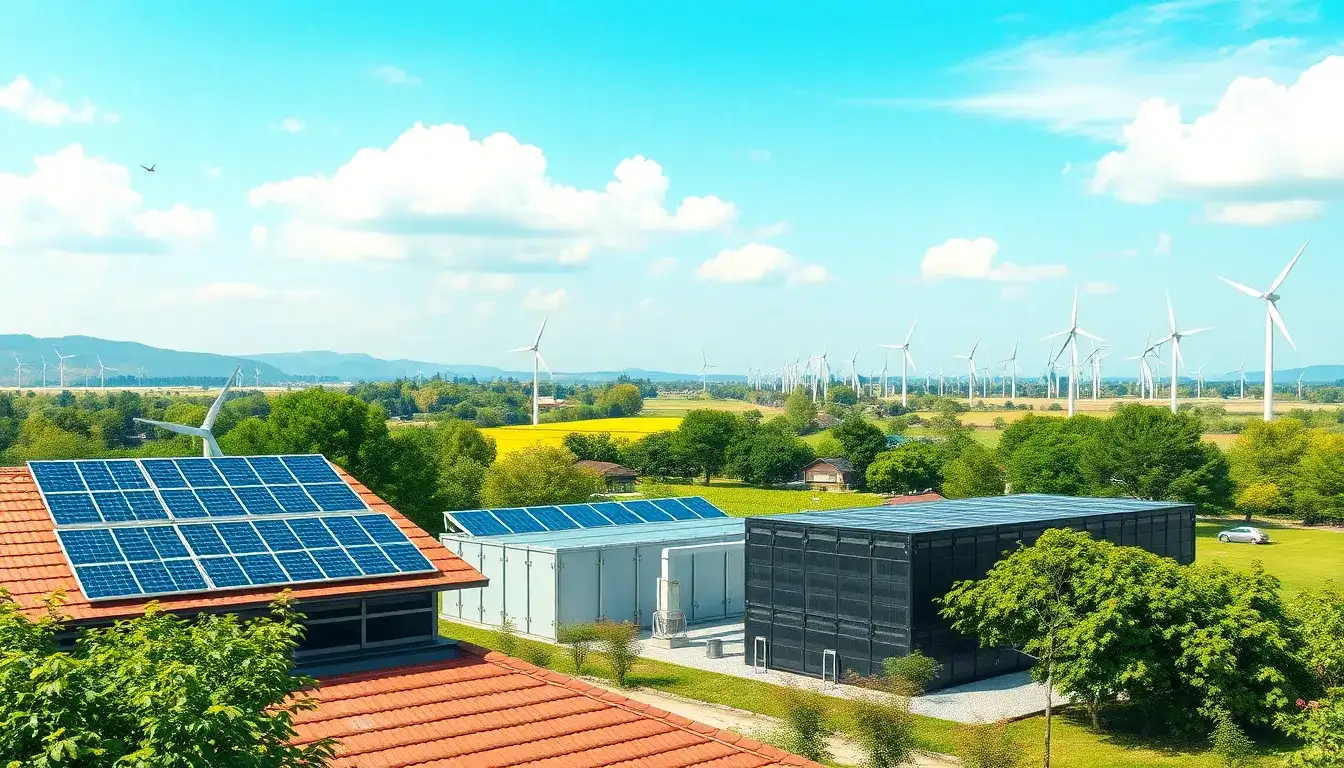
Solar panels and batteries play a crucial role in reducing greenhouse gas (GHG) emissions by enabling clean, renewable energy generation and storage, which displaces fossil fuel-based electricity production.
Role of Solar Panels in Reducing GHG Emissions
- Zero Emissions During Operation: Solar panels generate electricity without producing any direct GHG emissions or air pollution during their operation, unlike fossil fuel power plants. This makes solar energy a clean source of electricity.
- Significant Carbon Emission Reduction: Each kilowatt-hour (kWh) of electricity produced by solar panels reduces carbon emissions equivalent to the emissions from a kWh produced by fossil fuels. An acre of solar panels can reduce carbon dioxide emissions by over 200 times more than an acre of trees, demonstrating their efficiency in carbon mitigation per land area.
- Life-Cycle Emissions: While manufacturing and recycling solar panels do involve some GHG emissions, the overall life-cycle emissions of solar power are much lower than those of conventional fossil fuels. Improvements such as domestic production of solar panels can further reduce the carbon footprint of manufacturing by around 30%, enhancing their climate benefits.
- Increasing Solar Capacity: The expansion of solar power capacity is essential to decarbonize energy systems—projections indicate a sharp increase in solar energy’s share of electricity generation, which will substantially reduce overall GHG emissions from the power sector in coming decades.
Role of Batteries in Reducing GHG Emissions
- Energy Storage for Renewable Integration: Batteries store excess electricity generated by solar panels during sunny periods and release it when solar generation is low (night or cloudy days), enabling higher and more reliable use of renewable energy. This reduces dependence on fossil fuel backup power plants that emit GHGs.
- Grid Stabilization: By smoothing the intermittency of solar power, batteries support grid stability and reduce the need for carbon-intensive peaking power plants, which are otherwise required to balance energy supply and demand.
- Facilitating 100% Renewable Systems: Batteries are key components in building fully renewable energy systems that can operate independently or with minimal fossil fuel inputs, amplifying the overall reduction in greenhouse gas emissions.
In summary, solar panels directly reduce GHG emissions by replacing fossil fuel electricity with zero-emission solar power, while batteries enhance this effect by enabling greater use of solar energy through efficient storage and grid management. Together, they are foundational technologies for achieving significant reductions in greenhouse gas emissions in the energy sector.
Original article by NenPower, If reposted, please credit the source: https://nenpower.com/blog/what-role-do-solar-panels-and-batteries-play-in-reducing-greenhouse-gas-emissions/

