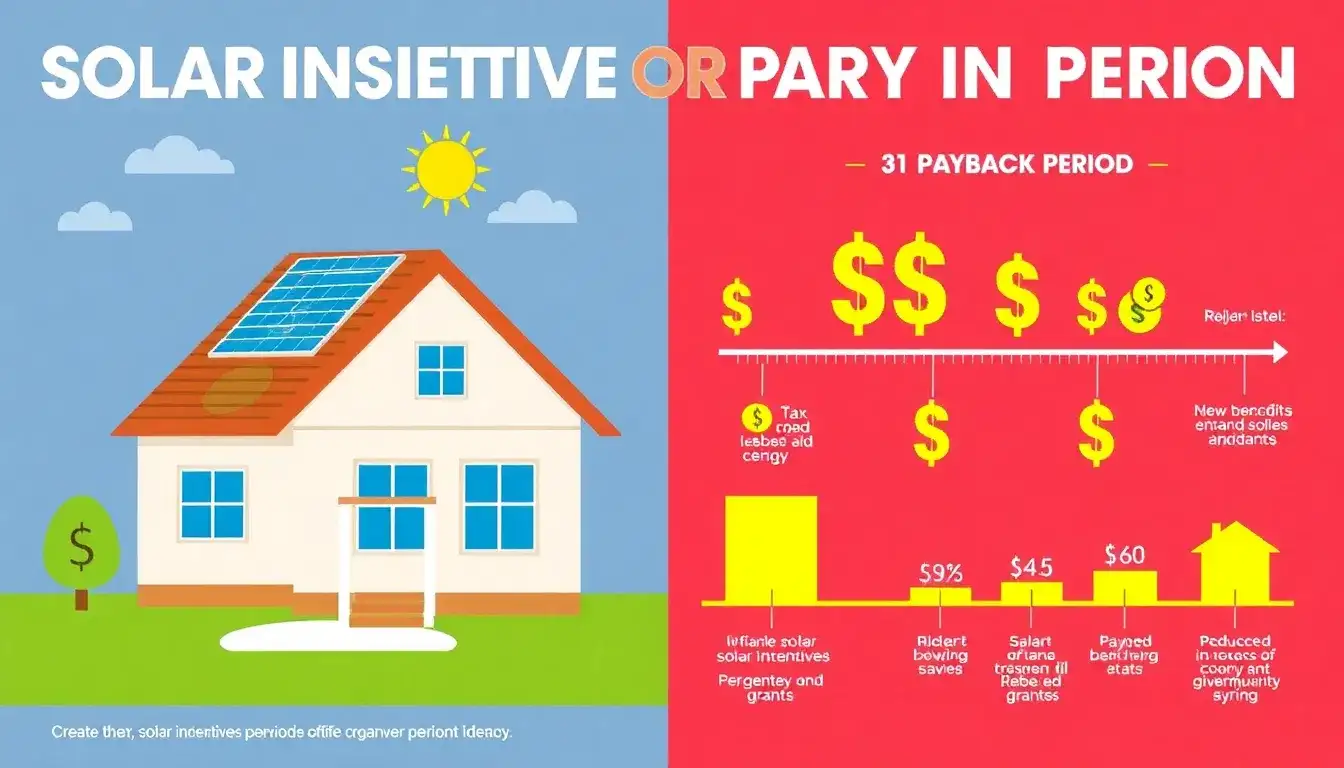
Solar incentives play a crucial role in reducing the payback period for solar installations by significantly reducing upfront costs and enhancing financial returns. Here are some ways incentives impact the payback period:
Solar Incentives and Their Impact
- Federal Tax Credits: Programs like the federal Investment Tax Credit (ITC) offer a 30% tax deduction on solar system costs, which directly reduces the net investment.
- State and Local Rebates: Many states and local governments provide rebates that can further lower installation costs, such as California’s Self-Generation Incentive Program (SGIP) for battery storage.
- Net Metering Policies: These allow homeowners to sell excess energy back to the grid, which can increase savings and shorten the payback period.
- SRECs (Solar Renewable Energy Certificates): In some regions, homeowners can sell these certificates to utilities, generating additional income.
How Incentives Shorten the Payback Period
- Reduced Upfront Costs: Incentives decrease the initial investment, meaning less money needs to be recouped through energy savings.
- Increased Energy Savings: By reducing electricity bills and providing additional income from energy sales or SRECs, homeowners can save more money each year.
- Enhanced Financial Returns: Incentives not only provide short-term savings but also long-term financial benefits by allowing homeowners to enjoy years of free electricity after the payback period.
Overall, solar incentives are essential in making solar energy more accessible and financially attractive by accelerating the payback period and ensuring a higher return on investment over the system’s lifespan.
Original article by NenPower, If reposted, please credit the source: https://nenpower.com/blog/what-role-do-solar-incentives-play-in-reducing-the-payback-period/