

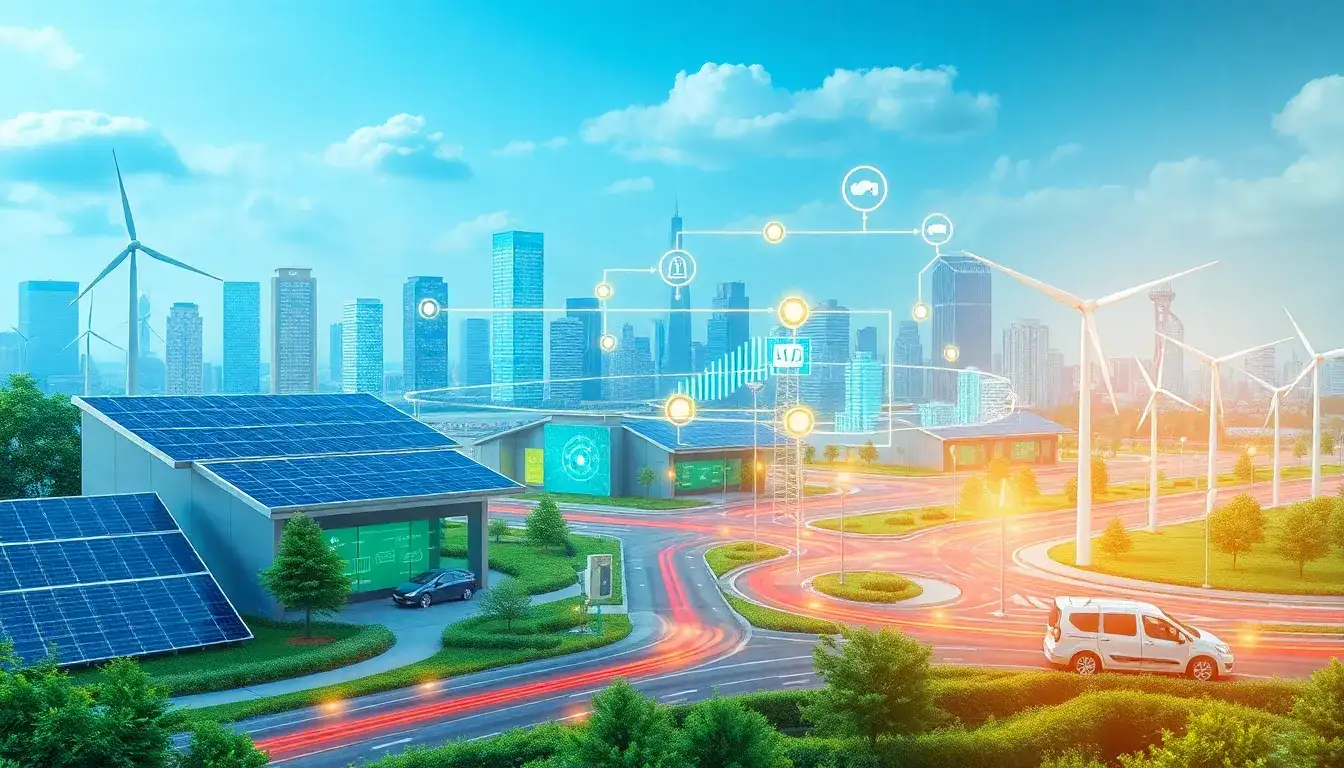
Smart grid technologies play a crucial role in managing the intermittency of renewable energy sources, enhancing the reliability and efficiency of the energy system. Here’s how they contribute:
Role of Smart Grids in Managing Renewable Energy Intermittency
- Real-Time Monitoring and Predictive Analytics
- Smart grids use advanced sensors and IoT technologies to monitor energy generation and consumption in real-time. This allows utilities to predict and manage the variability of renewable energy sources like solar and wind.
- Predictive analytics enable utilities to anticipate fluctuations in renewable energy output and adjust power distribution accordingly, maintaining grid stability.
- Balancing Supply and Demand
- Smart grid systems can balance the intermittent supply from renewable sources with demand in real-time. This is achieved by adjusting energy distribution based on current conditions, ensuring a stable energy supply.
- The ability to integrate various energy sources, including distributed generation, helps balance the grid and maintain reliability.
- Energy Storage Integration
- Smart grids support the integration of energy storage systems like batteries, which can stabilize the power supply by storing excess energy during periods of high renewable output and releasing it during periods of low output.
- This capability helps mitigate the intermittency of renewable energy sources, ensuring a consistent supply of electricity.
- Two-Way Power Flow and Consumer Engagement
- Smart grids enable consumers to become prosumers by feeding excess energy back into the grid, further stabilizing the system. This two-way flow promotes decentralized energy management and supports renewable energy integration.
- Consumers can monitor their energy consumption through smart meters and adjust their usage based on real-time data, contributing to more efficient energy management.
Challenges and Future Directions
While smart grids offer significant advantages in managing renewable energy intermittency, challenges such as high implementation costs, cybersecurity risks, and regulatory hurdles exist. Overcoming these challenges requires continued investment in technology development, supportive policies, and public engagement to ensure widespread adoption and a more sustainable energy future.
As the global transition to renewable energy continues, smart grid technologies will remain essential for efficiently integrating and managing diverse, distributed energy sources, thereby ensuring reliable and sustainable energy supply systems.
Original article by NenPower, If reposted, please credit the source: https://nenpower.com/blog/what-role-do-smart-grid-technologies-play-in-managing-the-intermittency-of-renewable-energy-sources/

