

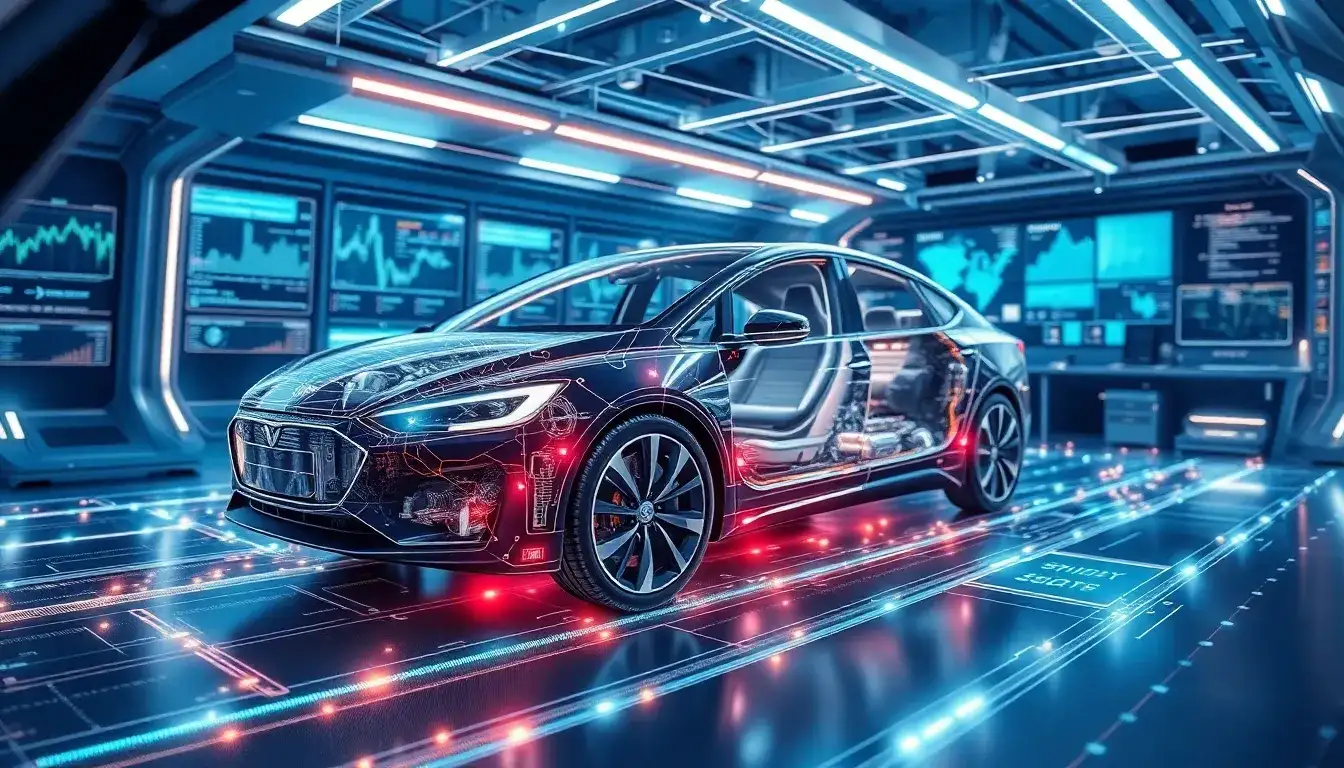
Smart control algorithms play a critical role in electric vehicle (EV) thermal management by dynamically monitoring and regulating the temperature of key components such as the battery, motor, and HVAC systems to optimize performance, safety, and energy efficiency.
Key Roles of Smart Control Algorithms in EV Thermal Management
- Dynamic, Real-Time Temperature Regulation:
Smart control algorithms continuously monitor multiple parameters like battery temperature, state of charge (SOC), ambient temperature, and cabin temperature using sensor inputs. They adjust actuators such as electronic expansion valves, pumps, and heat exchangers in real time to maintain optimal battery temperatures, typically around 25°C for normal charging and 15-20°C for fast charging. This adaptive approach minimizes temperature fluctuations and balances thermal loads more effectively than static or fixed setpoint systems. - Energy Efficiency and Reduced Consumption:
By precisely modulating cooling and heating elements only when necessary, smart control algorithms reduce unnecessary energy consumption by 15-25%, compared to conventional thermal management systems that operate with fixed thresholds. This leads to improved overall EV efficiency and extends battery life by avoiding overcooling or overheating. - Battery Safety and Longevity Enhancement:
Lithium-ion batteries are sensitive to temperature extremes, which can lead to thermal runaway, reduced capacity, or permanent damage. Smart algorithms incorporate predictive elements, such as machine learning or GPS data, to modify thermal control thresholds proactively. For example, they can lower temperature setpoints in anticipation of imminent charging events or adjust cooling when the vehicle is parked to avoid energy waste while preserving battery health. - Preemptive Thermal Management during Fast Charging:
During fast charging, battery heat generation increases suddenly, posing risks of overheating and charging power reduction. Smart control systems use predictive logic to activate cooling systems before critical temperatures are reached, preventing thermal spikes. They apply variable capacity control to pumps and chillers, operating only when needed, thereby maintaining uniform cell temperatures and prolonging battery life. - Integration with Advanced Sensor Technologies:
Modern EV thermal management leverages advanced sensors, including optical sensors, that provide high-precision, multi-point temperature data from battery modules and motors. These sensors feed into smart control algorithms to enable fine-grained thermal regulation, improving system responsiveness and safety.
Summary
Smart control algorithms are essential in EV thermal management as they enable dynamic, efficient, and predictive temperature regulation. They improve battery safety by preventing thermal runaway, extend battery longevity by maintaining optimal temperature ranges, reduce energy consumption through adaptive control, and support fast charging by preemptively managing thermal loads. The integration of advanced sensors and predictive data enhances these capabilities, making smart control algorithms a cornerstone of effective EV thermal management systems.
Original article by NenPower, If reposted, please credit the source: https://nenpower.com/blog/what-role-do-smart-control-algorithms-play-in-ev-thermal-management/

