

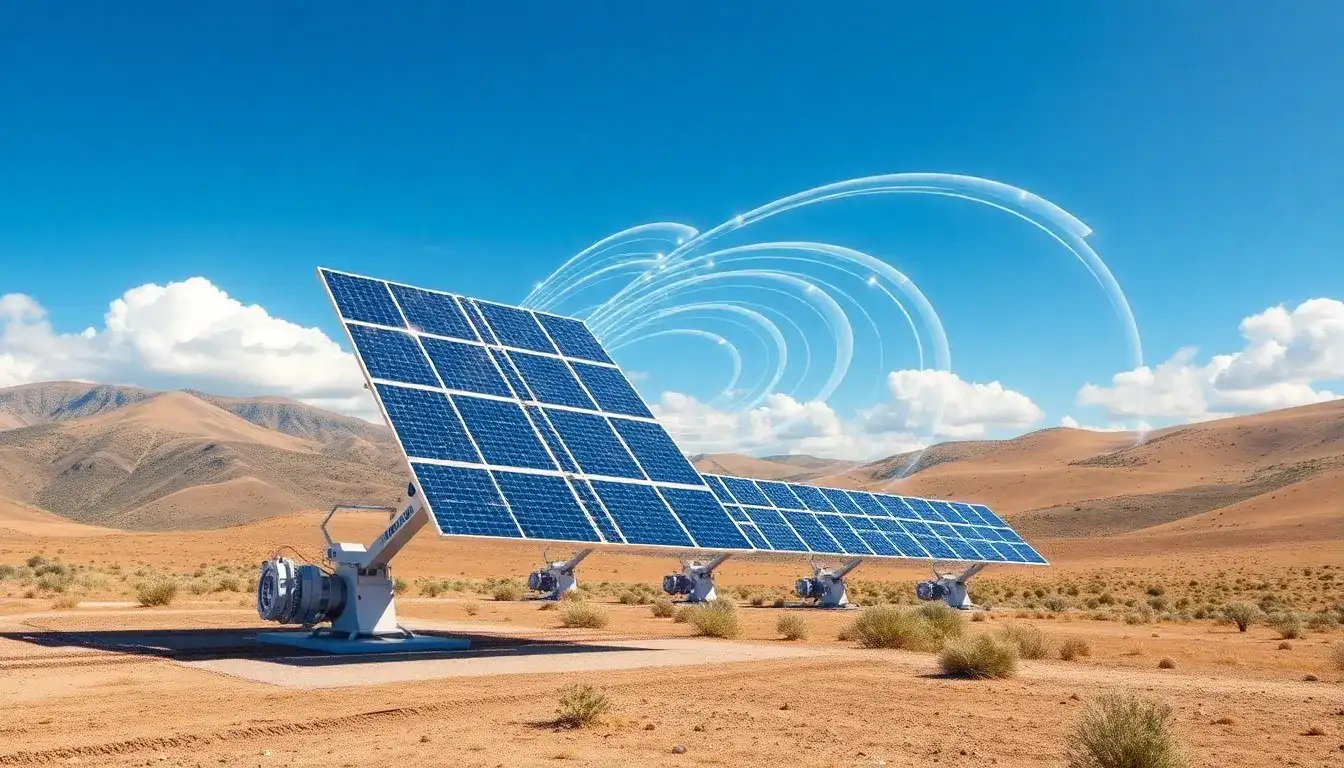
Sensors play a critical role in optimizing solar tracker performance during windy conditions by enabling real-time monitoring and automated adjustments. Here’s how:
1. Wind Detection
Sensors like anemometers detect wind speeds and trigger stowing protocols when thresholds are exceeded. For example, AllEarth Solar Trackers activate “Wind Hold Mode” when wind exceeds 25 mph for 5 seconds, securing panels in a protective position.
2. Adaptive Positioning
Advanced systems use sensors to adjust tracker angles dynamically. Single-axis trackers now tilt modules to ~45° (instead of lying flat) to reduce torsional stress, while dual-axis trackers stow horizontally due to lower wind resistance. Sensors enable site-specific adjustments based on real-time wind direction and speed.
3. Predictive Response
Modern trackers integrate atmospheric sensors and safety algorithms to anticipate extreme weather. These systems automatically adjust tracker rows across large installations to minimize structural strain while maintaining energy production.
4. Site Optimization
Sensors help identify localized wind patterns, enabling solutions like wind fences to reduce turbulence in vulnerable areas. This improves tracker stability and energy output without requiring full-site design changes.
5. Material and Design Feedback
Sensor data informs tracker engineering, guiding material choices and structural reinforcements to withstand wind loads. This feedback loop leads to more resilient designs.
Original article by NenPower, If reposted, please credit the source: https://nenpower.com/blog/what-role-do-sensors-play-in-optimizing-solar-tracker-performance-in-windy-conditions/

