

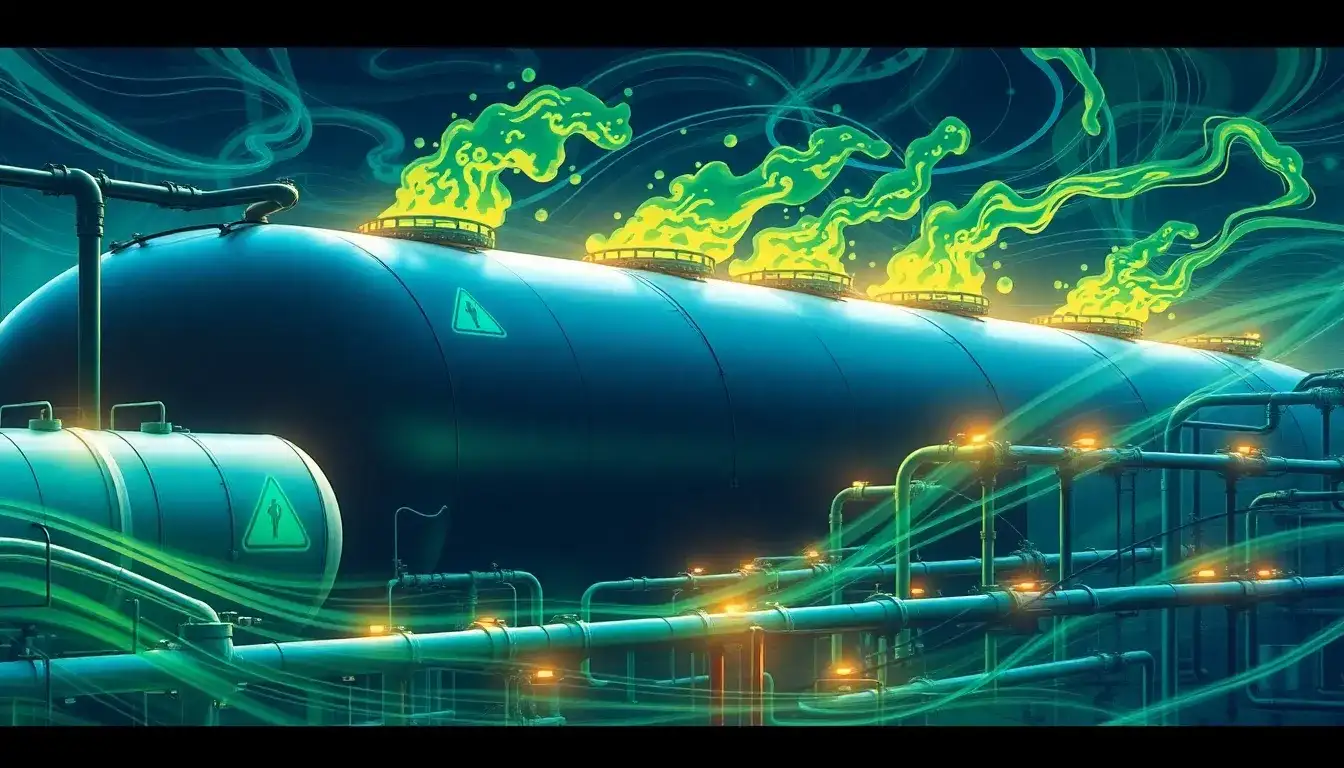
Residual hydrocarbons play a critical role in the explosion risk of Compressed Air Energy Storage (CAES) systems, especially when these systems are implemented in depleted hydrocarbon reservoirs. The presence of residual hydrocarbons in such reservoirs creates an environment where ignition and explosion hazards can arise during the air cycling processes in CAES operations.
Role of Residual Hydrocarbons in Explosion Risk of CAES Systems
- Ignition and Explosion Potential in Depleted Hydrocarbon Reservoirs:
In CAES systems that store compressed air in depleted natural gas or hydrocarbon reservoirs, residual hydrocarbons remaining in the pore spaces of the geological formation can mix with the injected air. This mixture may create flammable conditions. If an ignition source is present, such as electrical sparks or high temperatures, it could trigger an explosion within the reservoir. This ignition potential was a central concern in a Sandia National Laboratories report that preliminarily assessed these hazards, identifying that air cycling can react with residual hydrocarbons, increasing the risk of ignition and explosion. - Mechanism of Hazard Formation:
Residual hydrocarbons within the reservoir, when exposed to compressed air (which contains oxygen), can form combustible mixtures. The cycling of air pressure and volume during energy storage and release can redistribute these hydrocarbons and air, potentially creating zones with the appropriate fuel and oxygen concentrations for combustion. This risk is amplified by the unpredictable nature of air movement and reservoir heterogeneity. - Implications for Safety and Mitigation:
The presence of residual hydrocarbons necessitates detailed hazard analysis and the implementation of mitigating measures when designing and operating CAES systems in such reservoirs. These may include monitoring for hydrocarbon concentrations, controlling ignition sources, and designing operational procedures to minimize conditions conducive to explosions.
Context from Related Hydrocarbon Vapor Explosions
- Residual hydrocarbon vapors are known to be highly flammable and can lead to explosions if ignited, as seen in industrial contexts such as oil tanker repairs where residual vapors caused fatal explosions during hot work (welding). This underscores the sensitivity of hydrocarbon vapors to ignition sources and suggests a parallel risk in geological CAES settings.
- The presence of residual hydrocarbons also relates to complex vapor mixtures that can accumulate explosively. Similar to total petroleum hydrocarbons (TPH) vapor intrusion, residual hydrocarbons can create mixtures where the vapor phase contains varying fractions of aliphatic and aromatic hydrocarbons, potentially increasing explosion risks if not managed properly.
Summary
Residual hydrocarbons remaining in depleted hydrocarbon reservoirs act as a combustible fuel source during air cycling in CAES systems. Their presence significantly increases the risk of ignition and explosion within the reservoirs, posing a serious safety hazard. This risk stems from the interaction of compressed air with residual hydrocarbons that can form explosive mixtures, necessitating careful risk assessment and safety controls in CAES project design and operation.
References correspond to the numbered search results provided.
Original article by NenPower, If reposted, please credit the source: https://nenpower.com/blog/what-role-do-residual-hydrocarbons-play-in-the-explosion-risk-of-caes-systems/

