

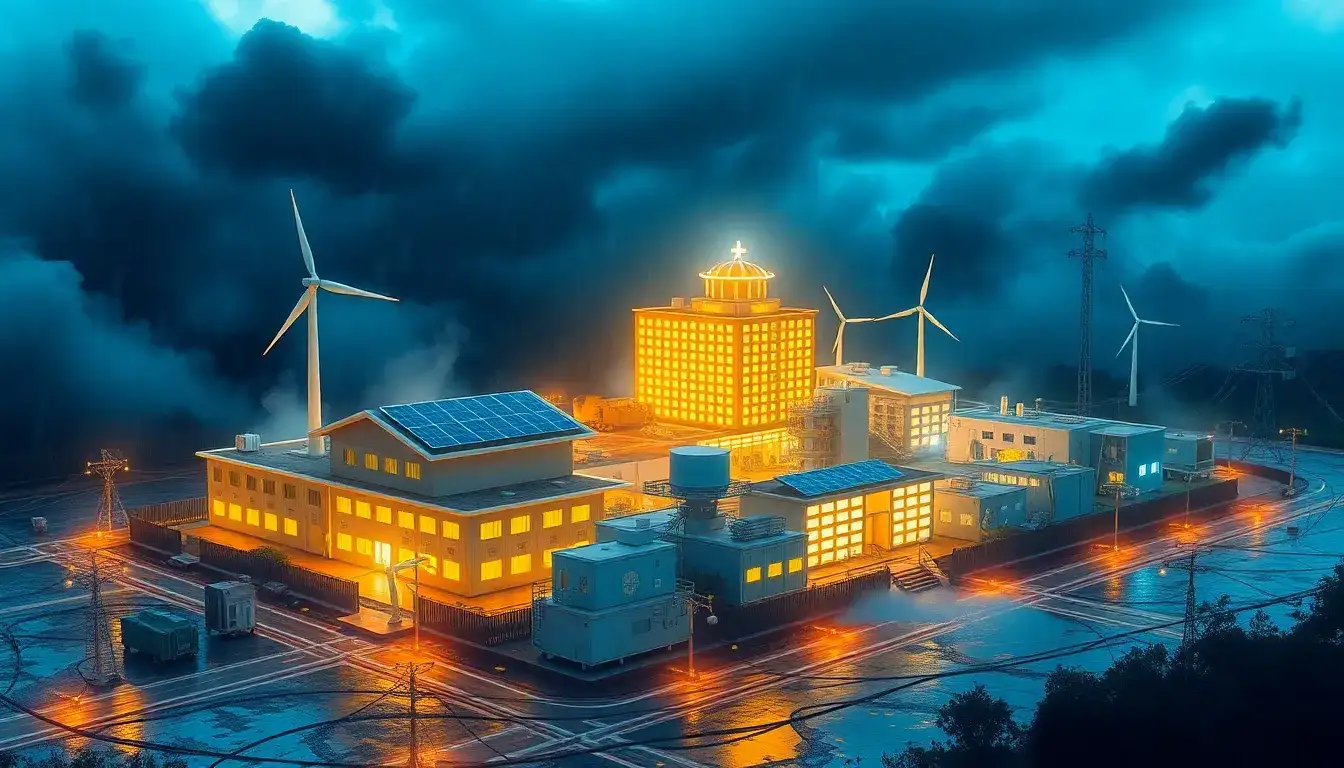
Renewable energy sources play a critical role in the functionality of microgrids during disasters by providing stable, reliable, and independent electricity generation that enhances energy resilience when the main power grid is compromised. Microgrids equipped with renewable power—such as solar and wind—combined with battery storage systems, enable continuous electricity supply to essential services like hospitals, emergency shelters, communication centers, water treatment facilities, and military bases during disasters like hurricanes, floods, earthquakes, and winter storms.
Key roles of renewable energy in microgrids during disasters include:
- Ensuring energy resilience and continuity: Renewable-powered microgrids can operate autonomously (“island mode”) from the main grid during outages, avoiding common failure points of centralized systems and maintaining critical infrastructure functionality when the central grid is down.
- Supporting disaster relief and response efforts: Microgrids enable rapid deployment and operation of temporary disaster relief facilities such as field hospitals and mobile command centers by providing clean and reliable power onsite, which is often unavailable through traditional grid infrastructure post-disaster.
- Reducing fossil fuel dependence and emissions: By leveraging solar and wind energy, microgrids minimize the need for diesel generators or other fossil fuel sources typically used in emergencies, thus decreasing environmental impact and improving sustainability during and after disasters.
- Enhancing cybersecurity and system robustness: The decentralization provided by renewable-integrated microgrids empowers communities to reduce vulnerabilities to both physical disruptions and cyberattacks, which are increasingly risks for centralized power grids during crises.
- Promoting energy independence and resilience in diverse settings: Microgrids help not only urban areas but also rural and island communities that face unique power challenges during disasters by harnessing local renewable resources, improving their energy autonomy.
In summary, renewable energy sources are foundational to microgrids’ ability to maintain electricity supply during disasters, supporting critical infrastructure, enabling swift disaster response, and contributing to a more sustainable and resilient energy future.
Original article by NenPower, If reposted, please credit the source: https://nenpower.com/blog/what-role-do-renewable-energy-sources-play-in-the-functionality-of-microgrids-during-disasters/

