

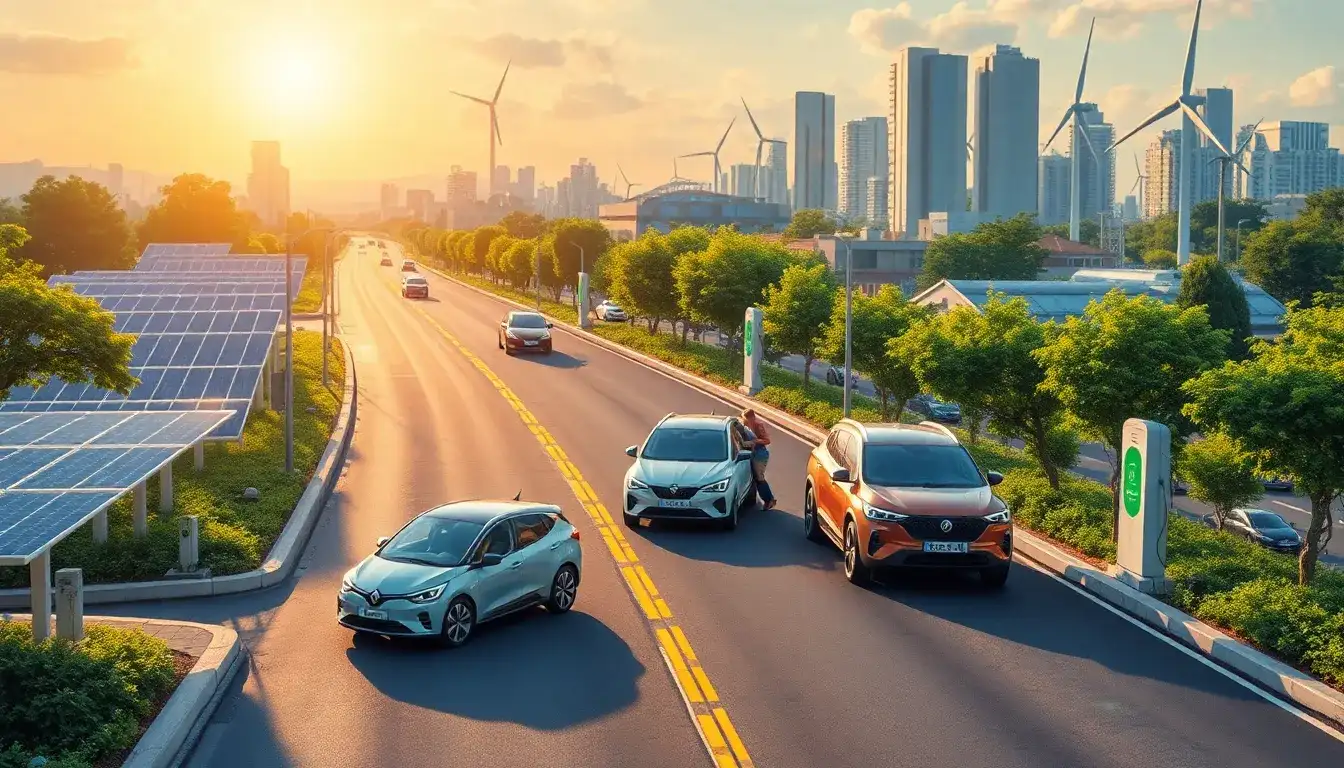
Plug-in hybrid electric vehicles (PHEVs) serve as a transitional technology in the shift to low-carbon transportation, offering flexibility and infrastructure compatibility while facing challenges related to driver behavior and long-term decarbonization goals.
Balancing electrification and practicality
PHEVs combine electric motors with gasoline engines, leveraging existing fuel infrastructure while supporting incremental grid electrification. Their smaller batteries (5–10 times smaller than full EVs) reduce raw material demands, making them cost-effective for manufacturers and consumers. They are particularly useful in rural areas with limited charging infrastructure, as they eliminate range anxiety and perform reliably in extreme weather.
Behavioral dependency and emissions variability
Emissions reductions depend heavily on charging habits. Studies show 12–17% of PHEV owners rarely or never charge their vehicles, leading to higher real-world emissions than lab estimates. However, disciplined charging (e.g., nightly) can achieve 60–70% electric miles, as demonstrated by Chevy Volt drivers. This inconsistency creates a gap between theoretical and actual emissions performance.
Biofuel compatibility and infrastructure continuity
PHEVs can use biofuels for their gasoline engines, enabling a gradual shift to 100% biofuel blends without requiring new distribution systems. This dual-fuel capability allows emissions cuts even before grid decarbonization, as biofuels replace fossil gasoline.
Transition challenges
While PHEVs reduce immediate fossil fuel reliance, their long-term role diminishes as EV charging networks expand and grid decarbonization progresses. Current biofuel blending limits (~10–20% in most markets) also constrain their emissions benefits compared to full electrification.
Key comparison of PHEV advantages and limitations
| Factor | Advantages | Limitations |
|---|---|---|
| Infrastructure | Works with existing fuel stations and standard electrical outlets | Public charging access less critical, potentially slowing EV infrastructure growth |
| Emissions | Can achieve 60–70% electric miles with regular charging | Real-world emissions often exceed predictions due to inconsistent charging |
| Materials | Smaller batteries reduce lithium/cobalt demands compared to EVs | Still require rare-earth materials for dual powertrains |
| Policy alignment | Effective interim solution during grid/biofuel transitions | Risk of becoming a compliance tool for automakers if over-relied upon |
Original article by NenPower, If reposted, please credit the source: https://nenpower.com/blog/what-role-do-phevs-play-in-the-transition-to-a-low-carbon-transportation-sector/

