

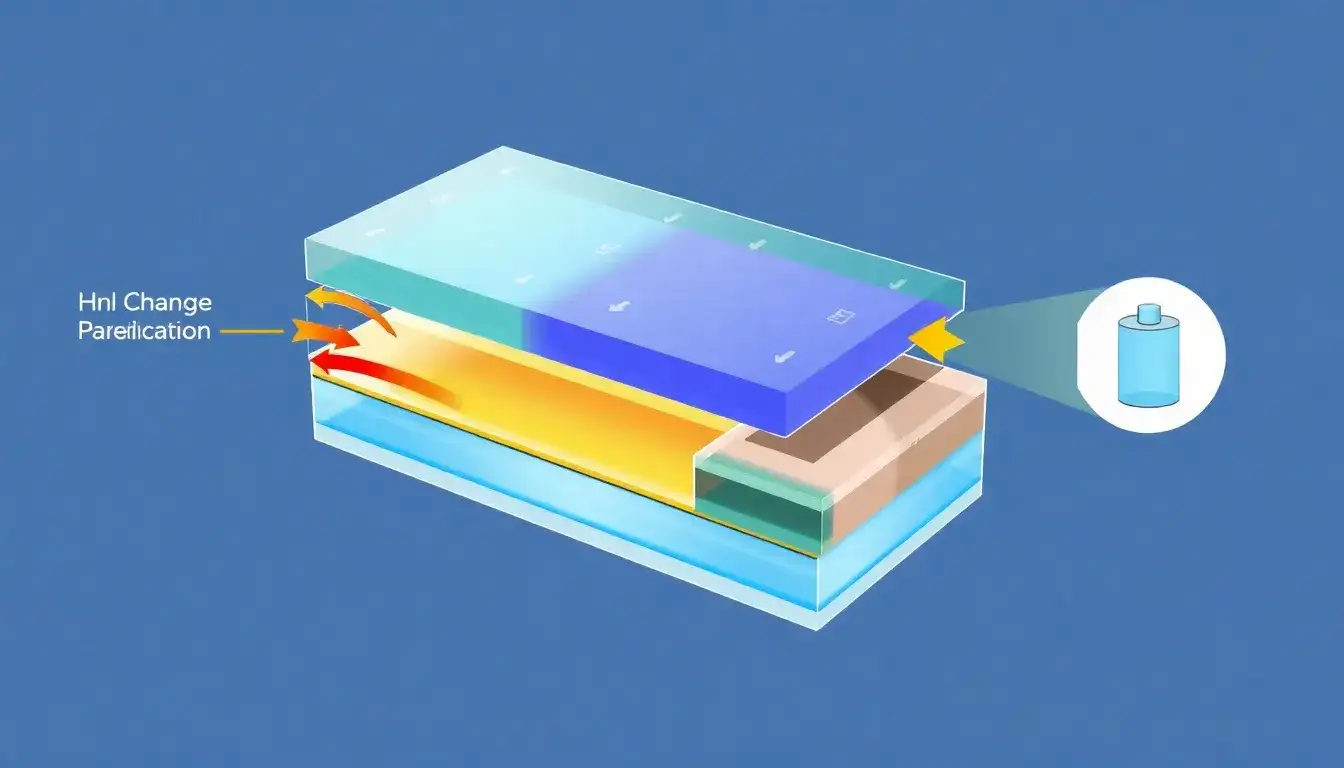
Phase-change materials (PCMs) play a critical role in battery thermal management by efficiently absorbing and dissipating heat generated during charging and discharging processes. Here’s how PCMs contribute to this process:
Role of Phase-Change Materials in Battery Thermal Management
- Heat Absorption and Dissipation:
- PCMs exhibit high latent heat capacity, which allows them to absorb heat without significant temperature increases. This property helps maintain battery temperatures within safe operating ranges, enhancing battery performance and lifespan.
- When the battery generates heat, the PCM melts and stores this energy as latent heat, effectively cooling the battery.
- Passive Thermal Protection:
- Unlike active cooling systems (like Peltier elements or liquid cooling), PCMs provide passive thermal management without requiring additional power. This reduces energy consumption and system complexity.
- Temperature Uniformity:
- PCMs help maintain uniform temperatures across battery cells, which is crucial for optimizing battery performance, capacity, and longevity. Uniform temperatures minimize thermal gradients that could lead to premature degradation.
- Enhanced Battery Life and Performance:
- By regulating temperature more effectively than air cooling, PCMs can increase accessible battery capacity. For instance, PCM usage has been reported to increase accessible capacity from 60% to 90% compared to air cooling alone.
- Material Selection and Design:
- Common PCMs include paraffin wax and fatty acids due to their chemical stability and cost-effectiveness. However, their low thermal conductivity can be improved by incorporating materials like expanded graphite or metal foams into the PCM.
- System Design and Integration:
- PCMs can be integrated into battery packs by forming jackets around cells or embedding them in specific patterns. This design helps maintain a consistent temperature throughout the battery pack.
Overall, PCMs offer a simple yet effective solution for managing battery temperatures, enhancing safety, performance, and durability without the need for complex active cooling systems.
Original article by NenPower, If reposted, please credit the source: https://nenpower.com/blog/what-role-do-phase-change-materials-play-in-battery-thermal-management/

