

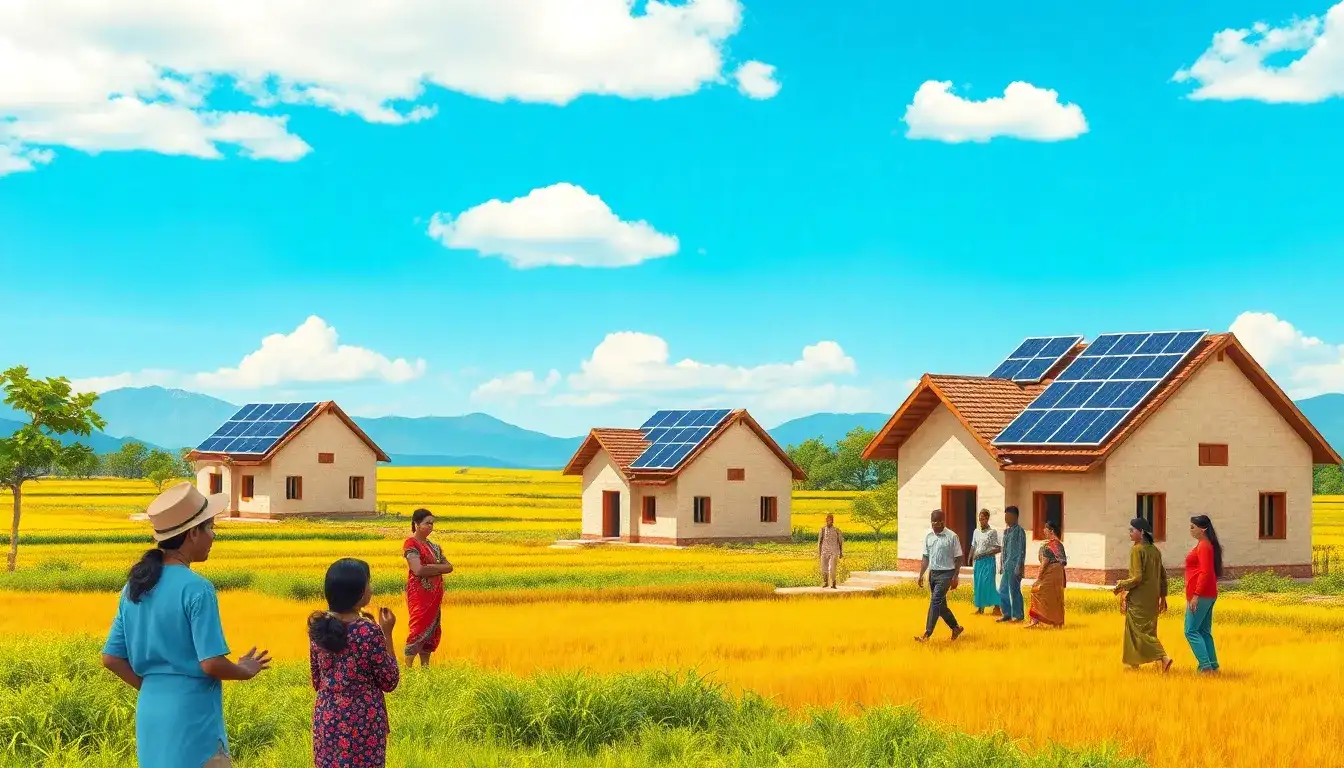
Microloans and subsidies play a vital role in promoting solar energy adoption in rural areas by addressing financial and accessibility barriers faced by local entrepreneurs and communities.
Role of Microloans in Promoting Solar Energy
- Providing Affordable Capital to Entrepreneurs: Traditional financial institutions often do not serve rural entrepreneurs due to perceived high risks and lack of collateral or credit history. Microloans tailored for solar energy businesses help fill this gap by offering accessible financing with lower interest rates and flexible repayment terms designed for small-scale rural businesses.
- Enabling Business Growth and Distribution: Microloans enable rural solar entrepreneurs to purchase and stock solar products, such as solar lights and kits, that they can sell within their communities. For example, SolarAid’s programs in Zambia and Malawi use zero-interest credit facilities and cooperative models to allow entrepreneurs to access inventory on consignment and repay when sales are made. This supports business sustainability and wider distribution of clean solar energy.
- Encouraging Sustainable Development and Energy Security: With access to microfinance, rural businesses can transition to solar energy, which enhances operational efficiency and energy security. This financial support also encourages more investment in green technologies, contributing to sustainable development and climate change mitigation efforts in remote areas.
- Economic Empowerment and Improved Living Standards: Microloans not only improve energy access but also foster economic growth by enabling entrepreneurs to start or expand solar energy businesses. This leads to increased employment, enhanced income generation, and improved quality of life in rural communities.
Role of Subsidies in Promoting Solar Energy
- Reducing Upfront Costs for Solar Products: Subsidies help lower the initial cost barrier of solar systems for both entrepreneurs and end-users in rural areas, making solar energy more affordable and accessible.
- Supporting Pilot Projects and Scale-up: Subsidies often fund pilot projects such as solar mini-grids and individual solar kits, which demonstrate the feasibility and benefits of solar energy. Successful pilots can then be scaled up through microfinance and local entrepreneurship models.
- Complementing Microfinance to Make Solar Energy Viable: By combining subsidies with microloans, programs can offer affordable credit while also reducing financial risks and costs, thus making solar energy solutions more attractive and viable for rural populations.
In summary, microloans provide the essential financing mechanism that enables rural entrepreneurs to acquire and sell solar energy products affordably and sustainably, while subsidies help reduce costs and risk, allowing these models to reach and benefit more people in remote communities. Together, they form a powerful combination to promote the adoption of solar energy in rural areas, driving economic development, energy access, and environmental sustainability.
Original article by NenPower, If reposted, please credit the source: https://nenpower.com/blog/what-role-do-microloans-and-subsidies-play-in-promoting-solar-energy-in-rural-areas/

