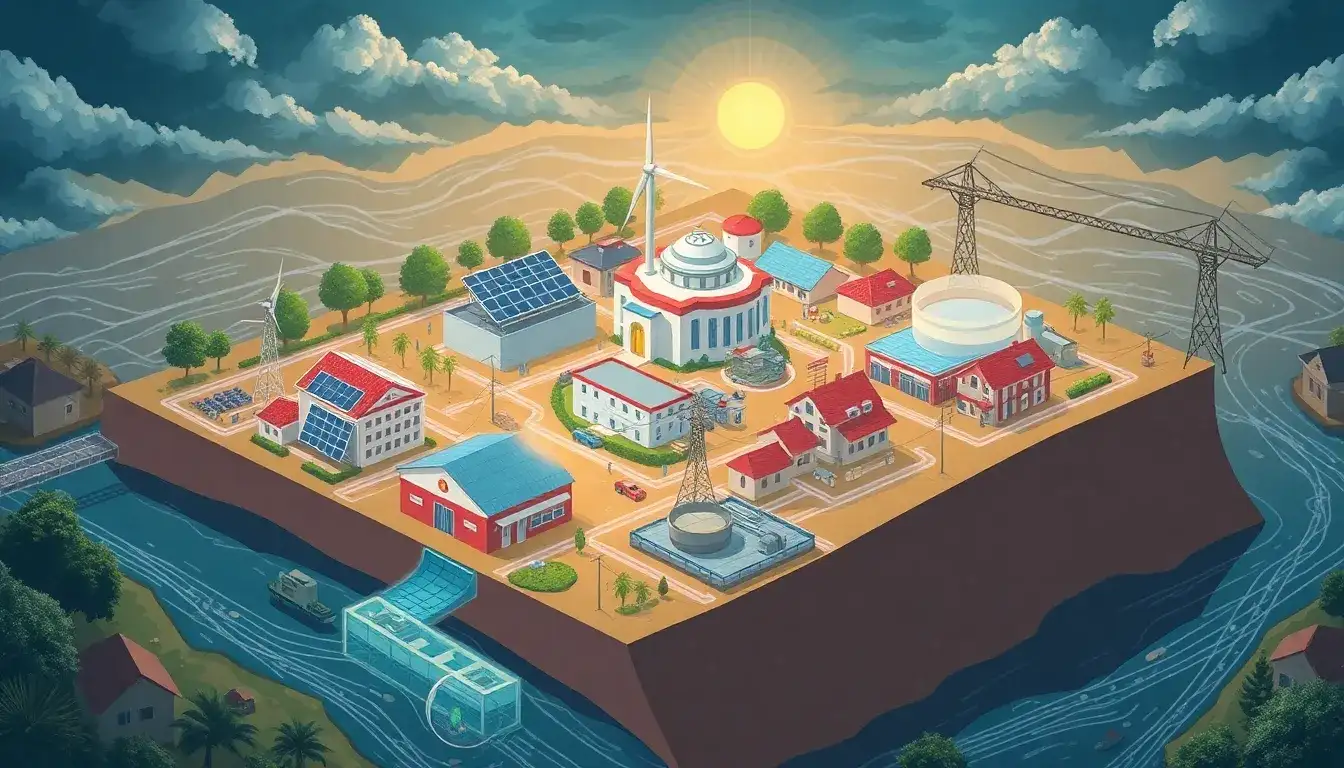
Microgrids play a pivotal role in supporting critical infrastructure during disasters, providing reliable and continuous power when traditional grid systems fail. Here are key aspects of how microgrids support critical infrastructure in disaster scenarios:
Role of Microgrids
- Power Continuity: Microgrids can “island” themselves during grid outages, ensuring that critical facilities such as hospitals, emergency shelters, and communication centers remain operational. This capability is crucial for maintaining essential services during disasters.
- Decentralization and Resilience: By decentralizing power generation and storage, microgrids reduce dependency on centralized infrastructure, which is often vulnerable to extreme weather and cyber threats. This decentralization enhances resilience by providing multiple points of power generation and distribution.
- Renewable Energy Integration: Microgrids often incorporate renewable energy sources like solar or wind power, reducing reliance on traditional fossil fuels and enhancing sustainability. This integration supports environmental resilience and reduces emissions.
- Cybersecurity Benefits: Microgrids can be designed with enhanced cybersecurity features, such as blockchain and AI-powered threat detection, to mitigate the risk of cyberattacks that could cripple centralized power systems. They can isolate compromised areas to prevent widespread disruptions.
- Disaster Relief and Recovery: Microgrids have been instrumental in disaster recovery by providing quick and reliable power to devastated areas. For example, in Puerto Rico after Hurricane Maria, microgrids helped communities recover more quickly by maintaining power for essential services.
Examples of Microgrid Support
- Puerto Rico: After Hurricane Maria, community microgrids supported critical infrastructure like medical centers and town centers, enabling quicker recovery.
- Japan: Microgrids have been used to sustain power during natural disasters, integrating features like predictive weather data to optimize energy use.
- Australia: Communities have used microgrids to maintain operations during wildfires, supporting essential services like water pumping and medical care.
Overall, microgrids serve as a critical tool for enhancing resilience in critical infrastructure during disasters by providing reliable, decentralized, and sustainable energy solutions.
Original article by NenPower, If reposted, please credit the source: https://nenpower.com/blog/what-role-do-microgrids-play-in-supporting-critical-infrastructure-during-disasters/