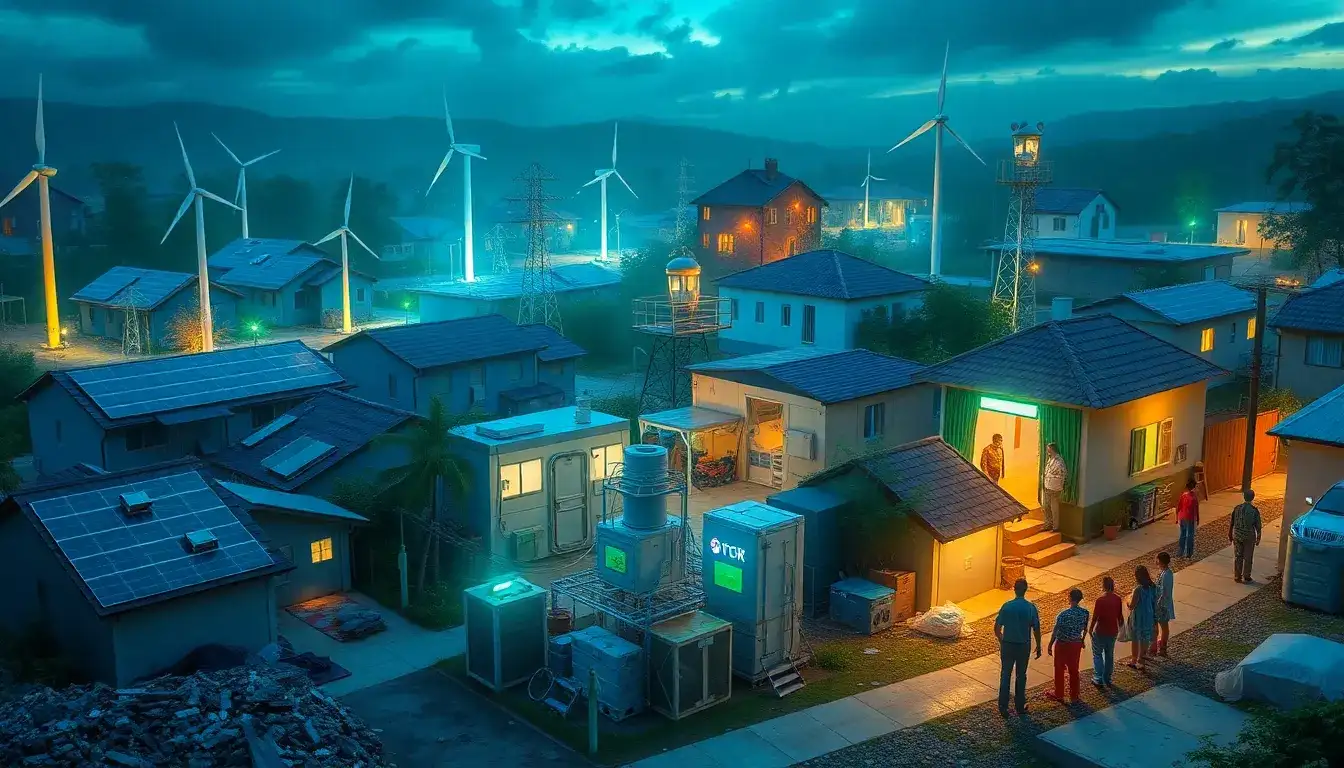
Microgrids equipped with energy storage play a critical role in disaster recovery by providing resilient, reliable, and independent power supply when the main grid fails. Their ability to operate in “island mode,” disconnecting from the central grid during outages, allows them to maintain continuous electricity for essential services and critical infrastructure such as hospitals, emergency shelters, communication centers, and water treatment facilities.
Key roles of microgrids with energy storage in disaster recovery include:
- Ensuring Continuous Power Supply: Microgrids automatically switch from the main grid to local power sources (including renewable energy coupled with battery storage) during outages caused by hurricanes, earthquakes, floods, or cyberattacks. This switch preserves electricity for essential services and supports rapid emergency response.
- Supporting Critical Infrastructure: By guaranteeing power to hospitals, field hospitals, emergency shelters, water treatment plants, and communication centers, microgrids enable first responders to coordinate and deliver aid effectively.
- Enhancing Energy Resilience and Security: Microgrids decentralize energy production, reducing dependence on vulnerable centralized grids that are prone to long outages and cyber threats. Their integration of renewable energy and battery storage mitigates fossil fuel reliance and can secure power availability even in prolonged disasters.
- Enabling Rapid Deployment: Portable or community microgrids facilitate quick restoration of power to temporary disaster facilities like mobile command centers or field hospitals, which is crucial in early recovery phases.
- Demonstrated Effectiveness: Microgrids proved their value during high-impact events such as Hurricane Maria in Puerto Rico and the Texas winter storm in 2021, where they delivered reliable energy to devastated communities and critical infrastructure while reducing reliance on the aging centralized grid.
In summary, microgrids with energy storage are vital components of disaster preparedness and recovery strategies. They provide stable, independent, and sustainable electricity to maintain vital services during grid failures, thereby strengthening community resilience and supporting effective disaster relief efforts.
Original article by NenPower, If reposted, please credit the source: https://nenpower.com/blog/what-role-do-microgrids-play-in-disaster-recovery-with-energy-storage/