

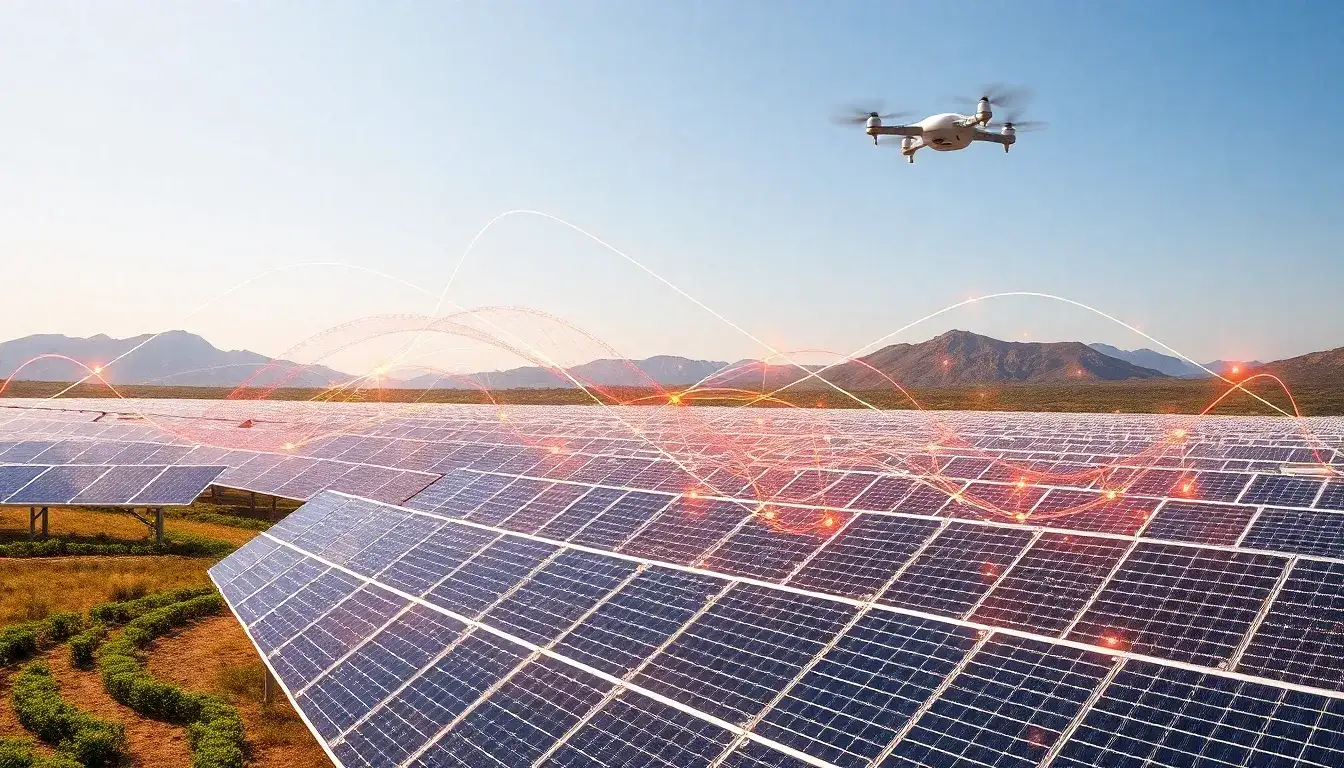
Machine learning algorithms play a multifaceted and critical role in optimizing solar panel efficiency by dynamically enhancing the performance, maintenance, and management of solar energy systems. Key contributions include:
Real-Time Performance Optimization
- Machine learning enables real-time adjustment of solar panel tilt angles and orientation to capture the maximum sunlight throughout the day, even as environmental conditions like cloud cover and temperature change. This dynamic adaptation ensures solar panels operate at peak efficiency continuously rather than relying on fixed positions.
- Algorithms analyze massive and diverse data streams—such as weather patterns, solar irradiance, temperature, and panel output—to detect suboptimal conditions (e.g., shading, debris) and automatically optimize panel positioning or trigger cleaning to restore energy capture.
Predictive Maintenance and Fault Detection
- Machine learning models forecast potential faults and performance degradation before they occur by analyzing historical data and identifying subtle anomalies that human operators might miss. This predictive maintenance reduces downtime and costly repairs by enabling preemptive interventions.
- AI-driven monitoring continuously scans for underperforming components or malfunctions, facilitating early diagnosis and minimizing energy losses caused by technical issues.
Energy Yield Forecasting and Management
- These algorithms predict solar energy output by integrating historical and real-time environmental data, improving energy planning and system design. Accurate forecasting helps optimize energy storage, consumption, and grid integration, leading to more efficient overall energy management.
- Machine learning supports balancing energy supply and demand in distributed solar systems, enhancing grid stability and reducing reliance on fossil fuel backups.
Optimization of Solar Panel Deployments
- Beyond individual panel adjustments, machine learning assists in optimizing the topology or layout of entire photovoltaic arrays, selecting configurations that maximize energy harvest under varied conditions. This includes reconfiguring series-parallel arrangements and exploring innovative structures like honeycomb or bridge link topologies to improve efficiency.
Quantifiable Efficiency Gains and Cost Reductions
- Studies and projects demonstrate that machine learning optimization can increase photovoltaic system effectiveness by up to 25-30%, significantly boosting energy yields compared to static setups.
- Operational costs are also reduced by up to 30% due to predictive maintenance and more effective fault management. Extending panel lifespan and minimizing downtime contribute further to better return on investment.
Summary Table of Machine Learning Roles in Solar Panel Efficiency Optimization
| Role | Description | Impact |
|---|---|---|
| Real-Time Angle & Orientation Optimization | Dynamically adjusts panel tilt and direction to maximize sunlight capture | Increased daily energy yield by up to 25-30% |
| Predictive Maintenance | Forecasts potential faults before they occur | Reduced downtime and maintenance costs |
| Fault Detection & Diagnosis | Early detection of inefficiencies or malfunctions | Minimizes energy losses, prevents failures |
| Energy Yield Forecasting | Predicts solar output using weather and performance data | Better energy planning and storage management |
| System Topology Optimization | Reconfigures PV array layouts for optimal operation | Enhanced array efficiency and performance |
| Grid Integration & Load Balancing | Balances production and consumption ensuring stable grid connection | Reduced fossil fuel reliance, stable supply |
In essence, machine learning algorithms serve as an intelligent, adaptive backbone that continuously optimizes solar panel operation, maintenance, and system-level management to maximize energy efficiency, reduce costs, and support sustainable energy goals.
Original article by NenPower, If reposted, please credit the source: https://nenpower.com/blog/what-role-do-machine-learning-algorithms-play-in-optimizing-solar-panel-efficiency/

