

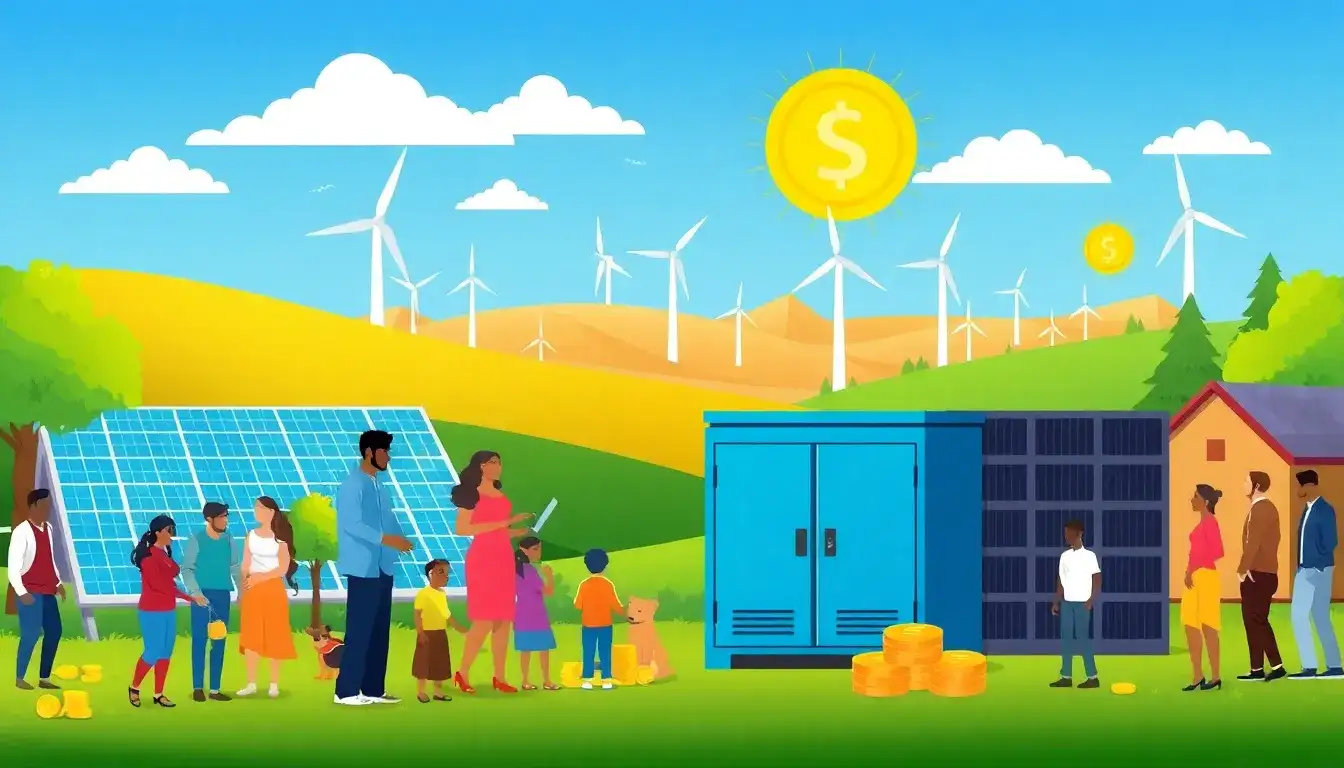
Low- or no-cost financing options play a crucial role in increasing energy storage adoption by addressing the barriers associated with high upfront costs and financial risks. These financing options help make energy storage systems more accessible and economical, particularly for vulnerable communities and developing countries.
Key Roles of Low- or No-Cost Financing Options:
- Reducing Financial Barriers: Low- or no-cost financing options mitigate high upfront costs, which are significant obstacles to adopting energy storage technologies. By lowering these costs, more entities can invest in energy storage, thereby increasing its adoption rate.
- Improving Access to Clean Energy: In developing countries and rural areas, low-cost financing is essential for projects that aim to replace polluting energy sources with cleaner alternatives. Initiatives like the Climate Investment Funds (CIF) provide substantial financial support to ensure access to clean energy technologies, including energy storage systems.
- Enhancing Affordability: Models like on-bill financing allow consumers to repay energy upgrades through their monthly utility bills, making energy storage more affordable for households with limited financial resources. This improves energy affordability and access to cleaner energy sources.
- Promoting Sustainable Development: By facilitating the adoption of energy storage, these financing options support sustainable development goals, such as reducing greenhouse gas emissions and achieving energy independence. They also help implement renewable energy projects that are crucial for grid stability and decarbonization efforts.
- Increasing Investment and Co-Financing: Programs like CIF’s Global Energy Storage Program attract additional investments by leveraging public funds to stimulate private sector contributions. Each dollar invested in such programs can attract significant co-financing, leading to a multiplier effect in energy storage adoption.
Examples of Successful Low-Cost Financing Initiatives:
- Rural Energy Savings Program (RESP): Offers no-interest loans to rural utilities, which in turn develop affordable on-bill financing programs for clean energy upgrades.
- Climate Investment Funds (CIF): Supports large-scale energy storage projects in developing countries through low-cost financing, helping them transition to cleaner energy systems.
In summary, low- or no-cost financing options are essential for overcoming financial barriers and increasing the adoption of energy storage systems. They facilitate access to clean energy, support sustainable development, and encourage additional investment in the energy sector.
Original article by NenPower, If reposted, please credit the source: https://nenpower.com/blog/what-role-do-low-or-no-cost-financing-options-play-in-increasing-energy-storage-adoption/

