

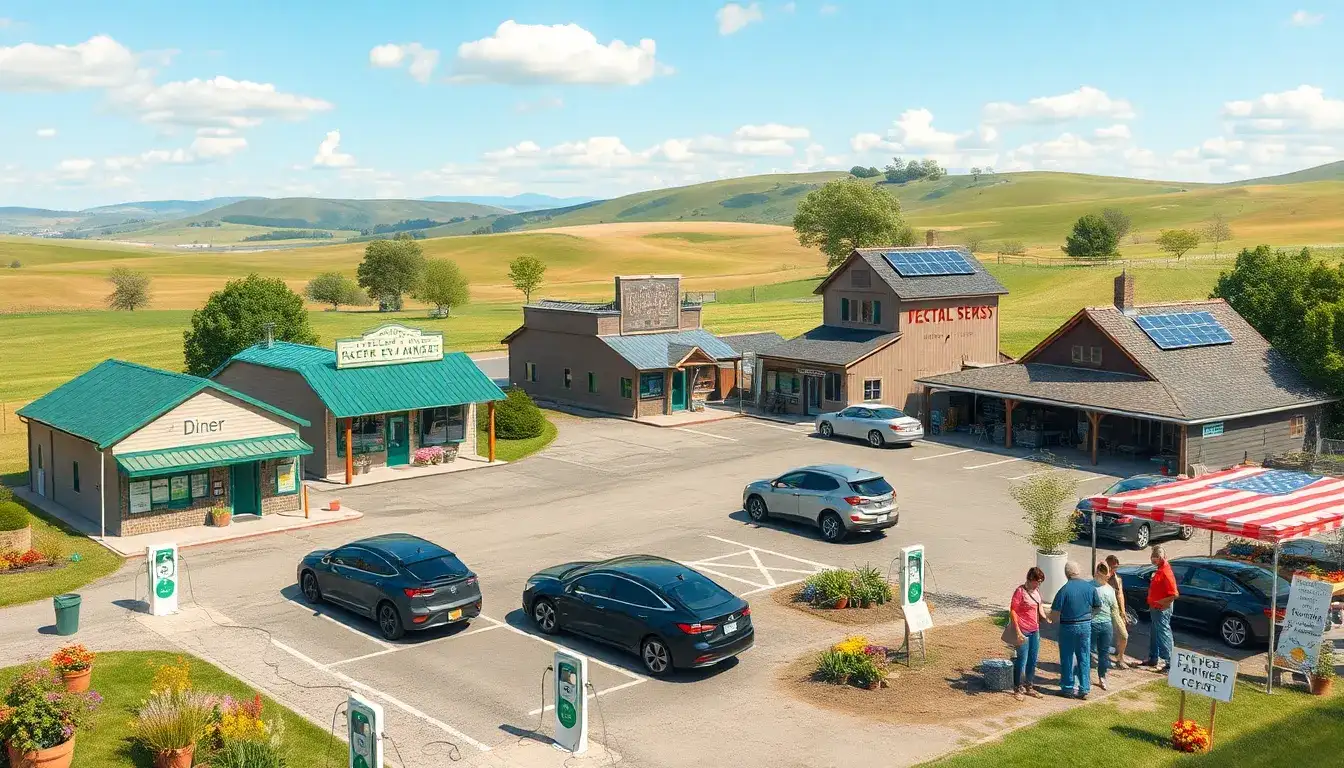
Local businesses serve as critical partners in expanding EV charging infrastructure in rural areas by providing accessible charging locations, supporting economic growth, and collaborating on implementation strategies:
1. Providing charging access points
Local businesses like gas stations, grocery stores, and convenience stores can install Level 2 chargers, creating convenient charging hubs for both residents and travelers. These locations are often strategically placed along highways or in town centers, addressing range anxiety and encouraging EV adoption.
2. Boosting local economies
Installing chargers attracts EV drivers who may patronize nearby businesses while charging, generating additional revenue for shops, restaurants, and hotels. Charging stations can also position rural towns as stops for tourism and long-distance travelers, fostering economic growth through increased commerce.
3. Partnering with utilities and governments
Businesses collaborate with utility companies to address grid upgrades and power distribution needs, ensuring sufficient electrical capacity for charging stations. Public-private partnerships help share costs and streamline infrastructure development, with businesses often serving as anchor sites for charger installations.
4. Supporting workforce development
Expanding charging infrastructure encourages the growth of EV-related industries, including repair centers and dealerships, creating local jobs and long-term economic stability. This aligns with broader initiatives to integrate rural areas into national EV transition plans.
Original article by NenPower, If reposted, please credit the source: https://nenpower.com/blog/what-role-do-local-businesses-play-in-expanding-ev-charging-infrastructure-in-rural-areas/

