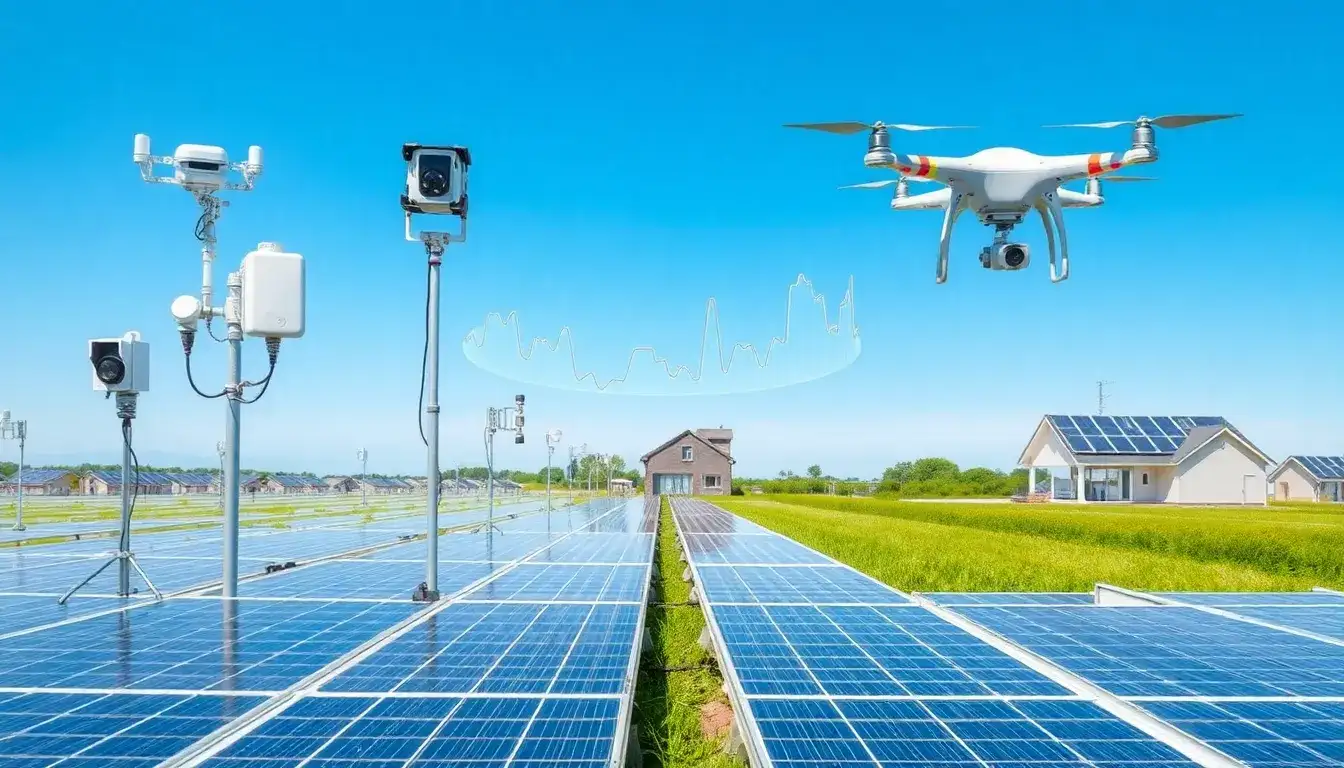
IoT devices play a critical role in solar panel monitoring by enabling real-time data collection, analysis, and remote management, which significantly enhances the efficiency, reliability, and maintenance of solar energy systems.
Key Roles of IoT Devices in Solar Panel Monitoring
1. Real-Time Data Tracking and Analysis
IoT sensors embedded in solar panels continuously measure key parameters such as voltage, current, power output, panel temperature, solar irradiance, and environmental conditions like weather factors. This real-time data collection allows immediate insight into how each panel and the system as a whole is performing. For example, sensors detect decreases in power output that might indicate dirt buildup, shading, or equipment faults.
2. Remote Monitoring and Management
IoT gateways collect sensor data and transmit it to cloud platforms, enabling operators to remotely monitor solar panels regardless of location, which is especially valuable for installations in remote or hard-to-access areas. Cloud-based analytics platforms process the data, detect anomalies, predict equipment failures using machine learning models, and generate alerts and performance reports, allowing for proactive maintenance before costly breakdowns occur.
3. Optimization of Energy Production
By continuously analyzing real-time and historical data, IoT systems help optimize solar panel orientation, energy consumption patterns, and inverter performance. Operators and users can make informed decisions on energy use, maximizing efficiency and reducing wastage. This dynamic optimization supports higher overall solar energy yield and better return on investment.
4. Enhanced Security and Asset Protection
In addition to performance monitoring, IoT devices like cameras and environmental sensors contribute to securing solar panels against theft, vandalism, and damage from extreme weather, thus safeguarding the asset and maintaining continuous energy production.
5. Predictive Maintenance and Fault Detection
IoT-enabled smart sensors act as “the eyes and ears” of the solar system, detecting small performance dips or abnormal conditions early. For instance, monitoring panel temperature helps identify overheating issues, while electrical sensors detect voltage or current irregularities. Predictive maintenance informed by IoT analytics prevents system downtime and reduces operational costs.
Summary Table of IoT Roles in Solar Panel Monitoring
| Role | Description | Benefits |
|---|---|---|
| Real-Time Data Collection | Continuous measurement of panel voltage, current, temperature, irradiance, and environmental data | Immediate insight into system health; early fault detection |
| Remote Monitoring & Control | Use of gateways and cloud platforms for remote system management | Access to data from anywhere; reduces need for onsite visits |
| Performance Optimization | Data-driven energy management, panel orientation, and inverter tuning | Maximizes power output; reduces energy waste |
| Security Enhancement | Cameras and sensors to detect theft, vandalism, and weather impacts | Protects solar assets; ensures uninterrupted operation |
| Predictive Maintenance | Early detection of faults using machine learning and sensor analytics | Minimizes downtime; lowers maintenance costs |
In conclusion, IoT devices transform solar panel monitoring by providing continuous, comprehensive data and remote management capabilities that improve system efficiency, enhance security, and enable proactive maintenance—ultimately boosting solar energy production and reducing operational costs.
Original article by NenPower, If reposted, please credit the source: https://nenpower.com/blog/what-role-do-iot-devices-play-in-solar-panel-monitoring/