

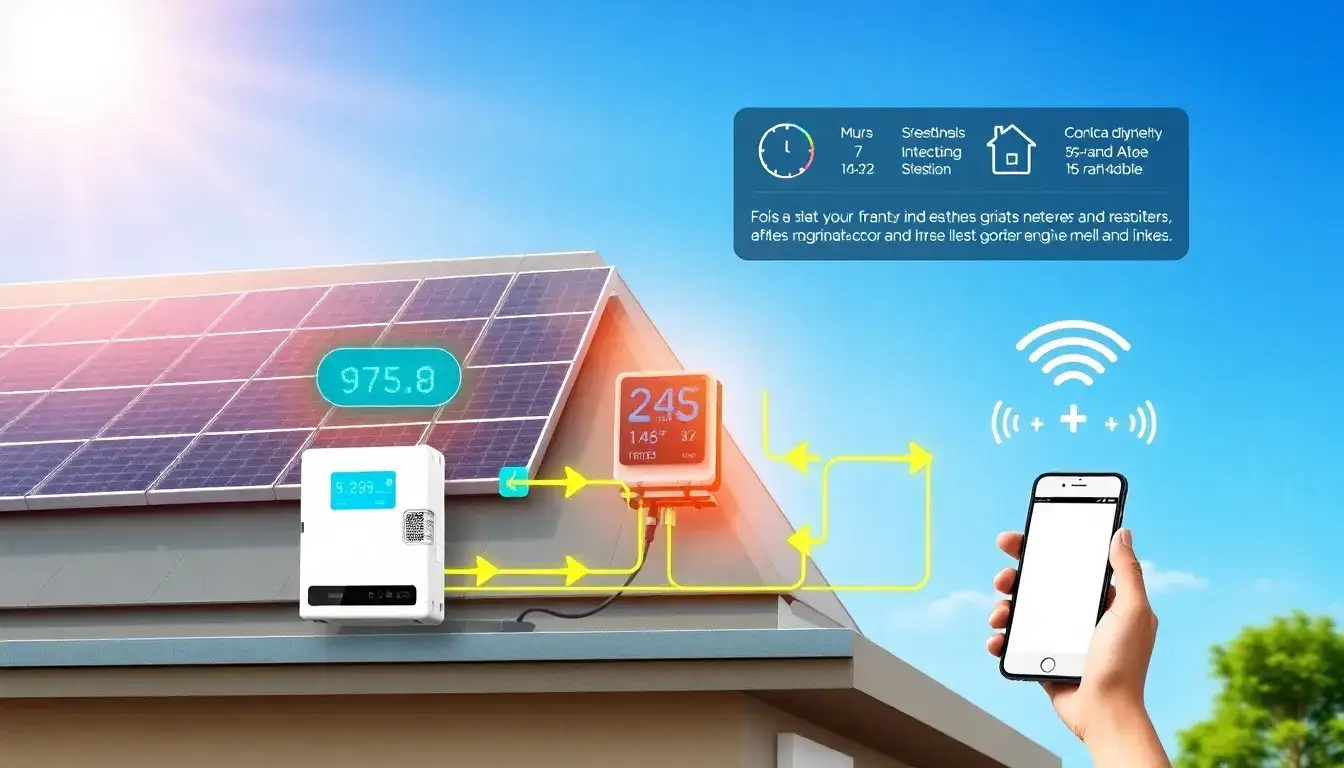
Inverters play a crucial role in solar panel monitoring systems by serving as both the power conversion and data collection hub for the solar energy system. Their primary function is to convert the direct current (DC) produced by solar panels into alternating current (AC) compatible with home use and the electrical grid. Beyond power conversion, modern solar inverters come equipped with built-in monitoring capabilities that track key performance parameters such as energy production, voltage, and current.
These monitoring features embedded in the inverter allow it to collect real-time data on the overall system performance. This data is then communicated via a network portal to centralized monitoring platforms, often cloud-based, where it can be accessed remotely through web or mobile applications. This enables users to view real-time and historic energy production and system status anytime and from anywhere with an internet connection.
Specifically, string inverters—which handle multiple series-connected solar panels—aggregate output data from the entire string, providing a comprehensive view of system efficiency and health. By monitoring these inverters, users can track total system output and detect issues impacting performance.
In short, the inverter acts as the interface between the solar panels and the monitoring system, converting power while simultaneously gathering and transmitting critical operational data. This integration simplifies solar system management, helps optimize energy consumption decisions, and supports troubleshooting for maintaining optimal performance.
Original article by NenPower, If reposted, please credit the source: https://nenpower.com/blog/what-role-do-inverters-play-in-solar-panel-monitoring-systems/

