

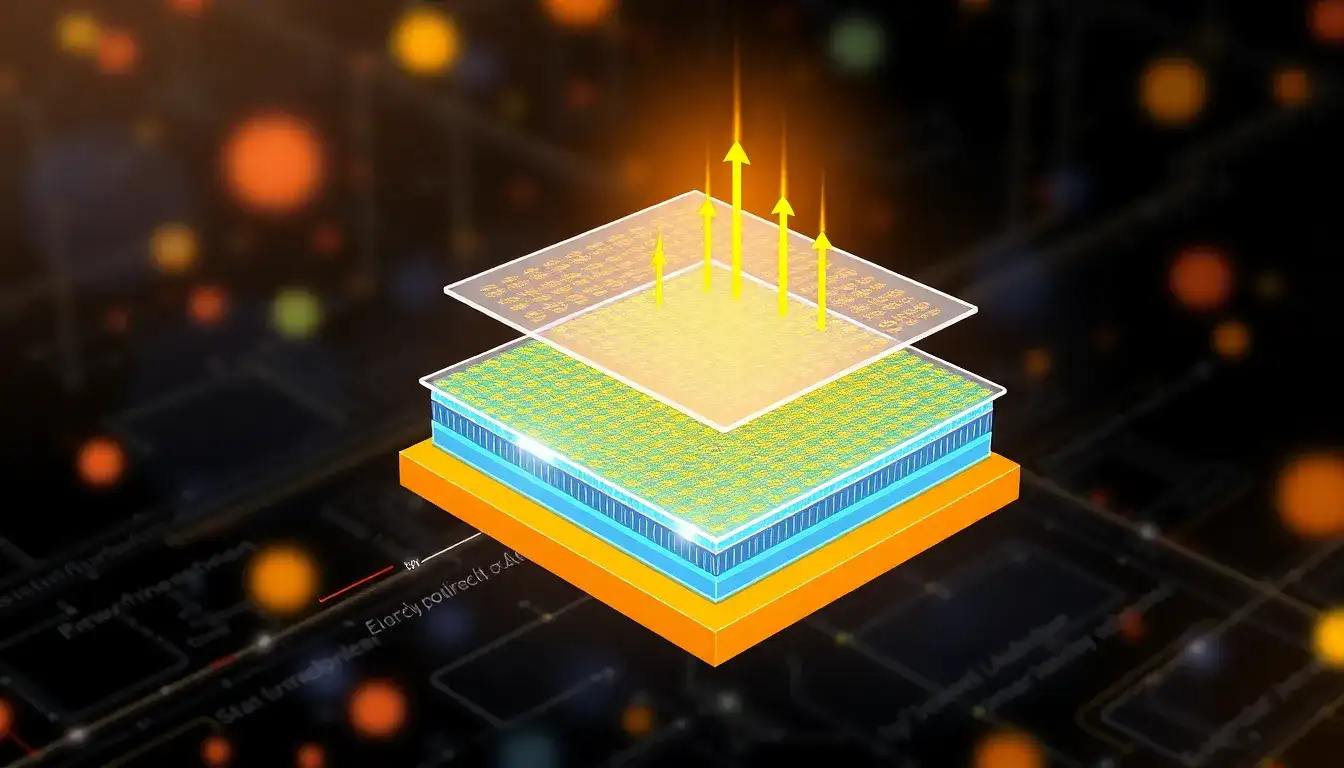
Interlayers play a crucial role in improving the stability of perovskite-silicon tandem solar cells by addressing key challenges such as nonradiative recombination, contact resistance, and interfacial defects. Here are some ways interlayers enhance stability:
- Mitigation of Nonradiative Recombination:
- Magnesium Fluoride (MgF) Interlayer: An ultrathin MgF interlayer at the perovskite/C60 interface helps to mitigate nonradiative recombination. It adjusts the surface energy of the perovskite layer and displaces C60 to improve electron extraction, which leads to higher efficiency and stability.
- Improvement of Interfacial Properties:
- Indium Tin Oxide (ITO) Interlayer: Deposited between the electron transport layer (ETL) and transparent conducting oxide (TCO), ITO interlayers help regulate contact resistance and energy-level alignment. This results in enhanced power conversion efficiency (PCE) and stability, with devices retaining a significant portion of their initial PCE over long periods.
- Enhanced Charge Extraction and Separation:
- Piperazinium Iodide Interfacial Modification: Used in conjunction with a triple-halide perovskite, this interlayer improves band alignment and enhances charge extraction at the electron-selective contact. This reduces recombination losses and boosts stability and efficiency.
In summary, interlayers in perovskite-silicon tandem solar cells improve stability by minimizing recombination losses, optimizing interfacial properties, and enhancing charge extraction. These advancements have led to the development of highly efficient and stable solar cells, reaching efficiencies beyond 30% with improved durability under various environmental conditions.
Original article by NenPower, If reposted, please credit the source: https://nenpower.com/blog/what-role-do-interlayers-play-in-improving-the-stability-of-perovskite-silicon-tandem-solar-cells/

