

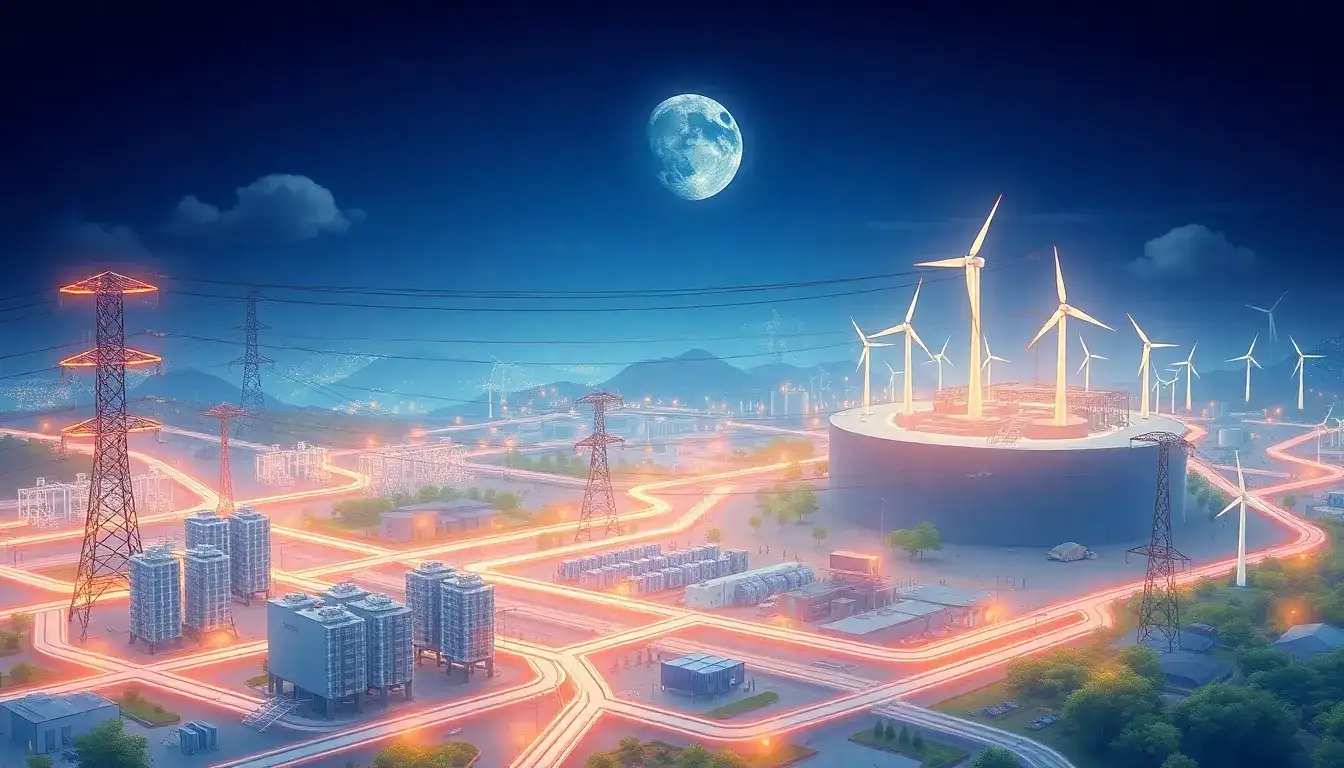
Grid Modernization as a Catalyst for LDES
- Renewable Energy Integration
LDES compensates for the intermittency of solar and wind by storing excess energy during peak generation and releasing it during demand surges or low production. This mitigates grid instability caused by the “duck curve” effect, where daytime solar overproduction clashes with evening demand spikes. - Infrastructure Optimization
Energy storage reduces strain on existing grids by shifting consumption to off-peak hours, deferring costly upgrades to transmission lines and power plants. Advanced LDES technologies like flow batteries and compressed air storage enable multi-day discharge, aligning with grid operators’ needs for flexible, long-term capacity. - Market and Policy Frameworks
Modernization efforts include policy reforms to incentivize LDES adoption. California’s mandates for deeper storage durations exemplify regulatory steps to prioritize LDES in resource adequacy planning, while federal rules are evolving to compensate storage for grid services like frequency control traditionally provided by fossil fuels.
Energy Security and LDES Growth
- Grid Resilience
LDES enhances resilience against extreme weather and outages by providing backup power for extended periods, reducing reliance on vulnerable centralized generation. Technologies like pumped hydro and thermal storage offer multi-day discharge capabilities critical during prolonged disruptions. - Decarbonization Pressures
As grids phase out fossil fuels, LDES becomes essential to maintain reliability without carbon-intensive peaker plants. McKinsey projects over 1.5 TW of LDES will be needed globally by 2040 to support deep decarbonization. - Supply Chain and Environmental Balance
While LDES reduces dependence on fossil fuel imports, its expansion requires addressing environmental concerns around battery materials. Innovations in recyclable or non-lithium technologies (e.g., iron-air batteries) are key to sustainable scaling.
Challenges and Pathways Forward
- Cost and Investment: High upfront costs persist, though policies like extended utility contracts and federal incentives are emerging to de-risk deployments.
- Technology Maturity: Compressed air and flow batteries need further R&D to achieve cost parity with shorter-duration lithium-ion systems.
- Interoperability: Grid modernization must prioritize standardization to integrate LDES with existing infrastructure and distributed energy resources.
In summary, grid modernization and energy security demands are accelerating LDES adoption, driven by policy shifts, technological advances, and the urgent need for a flexible, low-carbon power system.
Original article by NenPower, If reposted, please credit the source: https://nenpower.com/blog/what-role-do-grid-modernization-and-energy-security-play-in-the-growth-of-long-duration-energy-storage/

