

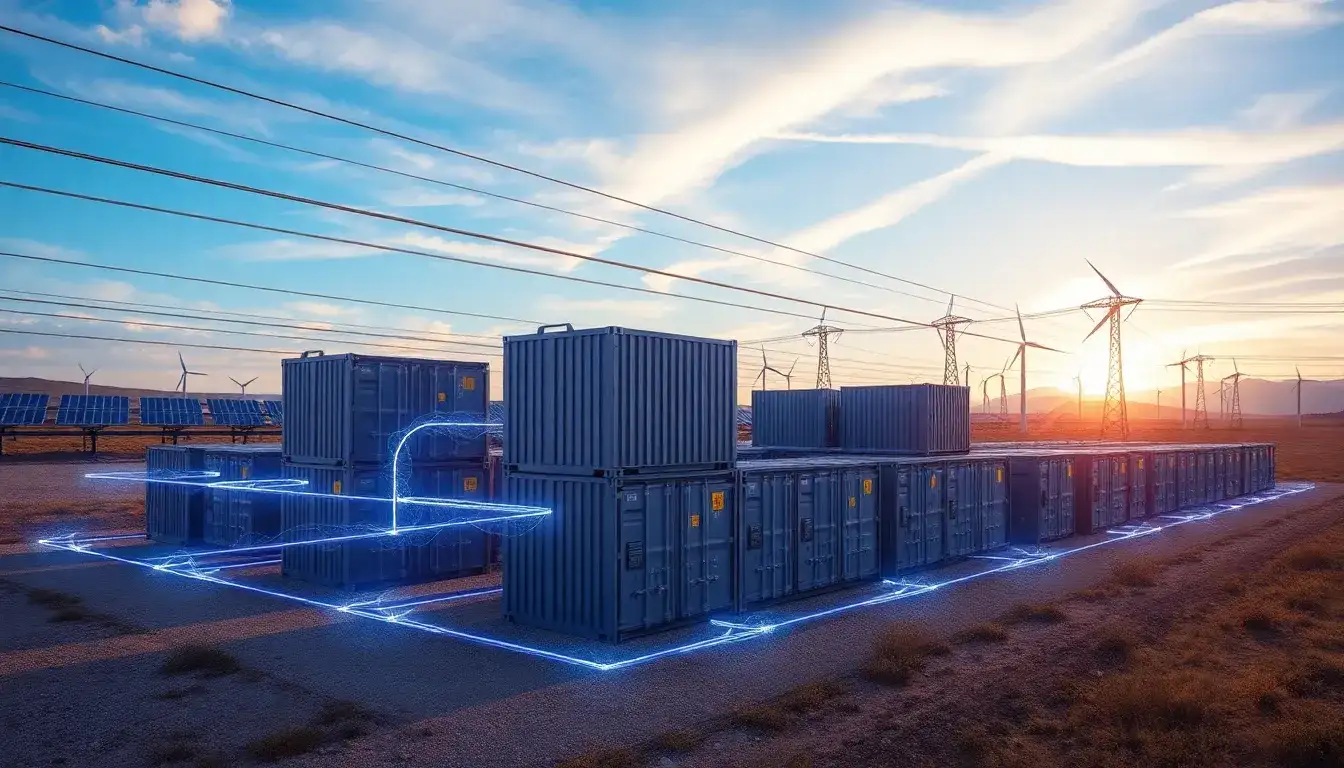
Grid-forming inverters play a critical role in utility-scale battery energy storage systems (BESS) by enabling these systems to actively stabilize and support the electrical grid, especially as inverter-based resources (IBRs) such as solar and wind increase in penetration.
Key Roles of Grid-Forming Inverters in Utility-Scale Battery Systems
1. Grid Stabilization and Support
Grid-forming (GFM) inverters allow battery storage systems to mimic the behavior of traditional synchronous generators by forming the grid voltage waveform rather than merely following it (as grid-following inverters do). This means GFM inverters can provide:
- Inertia-like response and damping behavior
- Voltage amplitude, phase angle, and frequency control
- Instantaneous, delay-free power response to grid events
These capabilities help stabilize the grid, particularly in weak or isolated areas with high renewable penetration where traditional synchronous machines are less available.
2. Increased Renewable Hosting Capacity
Studies have shown that replacing grid-following BESS with grid-forming BESS in transmission systems enhances the ability to host more solar and wind generation. By providing voltage and frequency support, GFM BESS reduce the risk of instability and allow more renewables to connect without requiring expensive transmission upgrades.
3. Replacement of Synchronous Machine Functions
Grid-forming inverters combined with battery storage provide traditional grid services that used to rely on mechanical rotating mass, such as:
- System inertia
- Short-circuit current contribution
- Frequency regulation
- Voltage support
This helps maintain reliable grid operation even as conventional generators retire, enabling a more flexible and resilient energy transition.
4. Cost Effectiveness and Versatility
Integrating advanced GFM controls in utility-scale batteries is proven to be cost-effective compared to alternative solutions like synchronous condensers or transmission expansion. The ability to tune inverter parameters over the asset lifetime improves performance and adaptability across different grid conditions and applications, including congestion management.
Summary Table
| Role | Description | Benefits |
|---|---|---|
| Grid Stability | Form grid voltage, provide inertia-like response and damping, fast power response | Enhances reliability, especially in weak grids |
| Renewable Hosting Capacity | Increase capacity for solar and wind by supporting voltage and frequency | More renewables can connect, defers costly upgrades |
| Replacement of Synchronous Machines | Provide inertia, short-circuit level, frequency & voltage support | Enables low-carbon grid operation without fossil plants |
| Cost Effectiveness & Versatility | Tunable parameters, multi-purpose functionality, cheaper than alternatives | Adaptable to grid needs, reduces capital costs |
In conclusion, grid-forming inverters in utility-scale battery systems are essential enablers of a stable, reliable, and resilient power grid with high shares of renewable energy. They provide key grid services traditionally supplied by rotating generators, improve the hosting capacity for renewables, and offer a cost-effective solution for the evolving electricity system.
Original article by NenPower, If reposted, please credit the source: https://nenpower.com/blog/what-role-do-grid-forming-inverters-play-in-utility-scale-battery-systems/

