

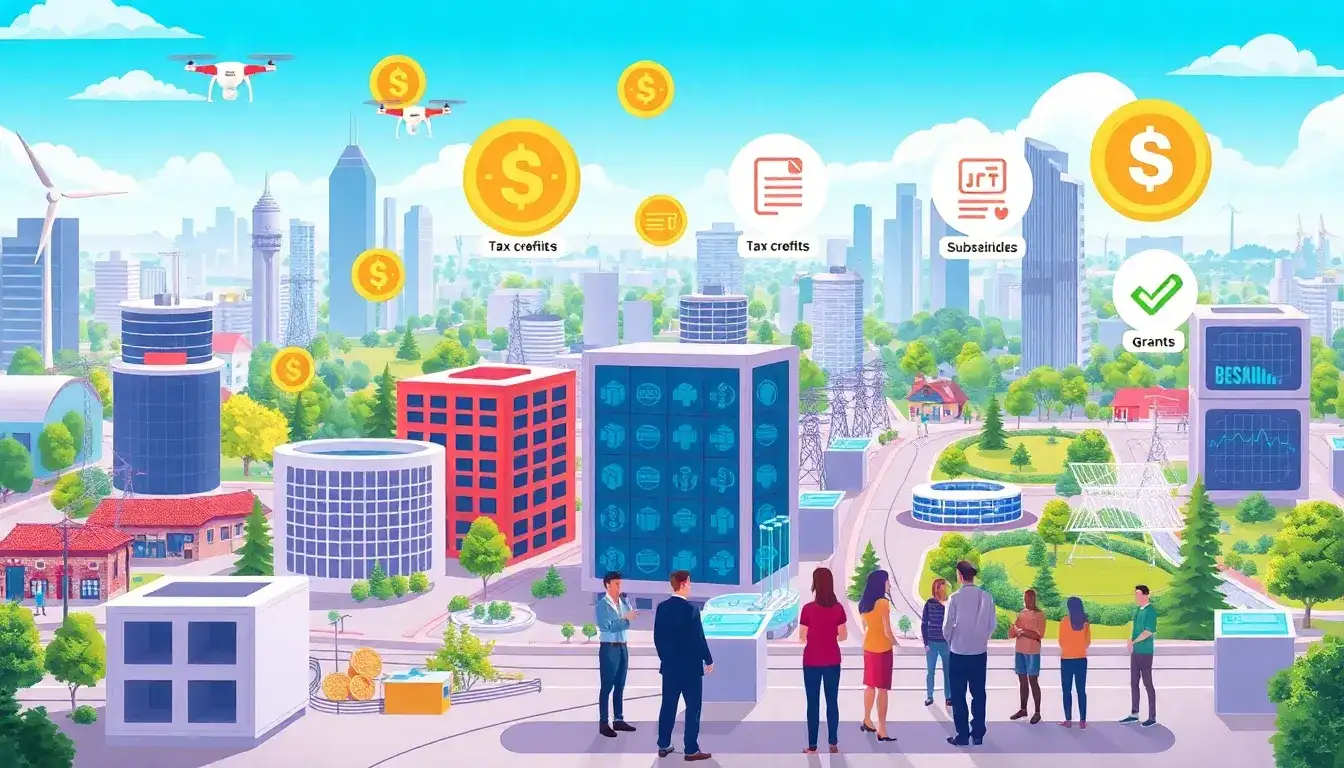
Government incentives play a crucial role in reducing the cost of Battery Energy Storage System (BESS) installations by providing financial benefits that make these systems more affordable. Here are some ways these incentives work:
Role of Government Incentives
1. Federal Tax Credits
- Investment Tax Credit (ITC): Thanks to the Inflation Reduction Act (IRA), residential BESS installations over 3 kWh are eligible for a 30% federal tax credit until 2032. This can save homeowners thousands of dollars on their system cost.
- Commercial Opportunities: For commercial properties, the Clean Electricity Investment Credit (CEIC) offers up to a 50% credit, depending on factors like using U.S.-sourced materials or locating projects in energy communities.
2. State-Level Rebates
- Upfront Rebates: Many states offer direct rebates to homeowners and businesses. For example, California’s Self-Generation Incentive Program (SGIP) provides incentives based on system capacity, with higher rates for those in high-risk areas.
- Performance-Based Incentives: Some programs also offer performance-based incentives, rewarding participants for contributing to grid stability and peak demand management. Connecticut’s Energy Storage Solutions program is an example, providing up to $16,000 in rebates for residential customers and 50% savings for businesses.
3. Utility Programs
- Utility Incentives: Some utilities offer additional incentives, such as Hawaii’s Battery Bonus Program, which provides cash incentives for participating in daily grid support during peak hours.
Impact on BESS Installations
These government incentives significantly reduce the upfront cost of BESS installations, making them more accessible and economically viable for both residential and commercial users. By lowering the financial barriers, these incentives encourage the adoption of clean energy technologies, fostering a more sustainable energy landscape.
In summary, government incentives play a vital role in promoting energy storage by offsetting costs and creating financial returns for system owners, which helps accelerate the integration of renewable energy sources into the grid.
Original article by NenPower, If reposted, please credit the source: https://nenpower.com/blog/what-role-do-government-incentives-play-in-reducing-the-cost-of-bess-installations/

