

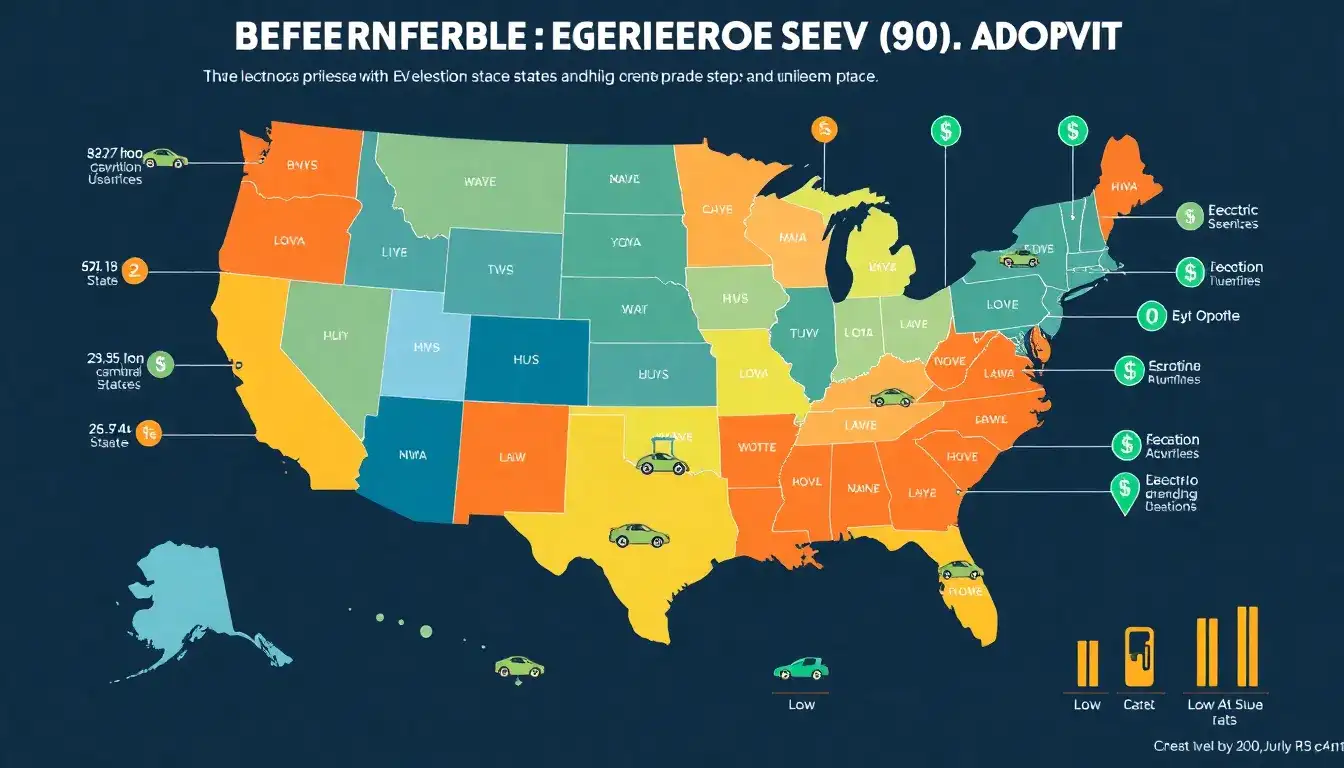
Fuel prices significantly influence electric vehicle (EV) adoption across different states, primarily through their impact on consumer incentives to switch from gasoline-powered vehicles to EVs.
Role of Fuel Prices in EV Adoption
- Gasoline prices have a stronger effect than electricity prices on EV demand. Research focusing on California shows that changes in gasoline prices impact demand for EVs roughly four to six times more than equivalent changes in electricity prices. This underscores how gasoline price hikes motivate consumers to consider EVs as cost-saving alternatives for fuel.
- High gasoline prices accelerate EV adoption. The record-high gasoline prices experienced in 2022 contributed to greater interest in transitioning to EVs, as consumers sought to reduce fuel costs and emissions. This effect tends to be more pronounced in states or periods when gasoline prices spike, pushing consumers toward cleaner, more economical electric alternatives.
- Recent decreases in fuel prices may slow EV adoption. After the peak in 2022, gasoline prices have fallen, which could slow the pace of EV adoption as the immediate financial incentive to switch declines. Consumers may feel less urgency to move away from internal combustion engines when gas is cheaper.
- State-level policies interact with fuel prices. Some states have implemented policies such as bans on new internal combustion engine (ICE) vehicle sales and subsidies or incentives for EV purchases and infrastructure. These policies, combined with fuel price dynamics, create the overall environment that affects EV uptake.
Additional Insights
- Fuel economy and cost savings from EVs matter. EVs improve fuel economy and lower fuel costs relative to gasoline vehicles, making them attractive during times of high fuel prices.
- Oil supply constraints may keep gasoline prices high despite increasing EV adoption. As EVs reduce gasoline demand, refiners might reduce supply, potentially keeping gasoline prices elevated and reinforcing the incentive to adopt EVs.
- Infrastructure and clean energy availability also shape EV adoption. The broader shift from fossil fuels to electricity requires expanded charging infrastructure and cleaner electricity generation, which varies by state and influences how attractive EV adoption is alongside fuel price factors.
In summary, fuel prices—particularly gasoline prices—play a critical and more influential role than electricity prices in driving EV adoption across states. High gasoline prices increase consumer demand for EVs due to fuel cost savings, while decreases in gasoline prices can dampen that demand. State-specific policies and infrastructure development further modulate this relationship.
Original article by NenPower, If reposted, please credit the source: https://nenpower.com/blog/what-role-do-fuel-prices-play-in-ev-adoption-across-different-states/

