

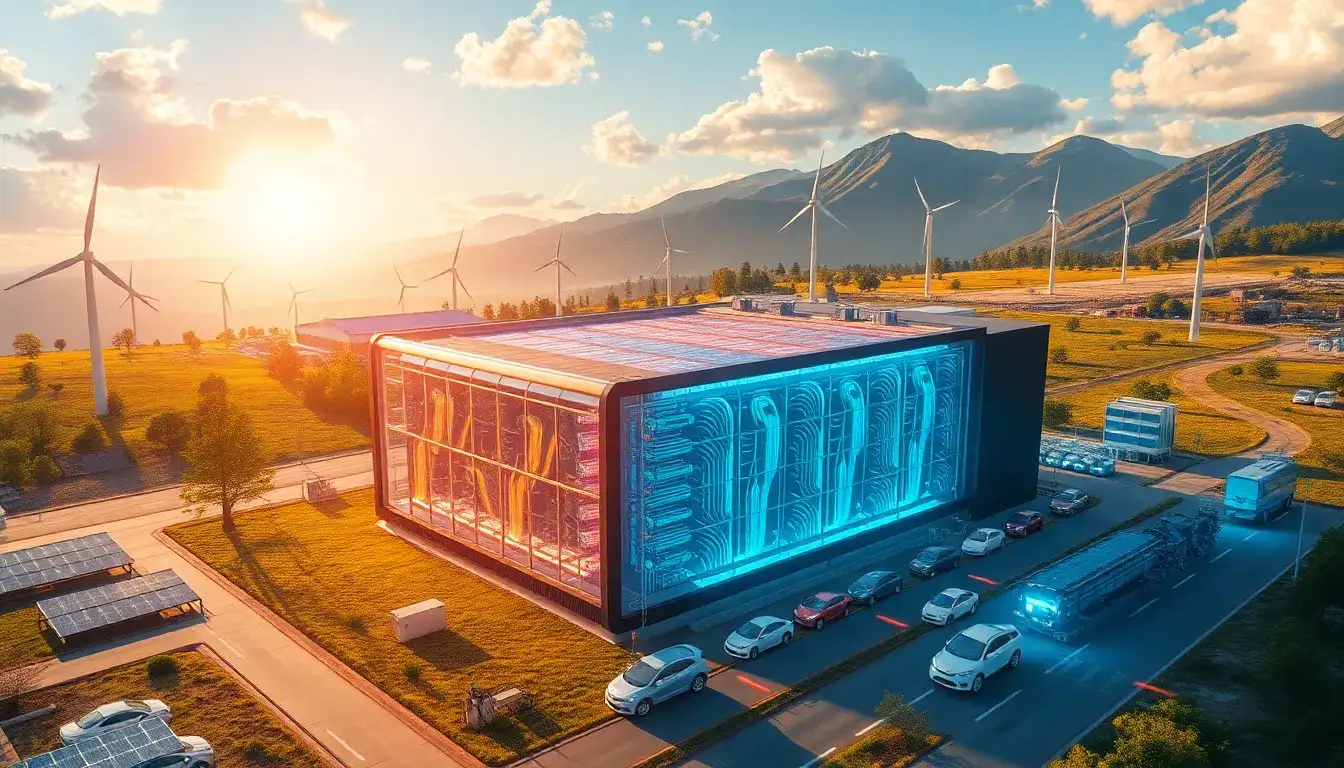
Flow batteries play a significant role in the long-duration energy storage market due to their unique attributes and benefits. Here are some key aspects of their role:
Key Attributes of Flow Batteries
- Long Lifetimes: Flow batteries, particularly vanadium types, are noted for their extended lifetimes and stability. They can perform over 20,000 charge-discharge cycles, equivalent to 15-25 years of operation with minimal performance decline. This compares favorably to lithium-ion batteries, which typically last for about 10,000 cycles or 15 years in stationary applications.
- Scalability: Unlike lithium-ion batteries, flow batteries scale effectively by adding larger electrolyte tanks and increasing the electrolyte volume. This scalability reduces their cost per unit as size increases, making them more cost-competitive for large-scale applications.
- Long-Duration Storage: Flow batteries are ideal for long-duration energy storage, becoming more competitive with lithium-ion batteries when discharging energy over more than four hours. This makes them suitable for grid-scale applications where renewable energy sources fluctuate.
- Cost Potential: The U.S. Department of Energy projects that strategic innovations could reduce the levelized cost of storage (LCOS) for flow batteries significantly, potentially dropping to as low as $0.052/kWh by 2030. This would make them highly competitive in the energy storage market, especially for long-duration storage applications.
Role in the Energy Storage Market
- Grid-Scale Storage: Flow batteries are designed to store hundreds of megawatt-hours of energy, making them capable of powering thousands of homes for extended periods. They offer a promising solution for integrating renewable energy sources into the grid by smoothing out energy supply and demand imbalances.
- Competition with Lithium-Ion Batteries: While lithium-ion batteries dominate short-duration applications, flow batteries are positioned as a key competitor for long-duration storage. Their advantages in scalability, lifespan, and cost-effectiveness for large-scale applications make them attractive alternatives for energy systems requiring extended energy storage periods.
In summary, flow batteries are crucial for long-duration energy storage due to their scalability, long lifetimes, and cost potential. As technology advances and costs decrease, they are likely to become a cornerstone of energy storage solutions for renewable energy systems.
Original article by NenPower, If reposted, please credit the source: https://nenpower.com/blog/what-role-do-flow-batteries-play-in-the-long-duration-energy-storage-market/

