

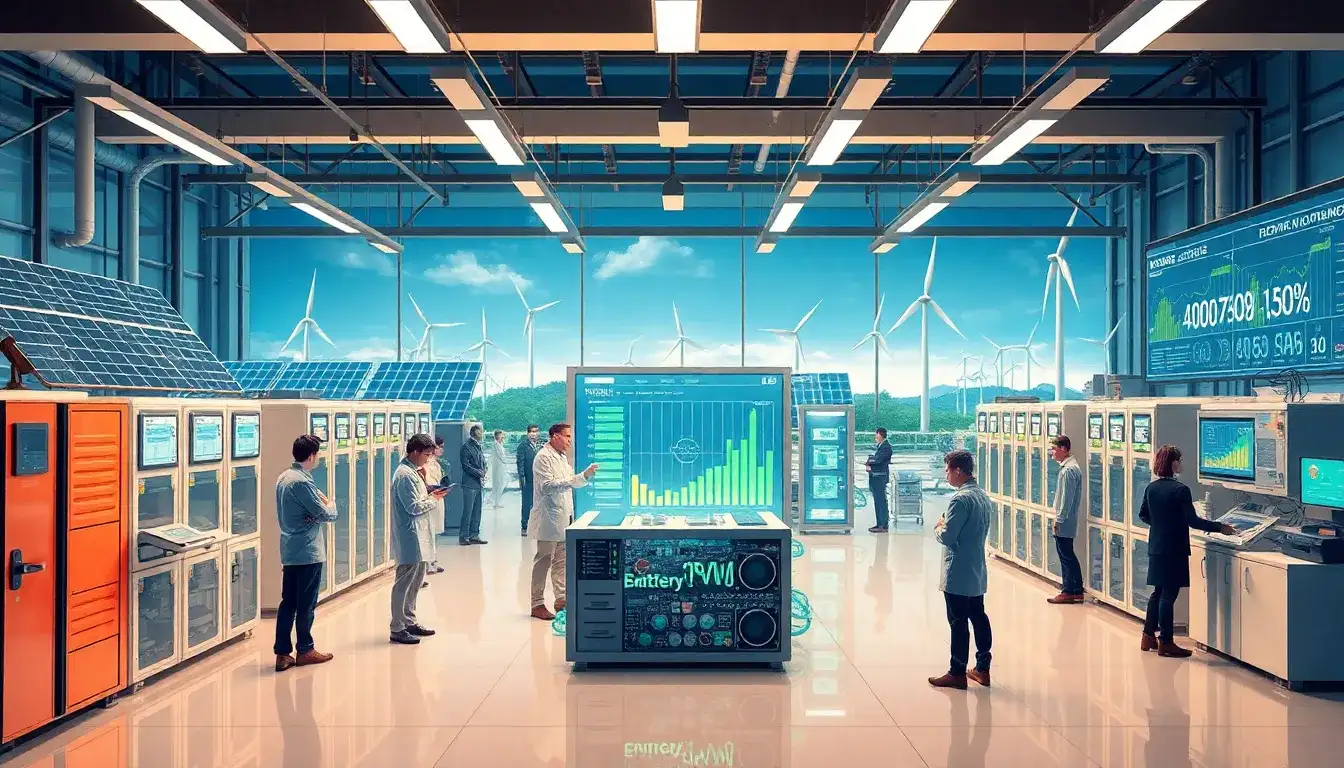
Demonstration programs serve as critical accelerators for energy storage innovation by bridging the gap between research and commercialization. They validate emerging technologies in real-world conditions, reduce financial and technical risks for developers, and provide actionable insights for scaling deployments.
Key roles of energy storage demonstration programs:
- Technology validation: Test novel storage systems (e.g., non-lithium technologies, long-duration solutions) under operational grid conditions to prove reliability, safety, and performance metrics.
- Cost reduction: Target ambitious goals like DOE’s Storage Shot initiative, which aims to reduce grid-scale energy storage costs by 90% for 10+ hour systems by 2030 through iterative demonstration-driven improvements.
- Grid resilience: Enable use cases such as microgrid integration, peak load reduction, enhanced renewable energy utilization, and critical infrastructure protection by demonstrating storage’s role in stabilizing transmission/distribution networks.
- Supply chain development: Prioritize U.S.-manufactured technologies and secure materials to reduce reliance on foreign-dominated supply chains.
- Policy and investment frameworks: Generate performance data to guide regulatory standards and attract private-sector funding for commercial-scale projects.
The U.S. Department of Energy’s $355M Energy Storage Demonstration Program exemplifies this approach, targeting 12 specific applications from EV fast-charging support to industrial process decarbonization through non-electric energy storage. Similarly, the Long-Duration Energy Storage Demonstration Initiative focuses on multi-day storage solutions to address renewable intermittency at scale.
Original article by NenPower, If reposted, please credit the source: https://nenpower.com/blog/what-role-do-demonstration-programs-play-in-energy-storage-development/

