

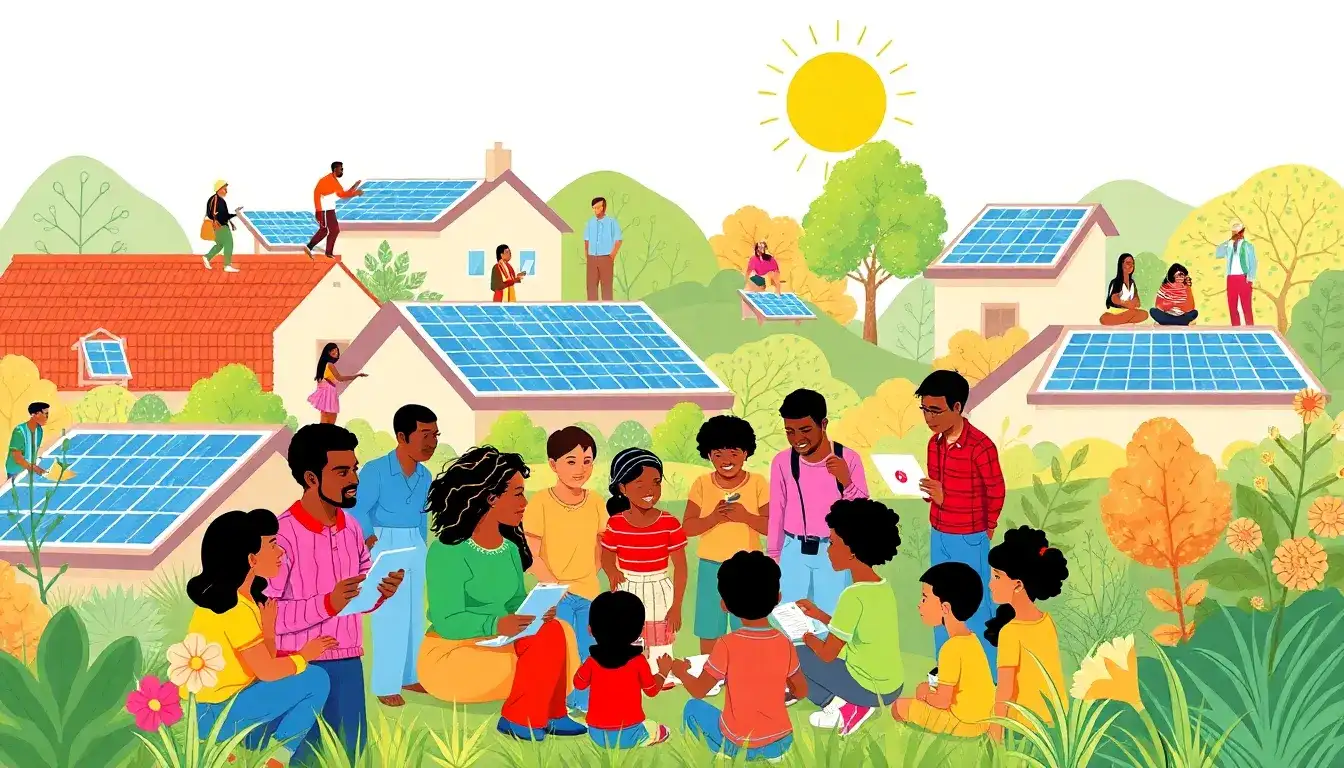
Community-based organizations (CBOs) play a crucial role in the success of community solar initiatives by facilitating equitable, inclusive, and effective solar project design and implementation. Their involvement helps ensure that solar benefits reach under-resourced communities and that projects address local needs and concerns.
Roles of Community-Based Organizations in Community Solar Initiatives
1. Facilitating Community Engagement and Trust
CBOs serve as trusted intermediaries within their communities, enabling meaningful dialogue between project developers, utilities, and residents. This trust is critical for engaging historically underserved populations and increasing participation in community solar programs, especially among low-income and marginalized groups.
2. Designing Equitable and Inclusive Programs
Collaborating with CBOs helps tailor community solar programs to be more inclusive, ensuring accessibility for renters, homeowners without suitable rooftops, and low-income households. CBOs provide vital insights into community-specific barriers and opportunities, contributing to program designs that maximize benefits like bill savings, energy resilience, and local economic development.
3. Outreach, Education, and Enrollment Support
CBOs lead outreach and education efforts, helping community members understand how community solar works, the financial and environmental benefits, and how to subscribe or participate. They can assist with navigating enrollment processes, securing financing or subsidies, and addressing language or technical barriers.
4. Advocacy and Partnership Building
CBOs act as advocates for energy justice by ensuring that state and local energy policies consider and protect the interests of vulnerable populations. They often form partnerships with state energy agencies and utilities to promote community-led solar development and to influence program structures that prioritize equity.
5. Supporting Long-Term Sustainability and Evaluation
Beyond initial implementation, CBOs help monitor project outcomes and community impacts, fostering accountability and continuous improvement. Their ongoing involvement supports sustained community benefits such as job creation, wealth building, and resilience during power disruptions.
In summary, community-based organizations are vital to the success of community solar initiatives by bridging the gap between solar projects and communities, especially those traditionally excluded from renewable energy benefits. Their participation ensures that community solar is more accessible, equitable, and responsive to local needs, leading to stronger, more sustainable outcomes for both the community and the broader energy system.
Original article by NenPower, If reposted, please credit the source: https://nenpower.com/blog/what-role-do-community-based-organizations-play-in-the-success-of-community-solar-initiatives/

