

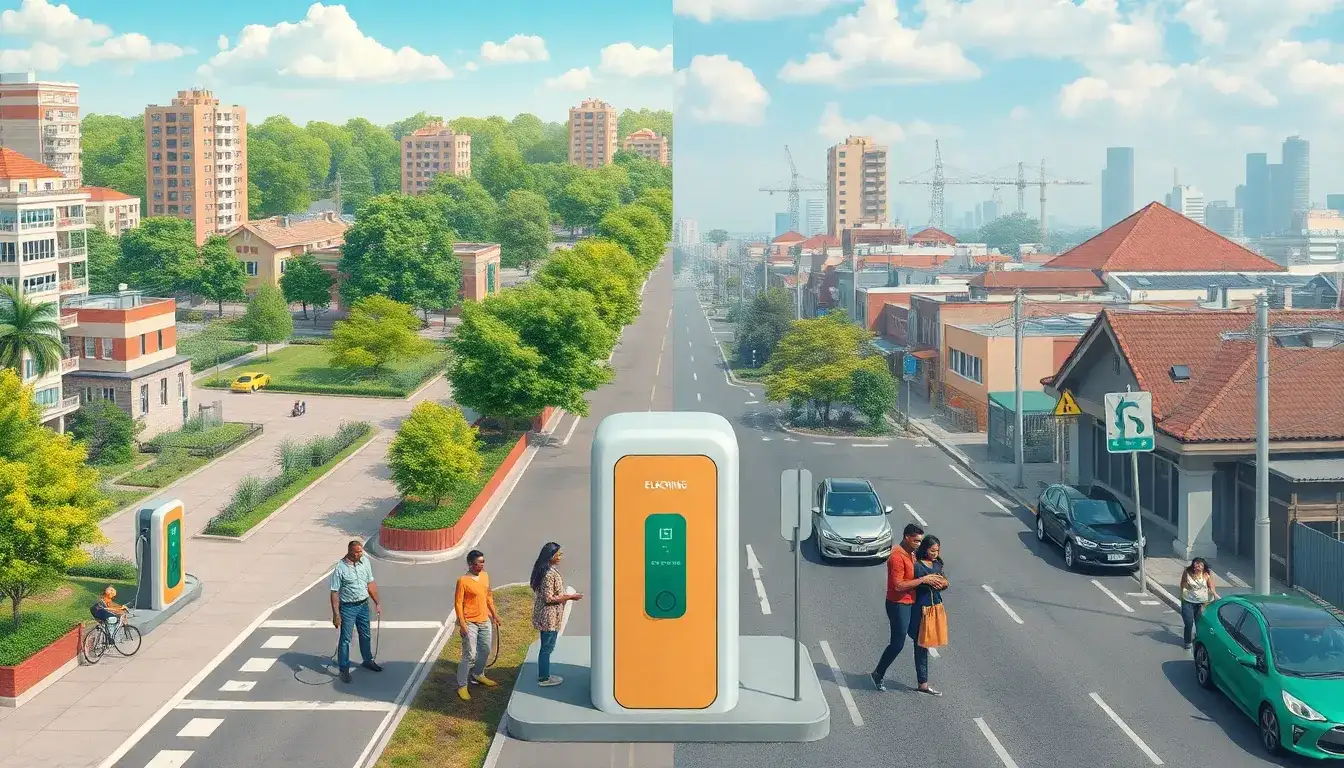
Charging station availability and cost barriers are significant factors influencing environmental justice in the transition to electric vehicles (EVs). These factors affect who can access EV benefits and help determine how equitably the environmental and economic advantages of EV adoption are distributed.
Charging Station Availability and Environmental Justice
Many U.S. communities, particularly underserved and disadvantaged ones, face “charging deserts” — areas lacking accessible public EV charging infrastructure. This lack of availability can disproportionately impact low-income and marginalized communities that may not have the ability to install home chargers, such as residents of apartments or rental housing. Public charging infrastructure is critical for these populations to participate in the EV transition.
However, federal and state rollout efforts, such as the National Electric Vehicle Infrastructure (NEVI) program, may unintentionally limit benefits reaching disadvantaged communities due to strict geographic siting requirements focused on highways and corridors rather than where vulnerable populations live. Moreover, limited engagement with community groups in planning processes can lead to infrastructure deployment that does not address local equity needs.
Investments in public charging infrastructure thus present an opportunity to address existing inequities and reduce environmental injustices by improving air quality and health outcomes in overburdened communities historically affected by transportation pollution. Local governments and urban planners have crucial roles in ensuring equitable distribution, integrating community input, and balancing accessibility with urban design considerations.
Cost Barriers and Their Impact on Equity
Cost is a substantial barrier to equitable EV charging access. Public charging is generally more expensive than home charging and often requires digital payment methods (smartphone apps, credit cards), which may exclude low-income users or those without access to such technology. Even when home charging is feasible, underserved communities often face higher relative energy burdens. For example, low-income households can spend up to three times more of their income on energy costs compared to higher-income households, with Black, Hispanic, and Native American households bearing disproportionately higher energy expenses.
These cost burdens can discourage EV adoption among disadvantaged groups, exacerbating environmental justice gaps. Governments and utilities are encouraged to develop pricing models and infrastructure funding strategies that lower costs and improve affordability for all residents.
Summary
- Charging station availability is often limited in disadvantaged communities due to geographic, economic, and planning-related barriers, creating “charging deserts” that hinder equitable EV adoption.
- Cost barriers, such as more expensive public charging and the requirement of digital payment methods, disproportionately affect low-income and marginalized populations who may already face higher energy burdens.
- These inequities in access and cost prevent disadvantaged communities from fully benefiting from cleaner transportation and better air quality, perpetuating environmental injustice.
- Local governments and planners can promote environmental justice by engaging communities, ensuring equitable distribution of charging infrastructure, and addressing affordability through innovative policies and programs.
In conclusion, addressing both availability and cost barriers is essential for EV infrastructure to serve as a tool for environmental justice, helping to reduce transportation pollution impacts and economic inequities in vulnerable communities.
Original article by NenPower, If reposted, please credit the source: https://nenpower.com/blog/what-role-do-charging-station-availability-and-cost-barriers-play-in-environmental-justice/

